
Table of Contents
Introduction
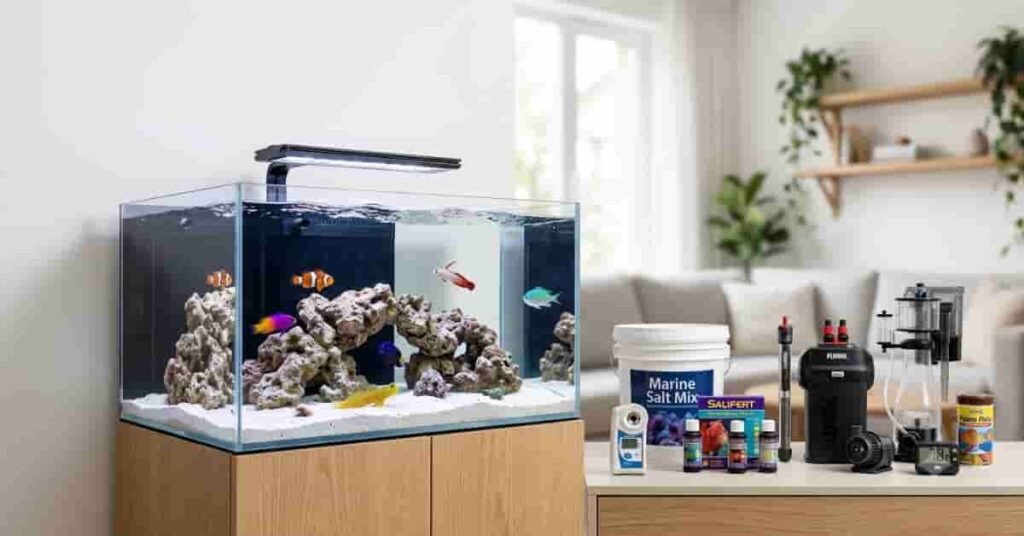
Have you ever dreamed of keeping colorful clownfish and other stunning saltwater fish at home?
A marine aquarium setup may look challenging, but beginners can absolutely succeed with the right guidance. Many hobbyists in the USA choose marine tanks because of their vibrant fish, fascinating marine life, and beautiful underwater displays. While saltwater aquariums require more planning than freshwater tanks, they are rewarding once you understand the basics. Learning how to setup a marine aquarium correctly from the start helps you avoid costly mistakes and keeps your fish healthy.
This guide is designed specifically for beginners who want a simple and stress-free way to get started. You’ll learn how to choose the right equipment, prepare saltwater, cycle your tank, and maintain stable water conditions. We’ll also cover marine aquarium setup for beginners, recommended fish, common mistakes to avoid, and essential maintenance tips. By the end, you’ll have the knowledge and confidence to build a healthy marine aquarium that thrives for years.
What Is a Marine Aquarium?
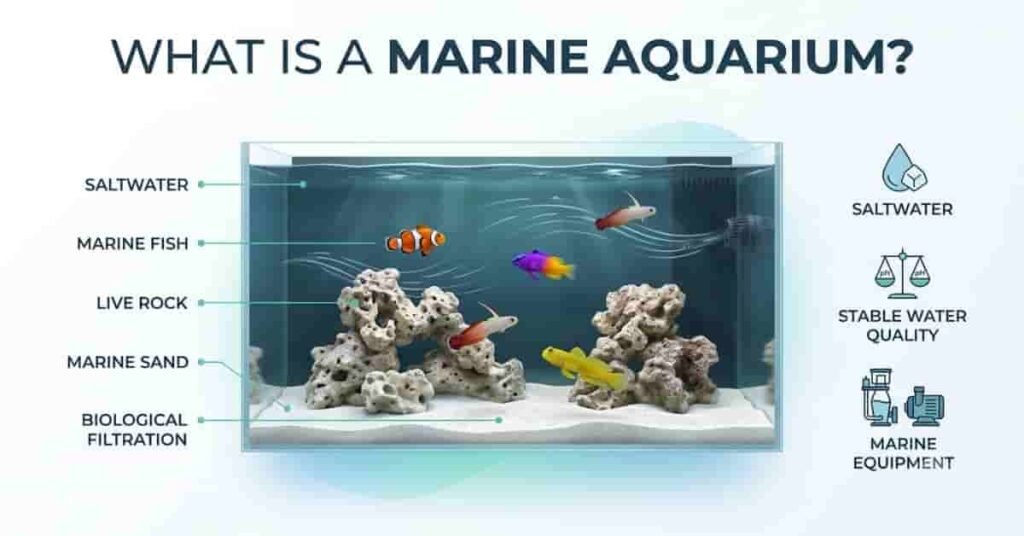
A marine aquarium is a saltwater fish tank that recreates a small part of the ocean inside your home. Unlike freshwater aquariums, marine tanks use specially mixed saltwater and house fish and other animals that naturally live in the sea. A successful marine aquarium setup focuses on stable water quality, proper filtration, and the right equipment to keep marine life healthy.
A sump can be a useful addition to a marine aquarium because it provides extra space for filtration equipment and improves overall system organization. Learn how they work in our Aquarium Sump Setup Guide.
Many beginners choose marine aquariums because of their bright colors and unique fish species. Popular options include clownfish, gobies, and royal grammas. Saltwater tanks can also become beautiful display pieces that bring a slice of the ocean into your living space.
There are several types of marine aquariums. Some keep only fish, while others include live rock or even delicate corals. Each setup has different equipment needs and maintenance levels. Beginners usually have the best experience with a simple fish-only or FOWLR aquarium before moving to a reef tank.
Understanding these differences helps you choose a setup that matches your budget, experience, and long-term goals.
Freshwater vs Marine Aquarium
Freshwater and marine aquariums may look similar, but they differ in water chemistry, equipment, livestock, and maintenance. Freshwater tanks use treated tap water, while marine aquariums require saltwater mixed with a quality marine salt mix. Saltwater fish are often more colorful, but they also need more stable water conditions.
For most beginners, freshwater aquariums are easier to maintain. However, a basic marine aquarium can also be successful with proper planning and patience. Choosing the right tank size and learning water testing early will make the experience much smoother.
| Feature | Freshwater Aquarium | Marine Aquarium |
|---|---|---|
| Water Type | Freshwater | Saltwater |
| Difficulty | Beginner-friendly | Moderate |
| Setup Cost | Lower | Higher |
| Maintenance | Easier | More detailed |
| Fish Colors | Good | Excellent |
| Equipment | Basic | Advanced filtration and marine equipment |
| Water Stability | More forgiving | Requires close monitoring |
Pro Tip
Many beginners think marine tanks are impossible to maintain. In reality, a 20–40 gallon fish-only setup is often easier to keep stable than a very small nano marine tank.
Marine Aquarium vs Reef Aquarium
Not every marine aquarium is a reef aquarium. While both use saltwater, they have different goals, equipment, and maintenance requirements.
A Fish-Only (FO) marine aquarium contains only marine fish. It is the simplest and most affordable option. Since there are no corals, lighting and water chemistry are less demanding. This makes it an excellent choice for beginners learning the basics of saltwater fish keeping.
A FOWLR (Fish Only With Live Rock) aquarium includes marine fish and natural live rock. The live rock provides biological filtration and creates hiding places for fish. It also supports beneficial bacteria that help maintain water quality. Many hobbyists consider FOWLR the best balance between beauty and ease of care.
A reef aquarium contains marine fish, live rock, and living corals. Corals require stronger lighting, stable calcium and alkalinity levels, and excellent water quality. Reef tanks are stunning, but they demand more time, equipment, and experience.
Types of Marine Aquariums
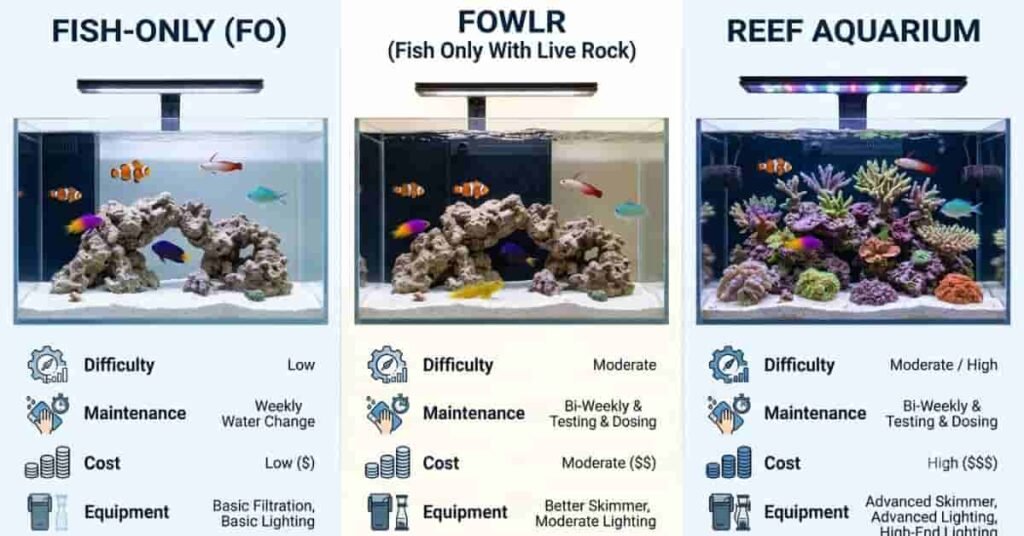
Choosing the right type of marine aquarium setup is one of the most important decisions for beginners. Each setup offers a different balance of cost, maintenance, and visual appeal. Some are designed for keeping fish only, while others support live rock or colorful corals.
If you’re new to the hobby, start with a setup that matches your experience and budget. A simpler aquarium is easier to maintain and gives you time to learn essential skills like testing water, managing salinity, and performing regular maintenance. As your confidence grows, you can always upgrade to a more advanced system.
The three most common marine aquarium types are Fish-Only (FO), Fish Only With Live Rock (FOWLR), and Reef Aquariums. Understanding how they differ will help you choose the best option for your goals.
Choosing reliable filtration is one of the most important decisions when setting up a marine aquarium. Our Aquarium Filter Setup Guide explains the main filter types and how to set them up properly.
Fish-Only (FO)
A Fish-Only (FO) aquarium contains only marine fish and decorative items such as rocks or artificial decorations. It does not include live rock or corals, making it the simplest type of saltwater aquarium.
This setup is ideal for anyone learning how to setup a basic marine aquarium. It usually costs less than other marine systems because it requires fewer specialized components. Water quality is still important, but you won’t need to manage coral-specific parameters like calcium or alkalinity.
Many beginners enjoy keeping hardy fish such as clownfish, damselfish, or gobies in a Fish-Only aquarium. Once you’re comfortable maintaining stable water conditions, you can upgrade to a more advanced setup if desired.
Fish Only With Live Rock (FOWLR)
A FOWLR (Fish Only With Live Rock) aquarium combines marine fish with natural live rock. The live rock is more than decoration. It houses beneficial bacteria that help break down waste and improve biological filtration.
FOWLR tanks look more natural than Fish-Only setups and provide caves and hiding places that reduce stress for many fish. Although live rock increases the initial cost, it often improves long-term stability and supports healthier marine life.
Many experienced hobbyists recommend FOWLR as the best marine aquarium setup for beginners because it balances beauty, filtration, and manageable maintenance.
Reef Aquarium
A reef aquarium is the most advanced type of marine aquarium. It contains marine fish, live rock, soft corals, or hard corals that require stable water chemistry and high-quality lighting.
Reef tanks create breathtaking underwater displays, but they also demand more time, equipment, and experience. In addition to monitoring salinity and temperature, you’ll need to maintain calcium, alkalinity, and magnesium levels for healthy coral growth. Regular testing and consistent maintenance are essential.
For most beginners, it’s better to gain experience with a Fish-Only or FOWLR aquarium before building a reef system. This approach helps you develop good maintenance habits and understand marine water chemistry.
Pro Tip
Wait until your aquarium has been stable for several months before adding corals. Healthy, consistent water conditions are more important than expensive equipment.
Equipment Needed for a Marine Aquarium Setup
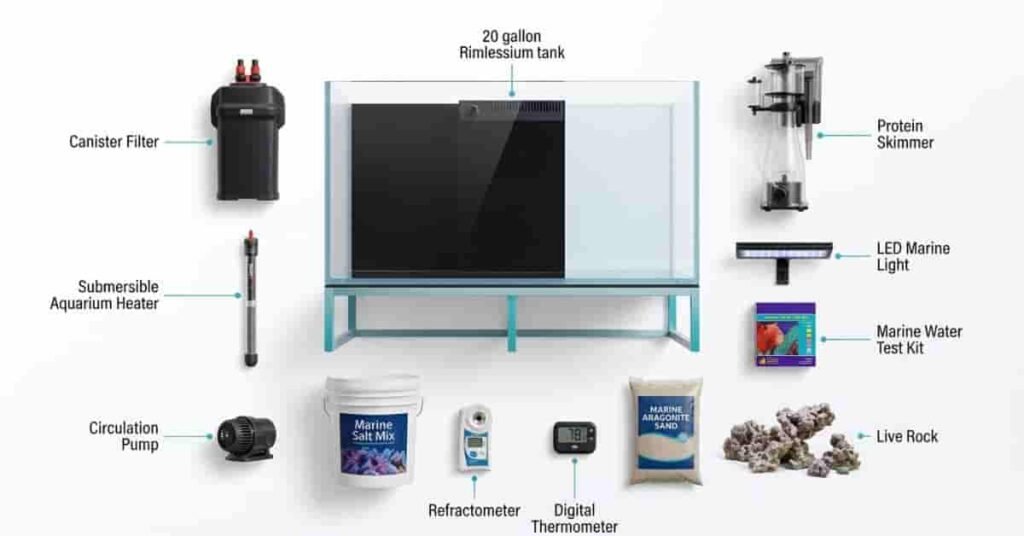
The right equipment is the foundation of a successful marine aquarium setup. Each piece plays a specific role in keeping your saltwater tank stable and your fish healthy. While it may seem like a long shopping list, you don’t need the most expensive gear to get started.
If you’re learning how to setup a marine aquarium, focus on reliable equipment rather than fancy upgrades. A quality filter, heater, and water testing tools will make a bigger difference than decorative extras. Buying the right equipment from the beginning also helps you avoid common beginner mistakes and costly replacements.
Below are the essential items every beginner should understand before setting up a new marine aquarium.
Key Takeaways
- Quality equipment creates a stable environment for marine fish.
- Invest in essential items before optional upgrades.
- Test water regularly to prevent problems early.
- Reliable equipment saves time and money in the long run.
Aquarium Tank
Your aquarium tank is the heart of the entire setup. For most beginners, a 20 to 40-gallon tank offers the best balance between stability and maintenance. Larger tanks hold water parameters more consistently, making them easier to manage than very small nano aquariums.
Choose a high-quality glass or acrylic tank with enough space for fish to swim comfortably and room for future equipment.
Once you’re comfortable maintaining a basic marine aquarium, you may want to explore keeping corals and other reef inhabitants. Our Reef Aquarium Setup Guide explains how to build a beginner-friendly reef system.
Pro Tip
Avoid starting with a tank smaller than 20 gallons. Small tanks experience faster changes in salinity and water quality.
Aquarium Stand
A marine aquarium becomes very heavy once filled with water, sand, and live rock. A sturdy aquarium stand supports this weight safely and keeps the tank level.
Many stands also provide storage space for filters, test kits, food, and maintenance supplies. Always place the stand on a flat, solid floor away from direct sunlight and heating vents.
Marine Filter
A marine filter removes debris and supports beneficial bacteria that convert harmful waste into safer compounds. Good filtration is essential for clean water and healthy fish.
Common choices include hang-on-back filters, canister filters, and sump filtration systems. Beginners often find quality hang-on-back or canister filters easy to maintain.
Protein Skimmer
A protein skimmer removes dissolved organic waste before it breaks down into ammonia and nitrate. It improves water quality and reduces nutrient buildup.
While not always required for small Fish-Only tanks, a protein skimmer is highly recommended for FOWLR and reef aquariums. It also reduces maintenance over time.
Pro Tip
Select a skimmer rated for a slightly larger aquarium than your actual tank volume.
Heater
Marine fish need a stable water temperature throughout the day. A reliable aquarium heater keeps the temperature consistent, even when room temperatures change.
Most tropical marine fish thrive between 76°F and 80°F (24–27°C). Pairing the heater with a thermometer makes monitoring easier.
Water Circulation Pump
Marine aquariums need strong water movement to distribute oxygen, move nutrients, and prevent dead spots where waste collects.
A circulation pump creates natural water flow similar to ocean currents. This is especially important for FOWLR and reef aquariums.
Pro Tip
Aim the pump toward the glass instead of directly at the fish to create gentle, even circulation.
Marine Salt Mix
Marine aquariums require a specially formulated marine salt mix. Never use table salt or ordinary sea salt because they lack essential minerals.
Mix the salt with purified water until it reaches the correct salinity before adding it to the aquarium.
Pro Tip
Mix new saltwater for several hours with a pump and heater before performing water changes.
Hydrometer or Refractometer
Salinity is one of the most important water parameters in a marine aquarium. A hydrometer or refractometer measures the amount of salt dissolved in the water.
A refractometer usually provides more accurate readings and is preferred by many experienced hobbyists.
Pro Tip
Check salinity after every water change and top off evaporated water with fresh RO/DI water, not saltwater.
Marine Test Kits
Marine test kits help you monitor water quality before problems affect your fish. They allow you to test important parameters such as ammonia, nitrite, nitrate, pH, and alkalinity.
Regular testing is one of the easiest ways to prevent fish stress and maintain a healthy aquarium.
Pro Tip
Test your water more frequently while cycling a new marine aquarium than after it becomes established.
Marine Lighting
Lighting improves the appearance of your aquarium and supports the health of marine life. Fish-only aquariums need standard aquarium lighting, while reef aquariums require stronger lights designed for coral growth.
Choose lighting that matches your aquarium type instead of buying the brightest option available.
Pro Tip
Use a timer to keep your aquarium lights on for 8–10 hours each day. A consistent schedule helps reduce algae problems.
Choosing the Right Tank Size
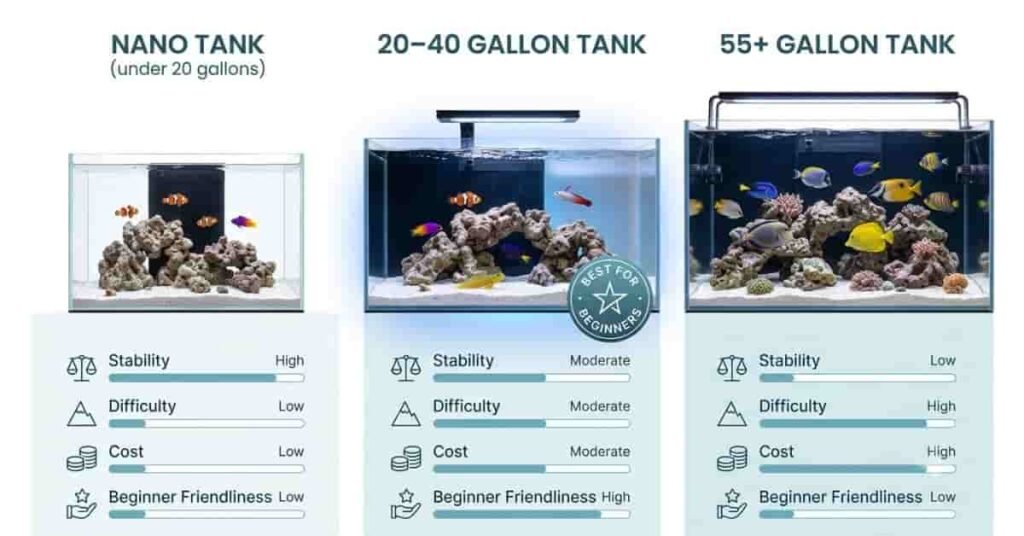
Selecting the right tank size is one of the most important decisions in a marine aquarium setup. Many beginners assume a smaller aquarium is easier to maintain because it costs less and takes up less space. In reality, the opposite is often true. Small tanks experience faster changes in salinity, temperature, and water quality, making them less forgiving when mistakes happen.
A larger aquarium holds more water, which helps keep water parameters stable. This gives beginners more time to correct small problems before they affect their fish. Your budget, available space, and long-term goals should all influence your choice, but stability should always come first.
The three most common marine tank sizes are nano tanks, medium-sized tanks, and large aquariums. Each has its own advantages and challenges.
| Tank Size | Difficulty | Water Stability | Setup Cost | Best For |
|---|---|---|---|---|
| Nano (Under 20 gallons) | High | Low | Lower | Experienced hobbyists |
| 20–40 Gallons | Easy | High | Moderate | Most beginners |
| 55+ Gallons | Moderate | Very High | Higher | Growing collections and advanced setups |
Key Takeaways
- Larger tanks are usually easier to keep stable than very small tanks.
- Choose a tank size that fits both your budget and maintenance routine.
- Most beginners have the best success with a 20–40 gallon aquarium.
- Avoid choosing the smallest tank simply to save money.
Nano Marine Tanks
Nano marine tanks typically hold less than 20 gallons of water. They are compact, affordable, and fit well in small homes or apartments. Their size also makes them attractive for hobbyists with limited space.
However, nano tanks require close attention because water conditions can change quickly. A small amount of evaporation can increase salinity, and overfeeding can affect water quality within hours. Beginners often find these rapid changes difficult to manage.
Pro Tip
Choose a nano tank only if you’re prepared to monitor water parameters regularly and perform consistent maintenance.
20–40 Gallon Tanks
A 20–40 gallon aquarium is the best choice for most people learning how to setup a new marine aquarium. This size offers enough water volume to keep salinity and temperature more stable while remaining affordable and easy to maintain.
You also have more room to create a natural aquascape with live rock and keep a small group of compatible marine fish. Maintenance tasks, such as water changes and cleaning, remain manageable without requiring large amounts of saltwater.
55+ Gallon Tanks
Marine aquariums of 55 gallons or larger offer excellent water stability and more swimming space for fish. They also allow for larger aquascapes and a wider selection of marine species.
The main drawback is cost. Larger tanks require more saltwater, stronger equipment, and higher ongoing maintenance expenses. Water changes also take more time because of the increased water volume.
Pro Tip
Plan your equipment before buying a large aquarium. Filters, heaters, and circulation pumps should all be sized correctly for the total water volume.
Best Size for Beginners
For most beginners, a 20–40 gallon Fish-Only (FO) or FOWLR aquarium offers the best balance of stability, cost, and ease of maintenance. It provides enough water volume to reduce sudden changes while keeping equipment and maintenance affordable.
Many experienced marine hobbyists recommend starting with this size because it allows you to build confidence without the challenges of a nano aquarium or the higher costs of a large system. Once you gain experience maintaining stable water quality, you can confidently upgrade to a larger or reef aquarium if your goals change.
How to Set Up a Marine Aquarium (Step-by-Step)
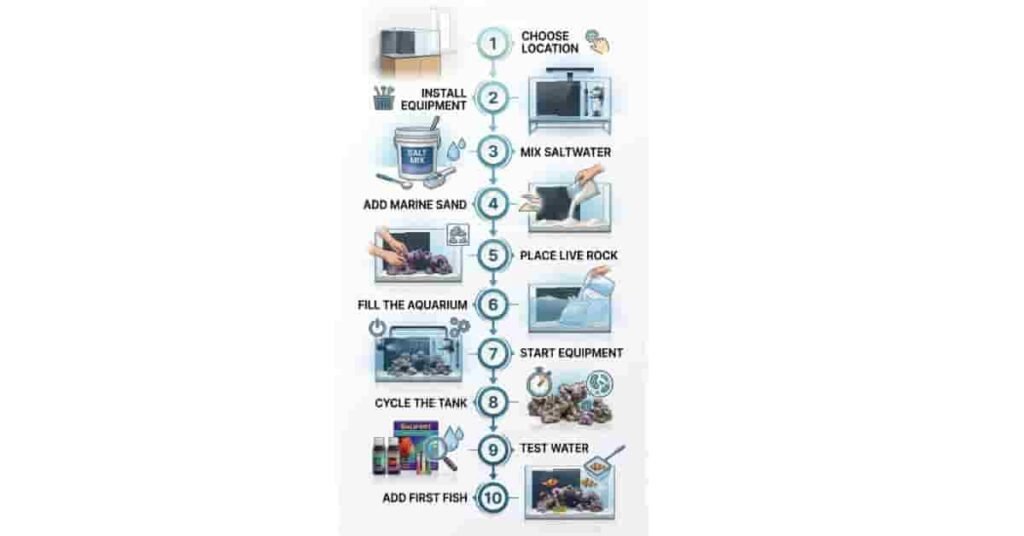
Learning how to setup a marine aquarium is easier when you follow the process in the correct order. Rushing through the setup often leads to poor water quality, stressed fish, and expensive mistakes. Taking your time gives beneficial bacteria a chance to grow and creates a stable environment for marine life.
Follow these ten steps to build a healthy saltwater aquarium from the ground up. Each step prepares your tank for the next one, helping you avoid common beginner problems.
Step 1 – Choose the Tank Location
Place your aquarium on a sturdy stand in a level area. Keep it away from direct sunlight, air vents, and doors that open frequently. Too much sunlight can encourage algae growth, while temperature changes can stress your fish.
Make sure you have easy access to electrical outlets and enough room for maintenance.
Step 2 – Install Equipment
Install your filter, heater, circulation pump, thermometer, and protein skimmer if you’re using one. Check that every piece of equipment is securely fitted and ready to operate.
Don’t switch the equipment on yet if the tank is still empty. Running some equipment without water can cause damage.
Step 3 – Prepare Saltwater
Use purified RO/DI water whenever possible and mix it with a high-quality marine salt mix. Stir the water with a circulation pump until the salt dissolves completely.
Check the salinity with a refractometer or hydrometer. Most marine aquariums perform best at a specific gravity of 1.023–1.026.
Step 4 – Add Marine Sand
Rinse marine sand only if the manufacturer recommends it. Then spread an even layer across the bottom of the tank.
Most beginner aquariums work well with a sand bed of 1–2 inches. This provides a natural appearance and gives bottom-dwelling fish a comfortable habitat.
Step 5 – Add Live Rock
Arrange the live rock before filling the aquarium completely. Build a stable structure with open swimming areas and hiding places for fish.
Live rock supports beneficial bacteria and improves biological filtration. It also creates a natural-looking aquascape.
Step 6 – Fill the Aquarium
Slowly add the prepared saltwater to the aquarium. Fill the tank carefully to avoid disturbing the sand bed.
Once filled, inspect the aquarium and plumbing for leaks before moving to the next step.
Step 7 – Start Filter & Heater
Turn on the filter, heater, circulation pump, and other equipment. Confirm that water is flowing properly and the heater maintains the correct temperature.
Allow the system to run continuously. Stable circulation and temperature are essential for a healthy marine aquarium.
Step 8 – Cycle the Aquarium
Cycling is the most important step in how to setup marine aquarium successfully. During this process, beneficial bacteria grow and convert harmful ammonia into nitrite and then into nitrate.
This process usually takes several weeks. Do not add fish until ammonia and nitrite reach 0 ppm. Patience during cycling greatly improves your chances of long-term success.
Step 9 – Test Water Parameters
Before adding any livestock, confirm that your water parameters are stable. Test salinity, temperature, pH, ammonia, nitrite, and nitrate using reliable marine test kits.
If any reading falls outside the recommended range, correct the issue before introducing fish.
Step 10 – Add Your First Marine Fish
Once the aquarium is fully cycled, you can begin adding hardy beginner fish. Introduce only one or two fish at a time so the biological filter can adjust gradually.
This is the safest way to setup a new marine aquarium without overwhelming the system. Observe each fish closely during the first few days and feed lightly until the tank stabilizes.
Pro Tip: Quarantining new fish before adding them to your display tank helps reduce the risk of introducing diseases.
Ideal Water Parameters for Marine Aquariums
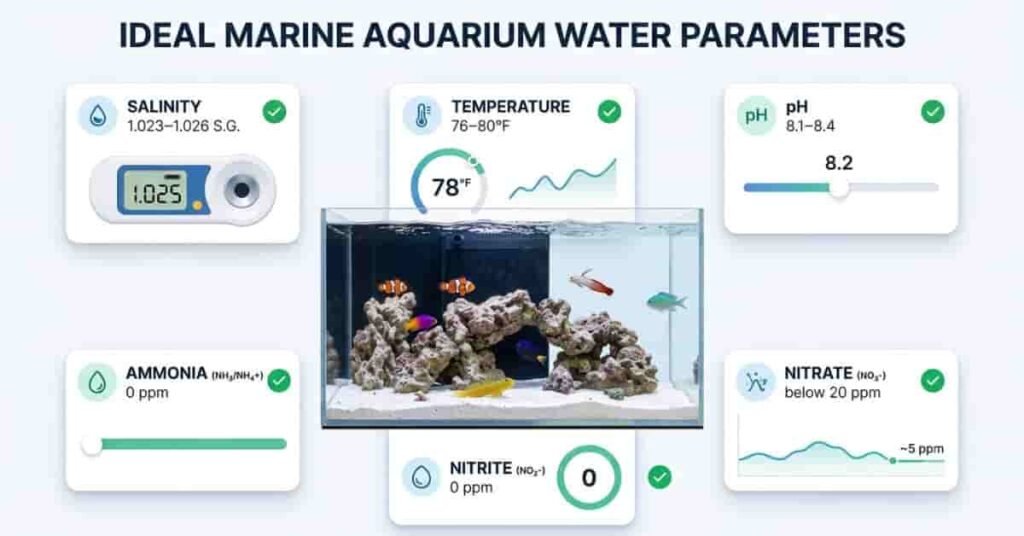
Maintaining stable water parameters is the key to a healthy marine aquarium setup. Marine fish are less tolerant of sudden changes than most freshwater species, so regular testing is essential. Even if your water looks clear, harmful changes can occur without obvious signs.
Check your water weekly and after every major water change. During the cycling phase, test more frequently to monitor the growth of beneficial bacteria. Consistent water quality reduces stress, prevents disease, and helps your fish thrive.
| Parameter | Ideal Range | Why It Matters |
|---|---|---|
| Salinity | 1.023–1.026 Specific Gravity | Supports proper fish health and osmoregulation |
| Temperature | 76–80°F (24–27°C) | Keeps fish active and reduces stress |
| pH | 8.1–8.4 | Maintains a stable marine environment |
| Ammonia | 0 ppm | Even small amounts are toxic to fish |
| Nitrite | 0 ppm | Harmful to marine livestock |
| Nitrate | Below 20 ppm (Fish-Only/FOWLR) | Lower levels promote healthier fish |
Avoid making large corrections all at once. If a parameter is outside the ideal range, adjust it slowly to prevent shocking your fish.
Best Marine Fish for Beginners
Choosing hardy fish makes your marine aquarium setup for beginners much more enjoyable. Beginner-friendly species adapt well to aquarium life, tolerate small changes better, and are generally peaceful. Start with only one or two fish and allow your biological filter to adjust before adding more.
The following species are popular because they are attractive, relatively easy to care for, and widely available.
| Fish | Care Level | Temperament | Adult Size |
| Ocellaris Clownfish | Easy | Peaceful | 3–4 inches |
| Firefish | Easy | Peaceful | 3 inches |
| Royal Gramma | Easy | Peaceful | 3 inches |
| Yellow Watchman Goby | Easy | Peaceful | 4 inches |
| Tailspot or Lawnmower Blenny | Easy | Peaceful | 2.5–5 inches |
| Blue-Green Chromis | Easy | Peaceful | 3–4 inches |
Ocellaris Clownfish
Ocellaris clownfish are one of the best choices for beginners. They are hardy, colorful, and adapt well to aquarium life. They also remain relatively small and are comfortable in community tanks with compatible species.
Firefish
Firefish are peaceful and easy to care for. Their bright colors and graceful swimming make them a favorite among new hobbyists. Provide plenty of hiding places because they can become shy.
Royal Gramma
Royal grammas stand out with their vibrant purple and yellow coloration. They are generally peaceful and spend much of their time swimming around caves and live rock.
Yellow Watchman Goby
This goby enjoys resting on the sand and often forms interesting relationships with pistol shrimp in nature. It is hardy and well suited to beginner marine aquariums.
Blenny
Blennies have unique personalities and can help graze on certain types of algae. They are active fish that add plenty of character to the aquarium.
Chromis
Blue-green chromis are active schooling fish that bring movement to a marine aquarium. They are peaceful and do well in groups when given enough swimming space.
Marine Aquarium Cycling Explained
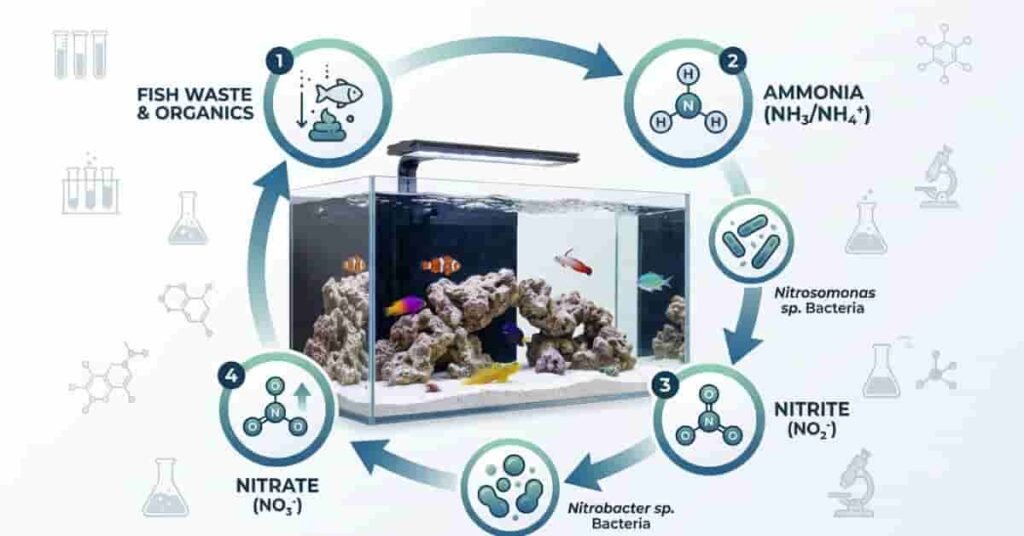
Cycling is one of the most important parts of how to setup marine aquarium correctly. During this process, beneficial bacteria establish themselves inside the filter, live rock, and substrate. These bacteria remove harmful waste and create a safe environment for marine fish.
The nitrogen cycle begins when ammonia enters the aquarium from fish waste or another ammonia source. Beneficial bacteria convert ammonia into nitrite, which is also toxic. A second group of bacteria then converts nitrite into nitrate. Regular water changes help keep nitrate under control.
For most new marine aquariums, the cycling process takes several weeks. The exact time depends on factors such as temperature, filtration, and the amount of beneficial bacteria already present.
Only add your first fish when testing shows:
- Ammonia: 0 ppm
- Nitrite: 0 ppm
- Nitrate: Present at a safe level
Adding fish too early is one of the biggest reasons new marine aquariums fail. Waiting until the cycle is complete protects your fish and gives your aquarium a stronger biological foundation.
Expert Tip: Don’t rush the cycling process. A few extra weeks of patience can prevent months of problems later.
Marine Aquarium Maintenance Routine
A regular maintenance routine keeps your marine aquarium setup healthy and stable. Small, consistent tasks are much easier than fixing major problems later. By checking your aquarium every day and performing simple weekly maintenance, you can prevent poor water quality, fish stress, and algae outbreaks.
Create a schedule and stick to it. Most maintenance tasks take only a few minutes but make a big difference over time. Regular water testing and water changes also help you spot problems before they become serious.
Marine Aquarium Maintenance Checklist
| Task | Daily | Weekly | Monthly |
|---|---|---|---|
| Check fish behavior | ✅ | — | — |
| Check temperature | ✅ | — | — |
| Feed fish | ✅ | — | — |
| Top off evaporated water with RO/DI water | ✅ | — | — |
| Test salinity | — | ✅ | — |
| Test water parameters | — | ✅ | — |
| Clean aquarium glass | — | ✅ | — |
| Perform a 10–20% water change | — | ✅ | — |
| Vacuum debris from the substrate (if needed) | — | ✅ | — |
| Inspect equipment | — | ✅ | — |
| Deep clean filter media (as recommended) | — | — | ✅ |
| Clean pumps and powerheads | — | — | ✅ |
| Check heater and thermometer accuracy | — | — | ✅ |
Following this routine helps maintain stable water quality and reduces the chance of disease or equipment failure. Remember that consistency is more important than performing large maintenance sessions occasionally.
Common Beginner Mistakes
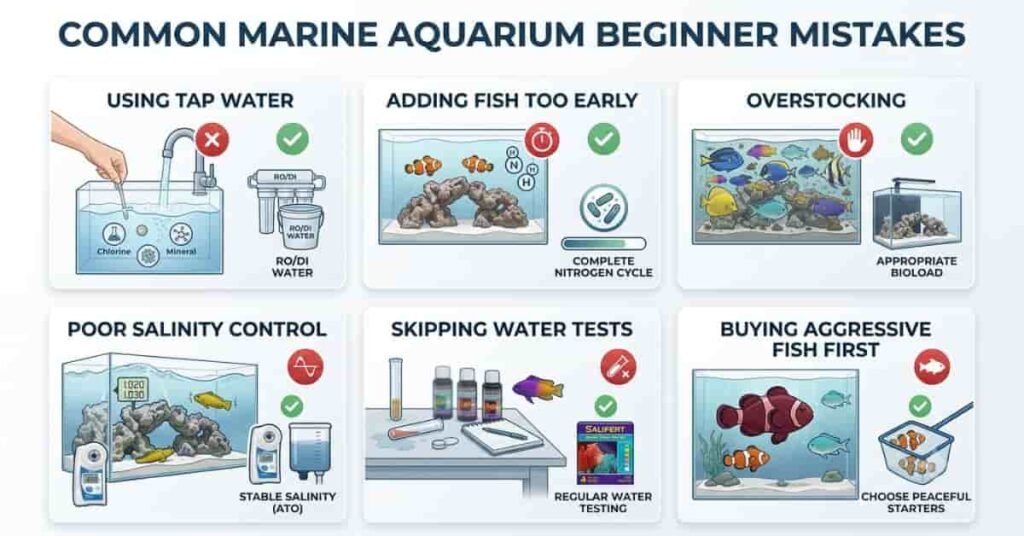
Every marine aquarist makes mistakes at some point, but knowing the most common ones can save you time, money, and frustration. Most problems happen because beginners rush the setup or overlook basic maintenance. Fortunately, these mistakes are easy to avoid with a little planning and patience.
Using Tap Water
Tap water may contain chlorine, chloramine, heavy metals, and nutrients that encourage algae growth. These contaminants can harm marine fish and make maintaining water quality more difficult.
Use purified RO/DI water whenever possible to prepare saltwater and replace evaporation.
Adding Fish Too Early
One of the biggest mistakes is adding fish before the aquarium finishes cycling. Without enough beneficial bacteria, toxic ammonia and nitrite can quickly build up.
Always confirm that ammonia and nitrite test 0 ppm before introducing your first fish.
Overstocking
Adding too many fish at once places extra pressure on your biological filter. This often leads to poor water quality and increased stress among fish.
Introduce new fish gradually and give the aquarium time to adjust between additions.
Poor Salinity Control
Salinity changes can happen quickly, especially in smaller aquariums. Allowing too much evaporation without topping off fresh water can stress or even kill marine fish.
Check salinity regularly with a refractometer or hydrometer and top off with fresh RO/DI water, not saltwater.
Skipping Water Tests
Clear water doesn’t always mean healthy water. Harmful ammonia, nitrite, or nitrate levels may go unnoticed without testing.
Make water testing part of your weekly maintenance routine to catch problems early.
Buying Aggressive Fish First
Some marine fish become territorial and may bully new tank mates. Starting with aggressive species can make stocking your aquarium much more difficult.
Choose peaceful, beginner-friendly fish first, then add more assertive species later if they are compatible.
How Much Does a Marine Aquarium Cost?
One of the first questions beginners ask is how much a marine aquarium setup costs. The total price depends on your tank size, equipment quality, and whether you choose a Fish-Only (FO), FOWLR, or reef aquarium. While saltwater aquariums cost more than freshwater setups, you don’t need premium equipment to get started successfully.
A beginner-friendly 20–40 gallon Fish-Only or FOWLR aquarium offers the best balance between cost and long-term stability. Investing in reliable equipment from the start can also reduce maintenance problems and expensive upgrades later.
The table below shows typical price ranges for essential equipment. Prices may vary by brand, tank size, and retailer.
| Equipment | Estimated Cost (USD) |
|---|---|
| Aquarium Tank (20–40 Gallons) | $100–$300 |
| Marine Filter | $50–$200 |
| Marine Salt Mix | $40–$80 |
| Live Rock | $100–$300 |
| Marine Sand | $30–$80 |
| Marine Test Kit | $30–$100 |
| Aquarium Heater | $25–$60 |
| Protein Skimmer | $80–$250 |
Estimated Beginner Setup Cost
| Setup Type | Estimated Cost (USD) |
| Fish-Only (FO) | $400–$700 |
| FOWLR | $600–$1,000 |
| Basic Reef Aquarium | $1,000+ |
These estimates cover the basic equipment needed to start. Livestock, maintenance supplies, replacement filter media, and electricity will add to your ongoing costs.
Troubleshooting Common Marine Aquarium Problems
Even a well-maintained marine aquarium setup can experience occasional problems. The good news is that most issues have simple solutions when caught early. Regular water testing and daily observation help you identify problems before they become serious.
Use the guide below to diagnose common issues and take the right corrective action.
| Problem | Possible Cause | Recommended Solution |
| Cloudy Water | Bacterial bloom, disturbed sand, or excess waste | Reduce feeding, improve filtration, and allow the tank to clear naturally. |
| High Nitrates | Overstocking, overfeeding, or missed water changes | Perform partial water changes, clean debris, and reduce feeding if needed. |
| Algae Blooms | Excess nutrients, long lighting periods, or poor water quality | Shorten the lighting schedule, use RO/DI water, and maintain regular water changes. |
| Fish Stress | Poor water quality, sudden parameter changes, or incompatible fish | Test water immediately, stabilize conditions, and check fish compatibility. |
| Low Salinity | Too much fresh water added or inaccurate measurements | Mix saltwater correctly and slowly raise salinity to the recommended range. |
| High Ammonia | Incomplete cycling, dead livestock, or overfeeding | Stop adding new fish, reduce feeding, perform a water change if necessary, and allow the biological filter to recover. |
Most aquarium problems are easier to prevent than to fix. Keeping a maintenance schedule, testing water regularly, and avoiding sudden changes will reduce the risk of these issues.
Conclusion
Starting a saltwater aquarium may seem challenging, but the right approach makes the process much easier. This guide covered everything you need for a successful marine aquarium setup, from choosing the right equipment and tank size to cycling, water parameters, maintenance, and beginner-friendly fish.
If you’re new to the hobby, start with a simple Fish-Only or FOWLR aquarium. Focus on maintaining stable water quality and learning the basics before upgrading to a reef tank. With patience and regular care, you’ll build a healthy aquarium that both you and your fish can enjoy for years.
Ready to begin your saltwater journey? Explore our other beginner-friendly aquarium guides, and share your questions or experiences in the comments. We’d love to hear how your marine aquarium setup is coming along!
Frequently Asked Questions
Everything beginners need to know about setting up and maintaining a marine aquarium.
1. Is a marine aquarium difficult to maintain?
2. What’s the best marine tank size for beginners?
3. Can I use tap water in a marine aquarium?
4. How long should I cycle a marine aquarium?
5. What’s the difference between a marine aquarium and a reef aquarium?
6. Do I need live rock in a marine aquarium?
7. Which fish should I add first?
8. How often should I change the water?
9. Do I need a protein skimmer?
10. How often should I test my aquarium water?

The Aquarium Advisor Team was founded by Daniel Carter (Austin, Texas, USA) and Emily Parker (Tampa, Florida, USA), two passionate aquarium enthusiasts dedicated to helping hobbyists build healthy and thriving aquariums.
They created AquariumAdvisor.com to share practical aquarium guides and professional online calculators. Every calculator is developed with experienced software developers to ensure accurate, reliable, and easy-to-use results for aquarium owners of all experience levels.