
Table of Contents
Introduction
Have you ever dreamed of bringing a colorful coral reef into your home?
A successful reef aquarium setup may look complicated, but beginners can build a thriving reef tank with the right plan. Unlike freshwater aquariums, reef tanks require stable water conditions, specialized equipment, and a little extra patience. The good news is that thousands of hobbyists across the USA start reef keeping every year, and many enjoy long-term success by following proven steps from the beginning.
This guide is designed for first-time reef keepers who want clear, practical advice without confusing jargon. Whether you’re learning how to setup a reef aquarium or planning your first aquarium reef setup, you’ll find everything explained in simple terms. We’ll cover the essential equipment, choosing the right tank size, preparing saltwater, cycling your aquarium, maintaining healthy water parameters, and selecting beginner-friendly fish and corals. By the end of this guide, you’ll have the knowledge and confidence to create a beautiful, healthy reef aquarium that can thrive for years.
What Is a Reef Aquarium?
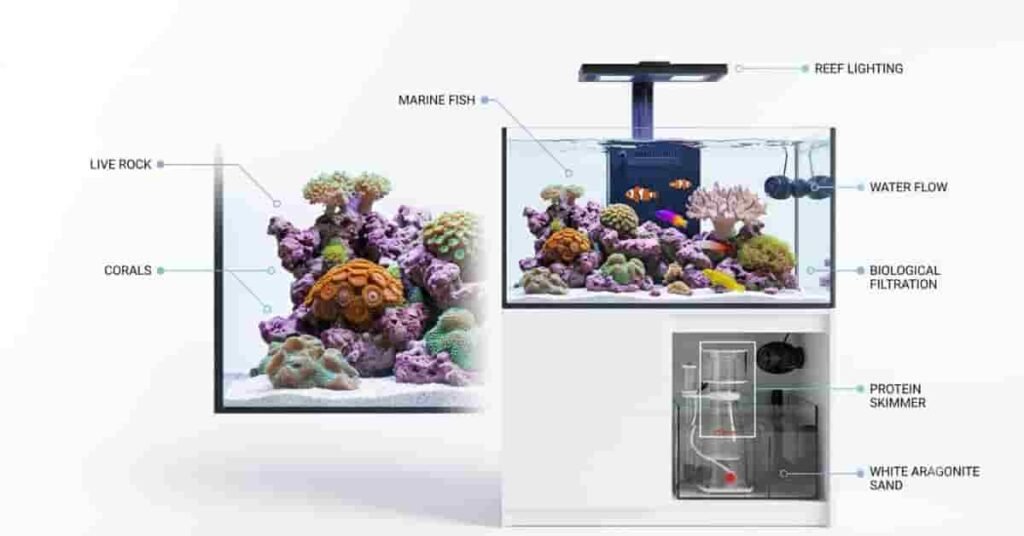
A reef aquarium is a saltwater tank designed to recreate the natural environment of a coral reef. Unlike a standard marine aquarium, it houses not only fish but also live corals, beneficial bacteria, and other reef organisms. These living elements work together to form a balanced ecosystem that can thrive for many years with proper care.
Healthy reef aquariums depend on stable water conditions, quality equipment, and regular maintenance. Corals need the right lighting, water flow, and water chemistry to grow. Fish and invertebrates also rely on clean, stable water to stay healthy. While reef tanks require more attention than freshwater aquariums, beginners can succeed by learning the basics and following a step-by-step setup process.
Many hobbyists in the USA choose reef aquariums because they offer stunning colors and fascinating marine life. Watching corals grow and fish interact creates a rewarding experience that changes over time. Although reef keeping has a learning curve, modern equipment and beginner-friendly coral species make it easier than ever to get started.
A reef aquarium requires many of the same fundamentals as a marine fish tank, along with additional equipment and care. Our Marine Aquarium Setup Guide is a helpful starting point for understanding the basics.
Expert Tip: Focus on stability instead of perfection. Keeping water parameters consistent is more important than chasing exact numbers.
How a Reef Aquarium Works
A reef aquarium works by creating a stable marine ecosystem inside a glass tank. Beneficial bacteria convert harmful fish waste into less harmful compounds through the nitrogen cycle. This natural process helps maintain safe water conditions for fish and corals.
Live rock serves as the biological filter in most reef tanks. It provides a home for beneficial bacteria while adding a natural look to the aquarium. Strong water flow from powerheads keeps oxygen levels high and delivers nutrients to corals. High-quality reef lighting supports photosynthetic corals that depend on light for energy.
Regular testing is essential because reef organisms are sensitive to sudden changes. Maintaining stable salinity, temperature, pH, calcium, alkalinity, and magnesium allows corals to grow while helping fish remain healthy. With consistent maintenance, all these elements work together to create a balanced and thriving reef environment.
Reef Aquarium vs Saltwater Aquarium
Although people often use the terms interchangeably, a saltwater aquarium and a reef aquarium are not the same. Every reef aquarium is saltwater, but not every saltwater aquarium contains corals. Choosing the right type depends on your experience, budget, and long-term goals.
| Feature | Fish-Only Tank | FOWLR Tank | Reef Tank |
|---|---|---|---|
| Saltwater | ✅ | ✅ | ✅ |
| Fish | ✅ | ✅ | ✅ |
| Live Rock | Optional | ✅ | ✅ |
| Live Corals | ❌ | ❌ | ✅ |
| Lighting | Basic | Moderate | High-performance reef lighting |
| Maintenance | Easy | Moderate | Highest |
| Best For | Beginners wanting fish only | Beginners wanting natural rockwork | Hobbyists wanting fish and corals |
A Fish-Only (FO) tank focuses on marine fish without live rock or corals. It is the simplest and most affordable option for beginners.
A FOWLR (Fish Only With Live Rock) aquarium includes live rock for natural biological filtration and a more realistic appearance. It offers better water stability than a fish-only tank while keeping maintenance manageable.
A Reef Tank combines marine fish, live corals, and other reef animals. It requires specialized lighting, stable water parameters, and careful maintenance, but it delivers the most colorful and rewarding display.
Many reef aquariums use sumps to provide additional filtration space and accommodate equipment such as protein skimmers. Learn more about this setup in our Aquarium Sump Setup Guide.
Pro Tip: If you’re new to reef keeping, consider starting with a FOWLR aquarium. It helps you learn saltwater care before adding corals.
Equipment Needed for a Reef Aquarium Setup
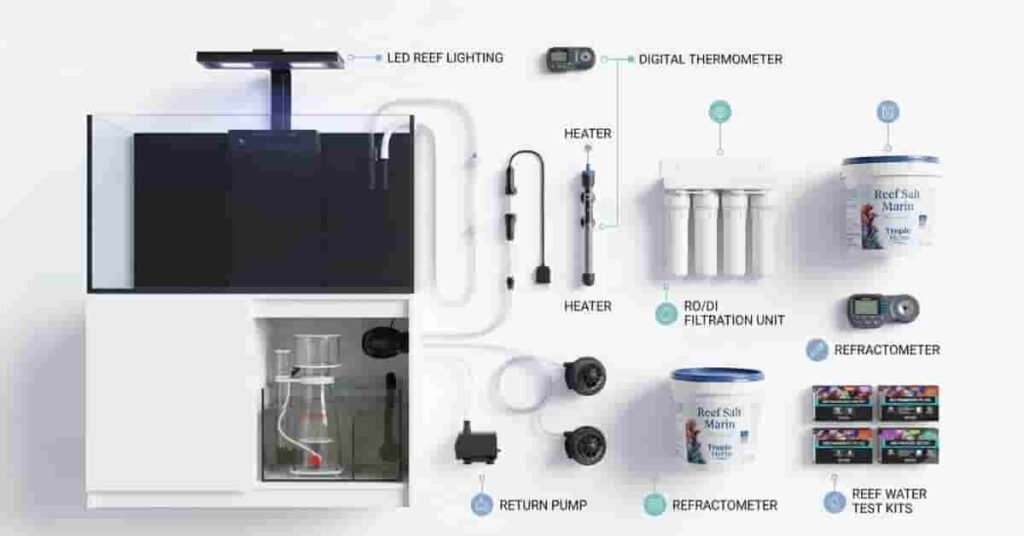
A successful reef aquarium setup starts with choosing the right equipment. Every piece plays an important role in creating a stable environment for fish and corals. While some items are optional, others are essential for maintaining water quality and supporting healthy marine life.
Beginners often feel overwhelmed by the number of products available. The good news is that you don’t need the most expensive equipment to build a thriving reef tank. Focus on reliable essentials first, then upgrade as your experience grows. Investing in quality equipment from the beginning can also save money by reducing maintenance problems and equipment failures.
Below are the most important components you’ll need for a beginner-friendly reef aquarium.
Expert Tip: Buy the best equipment your budget allows. Reliable equipment is easier to maintain and often lasts much longer than cheaper alternatives.
Aquarium Tank
The aquarium tank is the foundation of your reef system. Glass and acrylic are the two most common materials. Glass tanks resist scratches and cost less, while acrylic tanks are lighter and offer better clarity.
For most beginners, a tank between 40 and 75 gallons provides the best balance of stability and maintenance. Larger tanks hold more water, making sudden changes in temperature and water chemistry less likely. They also offer more space for fish, corals, and aquascaping.
Choose a reef-ready tank with built-in overflow if you plan to use a sump. It makes plumbing easier and gives your aquarium a cleaner appearance.
Aquarium Stand
A reef aquarium is much heavier than it looks. Once filled with water, live rock, sand, and equipment, even a medium-sized tank can weigh several hundred pounds.
Choose a sturdy stand designed specifically for aquariums. It should support the full weight of the tank without bending or shifting. Many reef stands also include storage space for equipment, test kits, and maintenance supplies.
If you plan to install a sump, make sure the stand provides enough room underneath for plumbing and easy access.
Sump (Optional vs Recommended)
A sump is an additional tank placed beneath the main aquarium. It increases total water volume and provides space for filtration equipment, heaters, and other accessories.
Although a sump is optional, it is highly recommended for reef aquariums larger than 40 gallons. It improves water stability, keeps equipment hidden, and makes maintenance easier.
Small nano reef tanks can operate successfully without a sump by using hang-on-back filters or all-in-one filtration systems.
Protein Skimmer
A protein skimmer removes dissolved organic waste before it breaks down into harmful nutrients. This helps maintain cleaner water and reduces nitrate buildup.
While some nano reefs can succeed without one, most reef aquariums benefit from using a quality protein skimmer. It improves oxygen exchange and helps keep corals healthy.
Select a skimmer rated slightly larger than your aquarium’s total water volume for the best performance.
Return Pump
A return pump moves water from the sump back into the display tank. It keeps filtration running continuously and maintains healthy water circulation.
Choose a pump that provides the recommended flow rate for your aquarium and sump. Quiet, energy-efficient models are ideal for home aquariums.
Regular cleaning helps maintain consistent performance and extends the pump’s lifespan.
Pro Tip: Install a valve to fine-tune water flow if your pump is more powerful than needed.
Powerheads / Wave Makers
Corals depend on moving water to receive oxygen and nutrients. Powerheads, also called wave makers, create water movement throughout the aquarium.
Proper flow prevents waste from settling on rocks and improves overall water quality. Most reef tanks use two or more powerheads to create random, natural water movement.
Avoid directing strong flow at a single coral for long periods, as it can damage delicate tissue.
Pro Tip: Position powerheads on opposite sides of the tank to eliminate dead spots.
Reef Lighting
Reef lighting is one of the most important investments for a reef aquarium. Many corals contain tiny algae called zooxanthellae that rely on light to produce energy.
Modern LED reef lights are the most popular choice because they are energy efficient, long-lasting, and easy to adjust. Select lighting that matches the types of corals you plan to keep.
Use a timer to maintain a consistent lighting schedule, usually 8–10 hours each day.
Pro Tip: Start with lower light intensity and increase it gradually as corals adjust.
Heater
Marine fish and corals require stable temperatures to stay healthy. A reliable aquarium heater keeps water within the ideal range of 76–78°F (24–26°C).
Choose a heater designed for your aquarium’s water volume. Many hobbyists use two smaller heaters instead of one large unit for added safety.
Regularly inspect heaters for damage and replace them if they stop maintaining a consistent temperature.
Pro Tip: Place the heater in an area with good water flow for even heating.
Thermometer
A thermometer helps you monitor water temperature throughout the day. Even small temperature swings can stress marine fish and corals.
Digital thermometers are generally easier to read and provide more accurate measurements than traditional stick-on models.
Check the temperature daily, especially during seasonal weather changes.
Pro Tip: Compare your thermometer with another model occasionally to verify its accuracy.
RO/DI Water System
Tap water often contains chlorine, phosphates, nitrates, and other impurities that can cause algae problems or harm sensitive corals.
An RO/DI (Reverse Osmosis/Deionization) system removes these contaminants, producing purified water for mixing saltwater and replacing evaporation.
Using RO/DI water is one of the best ways to maintain long-term reef health.
Pro Tip: Replace RO/DI filters on schedule to maintain water purity.
Marine Salt Mix
Marine salt mix transforms purified RO/DI water into seawater by adding essential minerals and trace elements.
Choose a high-quality reef salt formulated for coral aquariums. Follow the manufacturer’s mixing instructions and allow the saltwater to mix completely before adding it to your aquarium.
Always verify salinity with a refractometer before performing water changes.
Pro Tip: Never add dry salt directly into an aquarium containing fish or corals.
Test Kits
Regular water testing is essential for every reef aquarium setup. Test kits help you monitor water chemistry before problems affect your livestock.
At a minimum, beginners should test:
- Salinity
- Ammonia
- Nitrite
- Nitrate
- pH
- Alkalinity
- Calcium
- Magnesium
As your reef matures, consistent testing helps maintain stable water conditions and healthy coral growth.
Choosing the Right Tank Size
Choosing the right tank size is one of the most important decisions in your reef aquarium setup. Many beginners assume smaller tanks are easier to manage because they cost less and take up less space. In reality, larger tanks are often more forgiving because they hold more water, making temperature and water chemistry more stable.
Effective filtration helps keep water quality stable and supports a healthy reef environment. Our Aquarium Filter Setup Guide covers the main filtration options and how to install them correctly.
Your ideal tank size depends on your budget, available space, and the types of fish and corals you want to keep. A small reef aquarium can be beautiful, but it requires closer attention to water quality. Larger systems cost more upfront, yet they provide greater stability and more room for livestock.
The table below compares the most popular reef tank sizes for beginners.
| Tank Size | Best For | Advantages | Disadvantages |
|---|---|---|---|
| Nano Reef (10–15 Gallons) | Small spaces and experienced beginners | Lower cost, compact, easy to fit anywhere | Water changes happen quickly, limited fish choices, less stable |
| 20-Gallon Reef | First-time reef keepers | Affordable, manageable maintenance, enough space for beginner fish | Limited coral and fish capacity compared to larger tanks |
| 40-Gallon Breeder | Most beginners | Excellent water stability, wide footprint for aquascaping, flexible stocking | Requires more equipment and higher initial cost |
| 75+ Gallon Reef | Long-term hobbyists | Very stable water conditions, more livestock options, easier to maintain water chemistry | Higher purchase price, increased electricity and maintenance costs |
Nano Reef Tanks
Nano reef tanks usually hold between 10 and 15 gallons of water. They are popular because they fit easily in apartments, offices, or small homes. Their lower startup cost also attracts many beginners.
However, small water volumes can change quickly. A slight mistake in salinity, temperature, or dosing has a much bigger impact than it would in a larger aquarium. Daily monitoring and consistent maintenance are essential for long-term success.
20-Gallon Reef Tanks
A 20-gallon reef tank offers a good balance between affordability and stability. It provides enough room for a small community of beginner-friendly fish, soft corals, and live rock without becoming difficult to maintain.
Many new hobbyists choose this size because equipment costs remain reasonable while maintenance stays manageable. If you have limited space but want a rewarding reef experience, a 20-gallon aquarium is a solid option.
40-Gallon Breeder Tanks
The 40-gallon breeder is widely considered one of the best reef tank sizes for beginners. Its wide footprint provides plenty of space for creative aquascaping and allows corals to spread naturally.
The extra water volume also helps keep salinity and other water parameters more stable. Although the initial investment is higher than a nano setup, many reef keepers find it easier to maintain over time.
75+ Gallon Reef Tanks
A 75-gallon or larger reef aquarium gives you the greatest flexibility. It can support a wider variety of fish, corals, and invertebrates while providing excellent water stability.
These systems require a larger investment in equipment, salt, and electricity. Water changes also take more time. However, experienced reef keepers often prefer larger tanks because they are more forgiving when minor mistakes happen.
Pros and Cons at a Glance
Choose a Nano Reef if:
- You have limited space.
- You have a smaller budget.
- You’re comfortable with frequent maintenance.
Choose a 20-Gallon if:
- You want an affordable beginner reef.
- You plan to keep a small number of fish and corals.
Choose a 40-Gallon Breeder if:
- You want the best balance of stability and cost.
- You plan to expand your reef over time.
Choose a 75+ Gallon if:
- You have enough space and budget.
- You want a diverse reef with more livestock options.
Step-by-Step Reef Aquarium Setup
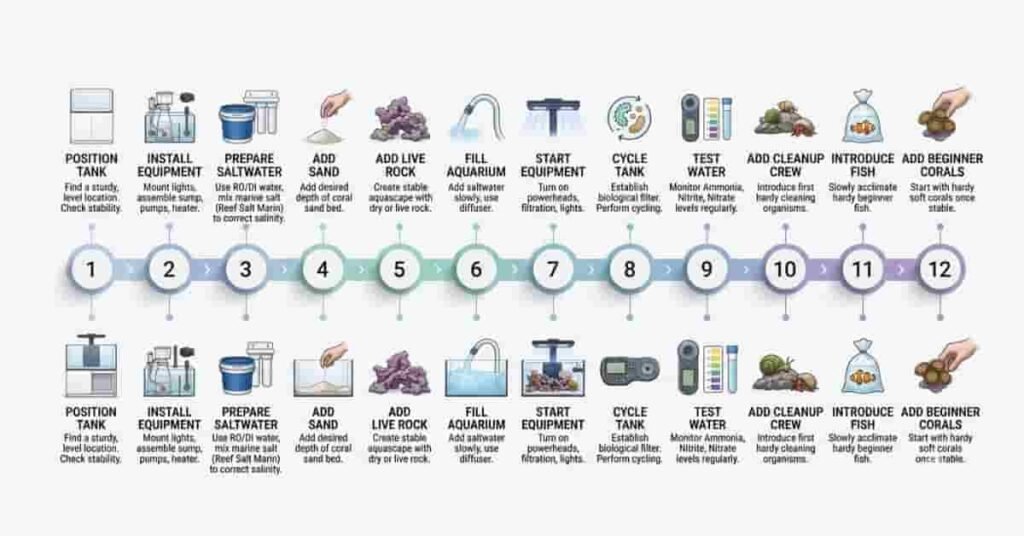
A successful reef aquarium setup takes patience and careful planning. Rushing the process can lead to poor water quality, stressed fish, and unhealthy corals. By following each step in the correct order, you’ll build a stable marine ecosystem that supports long-term success.
Whether you’re setting up your first reef tank or upgrading from freshwater, these beginner-friendly steps will help you avoid common mistakes and create a healthy environment for marine life.
Step 1 – Position the Tank
Choose a sturdy, level surface that can support the full weight of your aquarium. Keep the tank away from direct sunlight, air vents, and high-traffic areas. Excess sunlight can encourage algae growth, while temperature changes can stress fish and corals.
Leave enough space behind and beside the tank for plumbing, maintenance, and equipment.
Step 2 – Install Equipment
Install your essential equipment before adding water. This typically includes the sump (if using one), return pump, protein skimmer, heater, powerheads, thermometer, and reef lighting.
Double-check that all plumbing and electrical connections are secure. It’s much easier to fix problems before the aquarium is filled.
Step 3 – Prepare Saltwater
Always use purified RO/DI water to mix saltwater. Add a high-quality marine salt mix according to the manufacturer’s instructions, then circulate the water with a pump until the salt dissolves completely.
Before adding the water to your aquarium, confirm the salinity with a refractometer. For most reef tanks, aim for a specific gravity of 1.025.
Step 4 – Add Sand
Rinse dry sand if recommended by the manufacturer. Then spread an even layer across the bottom of the aquarium.
Most beginner reef tanks use 1–2 inches of aragonite sand. This provides a natural appearance while supporting beneficial bacteria that help maintain water quality.
Step 5 – Add Live Rock
Live rock forms the biological foundation of an aquarium reef setup. It provides a home for beneficial bacteria and creates hiding places for fish and invertebrates.
Arrange the rocks so water can flow freely around them. Build a stable structure with plenty of open spaces instead of stacking rocks tightly together. Test the structure before adding livestock to ensure it won’t shift.
Step 6 – Fill the Aquarium
Slowly pour the prepared saltwater into the tank. Placing a plate or plastic bag on the sand helps prevent it from being disturbed while filling.
Once the aquarium is full, inspect all plumbing and equipment for leaks before moving to the next step.
Step 7 – Start Equipment
Turn on the return pump, powerheads, heater, and filtration system. Check that water flows properly through the aquarium and sump.
Set the heater to maintain a temperature between 76–78°F (24–26°C). Allow the system to run continuously while the water clears.
Step 8 – Cycle the Reef Tank
Cycling establishes beneficial bacteria that convert harmful ammonia into less harmful compounds through the nitrogen cycle. This process is essential before adding fish or corals.
The cycling period usually takes several weeks. During this time, monitor ammonia, nitrite, and nitrate levels regularly. Wait until ammonia and nitrite reach 0 ppm before adding livestock.
Step 9 – Test Water Parameters
Before adding any animals, test your water to confirm it is stable.
Check these key parameters:
- Salinity
- Temperature
- pH
- Ammonia
- Nitrite
- Nitrate
- Alkalinity
- Calcium
- Magnesium
If any values fall outside the recommended range, correct them before introducing livestock.
Step 10 – Add a Cleanup Crew
Once the tank has finished cycling, introduce a cleanup crew before adding fish. These helpful invertebrates consume leftover food, algae, and other waste.
A beginner cleanup crew may include:
- Snails
- Hermit crabs
- Cleaner shrimp
- Nassarius snails
- Trochus snails
Start with a small group and increase the population only if needed.
Step 11 – Introduce Fish
After the cleanup crew has settled in, begin adding hardy beginner fish. Introduce only one or two fish at a time to avoid overwhelming the biological filter.
Good beginner choices include:
- Ocellaris Clownfish
- Royal Gramma
- Firefish
- Watchman Goby
- Tailspot Blenny
Feed lightly during the first few weeks and continue monitoring water quality.
Step 12 – Add Beginner Corals
If you’re learning how to setup a reef aquarium, wait until the aquarium has remained stable for several weeks before adding corals.
Start with hardy species such as:
- Zoanthids
- Mushroom Corals
- Green Star Polyps
- Leather Corals
- Xenia
Place each coral according to its lighting and water flow requirements. Avoid making major changes during the first few months, as stability encourages healthy coral growth.
Water Parameters for a Healthy Reef Tank
Stable water parameters are the foundation of every successful reef aquarium setup. Even the best equipment cannot keep fish and corals healthy if water chemistry changes too often. Unlike freshwater fish, most reef animals are sensitive to sudden swings in salinity, temperature, and key minerals.
Instead of chasing perfect numbers, aim for consistent values within the recommended range. Testing your water regularly allows you to spot small changes before they become serious problems. This simple habit helps prevent coral stress, algae outbreaks, and fish health issues.
Use the table below as a quick reference for the ideal water parameters in a beginner reef aquarium.
| Water Parameter | Ideal Range | Why It Matters |
|---|---|---|
| Salinity | 1.024–1.026 SG (1.025 is ideal) | Maintains proper osmotic balance for fish and corals. |
| Temperature | 76–78°F (24–26°C) | Supports healthy coral growth and reduces stress. |
| pH | 8.1–8.4 | Essential for coral health and biological processes. |
| Alkalinity | 8–12 dKH | Helps stabilize pH and supports coral skeleton growth. |
| Calcium | 400–450 ppm | Needed for hard corals, coralline algae, and other reef organisms. |
| Magnesium | 1,250–1,350 ppm | Keeps calcium and alkalinity balanced. |
| Ammonia | 0 ppm | Even small amounts are toxic to marine life. |
| Nitrite | 0 ppm | Should remain undetectable after the tank has cycled. |
| Nitrate | Below 10 ppm (5–10 ppm is acceptable for many beginner reefs) | High nitrate levels can encourage algae and stress sensitive corals. |
Why These Parameters Matter
Every parameter affects the health of your reef aquarium. Stable salinity and temperature reduce stress on fish, while proper calcium, magnesium, and alkalinity allow corals to build strong skeletons. At the same time, keeping ammonia and nitrite at 0 ppm protects all marine life from toxic conditions.
Testing becomes especially important during the first few months. As your aquarium matures, regular water changes and proper equipment help maintain stable conditions with less effort.
Best Beginner Corals
Choosing hardy corals is one of the smartest decisions you can make during your reef aquarium setup. Beginner-friendly corals are more forgiving of small mistakes and adapt well to new aquariums. They also require less demanding care than many advanced coral species.
Start with a few easy corals and allow your reef tank to mature before adding more sensitive varieties. This approach helps you gain experience while keeping your aquarium stable.
Zoanthids
Zoanthids are among the easiest corals for beginners. They grow in colorful colonies and come in a wide range of patterns. These corals tolerate different lighting conditions and adapt well to most reef aquariums.
Place them in areas with moderate water flow and avoid overcrowding nearby corals as they spread over time.
Mushroom Corals
Mushroom corals are another excellent choice for new reef keepers. They thrive under low to moderate lighting and usually require very little maintenance.
These soft corals add bright colors to the aquarium and recover well from minor changes in water conditions.
Leather Corals
Leather corals are hardy, fast-growing soft corals that suit beginner reef tanks. They prefer moderate lighting and gentle to moderate water movement.
Occasionally, leather corals develop a waxy coating before shedding it naturally. This is normal and helps keep the coral healthy.
Green Star Polyps
Green Star Polyps are known for their bright green tentacles and constant movement in the current. They grow quickly and create a beautiful waving effect.
Because they spread rapidly, many hobbyists place them on isolated rocks to prevent them from covering other corals.
Xenia
Xenia is famous for its pulsing polyps that create constant movement throughout the aquarium. It grows best in stable water conditions with moderate lighting and flow.
Although easy to keep, Xenia can spread quickly, so leave enough space around the colony.
Best Fish for a Beginner Reef Aquarium
The best beginner reef fish are peaceful, hardy, and easy to care for. They adapt well to stable reef aquariums and usually coexist with soft corals and other community fish. Avoid adding too many fish at once, as your biological filter needs time to adjust.
Start with a small number of compatible species and increase your stocking gradually. This reduces stress on the aquarium and helps maintain good water quality.
Ocellaris Clownfish
Ocellaris Clownfish are one of the most popular reef fish in the world. They are hardy, colorful, and easy to feed, making them ideal for first-time reef keepers.
Royal Gramma
Royal Grammas display vibrant purple and yellow colors. They are peaceful and spend much of their time swimming around caves and rockwork.
Firefish
Firefish are calm, reef-safe fish that enjoy open swimming areas and secure hiding places. Keep a lid on your aquarium because they can jump when startled.
Watchman Goby
Watchman Gobies spend most of their time near the substrate. They are peaceful and help create activity around the bottom of the aquarium.
Blenny
Many Blenny species are excellent beginner fish. They have unique personalities and often graze on algae growing on rocks and glass, making them a helpful addition to reef tanks.
Reef Aquarium Maintenance Schedule
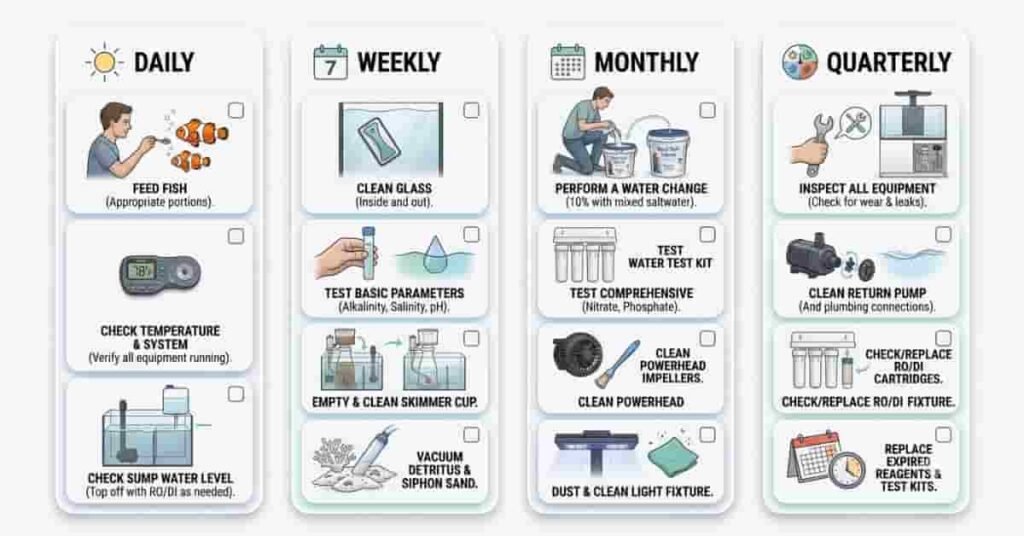
A consistent maintenance routine keeps your reef aquarium setup healthy and stable. Small tasks performed regularly are much easier than fixing major problems later. Following a schedule also helps maintain water quality, reduce algae growth, and support healthy fish and corals.
Use the maintenance checklist below as a simple routine for your reef tank.
| Frequency | Maintenance Tasks |
|---|---|
| Daily | Check fish and coral health, verify water temperature, inspect equipment, top off evaporated water with RO/DI water, feed fish appropriately. |
| Weekly | Test water parameters, clean aquarium glass, empty and clean the protein skimmer cup, perform a 10–15% water change if needed, inspect powerheads and pumps. |
| Monthly | Replace or rinse filter media as recommended, clean powerheads and return pump, inspect plumbing and electrical connections, recalibrate equipment if necessary. |
| Quarterly | Deep clean pumps and skimmer, replace worn equipment parts if needed, inspect lighting performance, review livestock growth and aquascape stability. |
Sticking to a maintenance routine helps prevent many common reef aquarium problems before they start. It also keeps water chemistry stable, which is the key to healthy fish and thriving corals.
Common Reef Aquarium Mistakes
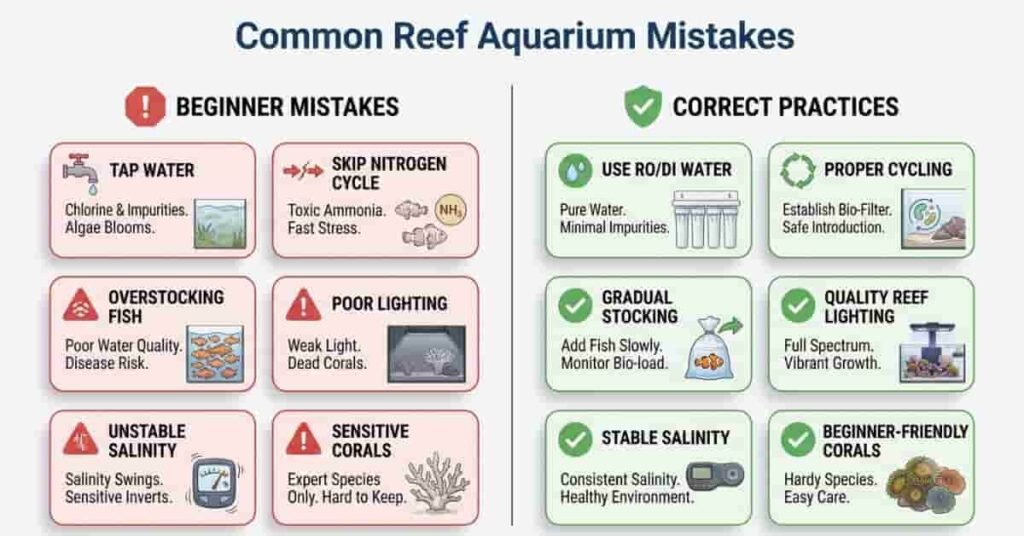
Even the best reef aquarium setup can run into problems if you skip important steps. Most beginner mistakes are easy to avoid with proper planning and patience. Learning what not to do will save you time, money, and frustration while keeping your fish and corals healthy.
Here are the most common mistakes new reef keepers make and how to avoid them.
Using Tap Water
Tap water often contains chlorine, phosphates, nitrates, and other impurities that can fuel algae growth and harm sensitive corals. Always use RO/DI water when mixing saltwater or topping off evaporation.
Skipping the Nitrogen Cycle
Adding fish before the aquarium finishes cycling is one of the biggest beginner mistakes. Beneficial bacteria need time to establish and remove toxic ammonia and nitrite.
Wait until both ammonia and nitrite measure 0 ppm before introducing livestock.
Overstocking Too Soon
Adding too many fish at once places extra strain on the biological filter. This can lead to ammonia spikes and poor water quality.
Introduce new fish gradually and give the aquarium time to adjust between additions.
Poor Lighting
Corals rely on proper lighting to grow and stay healthy. Weak lights can slow coral growth, while lights that are too powerful may cause stress or bleaching.
Choose reef-specific LED lighting that matches the coral species you plan to keep.
Ignoring Salinity
Salinity changes happen as water evaporates. If you don’t replace evaporated water with RO/DI freshwater, salinity will slowly rise and stress marine life.
Check salinity regularly using a refractometer.
Buying Sensitive Corals First
Many colorful SPS and LPS corals require stable water conditions and more experience. Starting with these species often leads to disappointment.
Instead, begin with hardy soft corals such as Zoanthids, Mushroom Corals, or Leather Corals.
Expert Tip: Make only one major change at a time. If something goes wrong, you’ll know exactly what caused it.
Troubleshooting Common Reef Tank Problems
Every reef keeper faces challenges from time to time. The key is identifying the problem early and fixing the root cause instead of treating only the symptoms. Regular testing and consistent maintenance prevent most issues before they become serious.
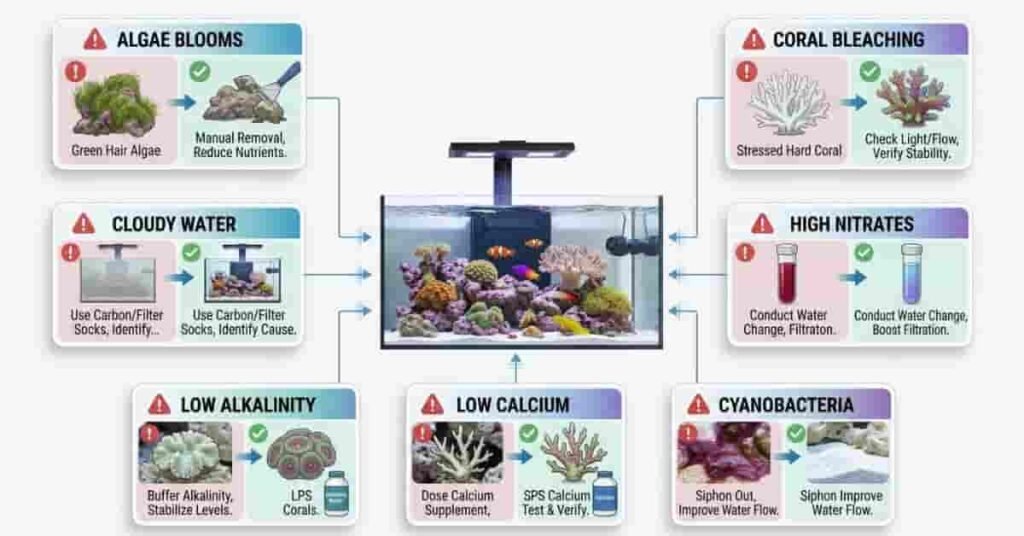
Use this quick troubleshooting guide to solve some of the most common reef aquarium problems.
| Problem | Possible Cause | Recommended Solution |
|---|---|---|
| Algae Blooms | Excess nutrients, overfeeding, old lighting | Reduce feeding, perform water changes, use RO/DI water, improve filtration. |
| Coral Bleaching | Excessive light, unstable temperature, poor water quality | Reduce light intensity, stabilize water parameters, check temperature. |
| High Nitrates | Overstocking, overfeeding, poor maintenance | Increase water changes, clean filtration, feed less, improve nutrient export. |
| Cyanobacteria | Excess nutrients and low water flow | Increase water circulation, reduce nutrients, siphon affected areas. |
| Low Calcium | Heavy coral consumption, insufficient supplementation | Test calcium regularly and use a reef-safe calcium supplement if needed. |
| Low Alkalinity | Coral growth and inconsistent maintenance | Monitor alkalinity and adjust gradually using a reef buffer if necessary. |
| Cloudy Water | Bacterial bloom, disturbed sand, suspended particles | Check filtration, avoid overfeeding, allow the tank to settle, perform a partial water change if needed. |
Most reef tank problems develop gradually rather than overnight. Watching your fish and corals every day helps you notice unusual behavior before water tests reveal a problem.
Conclusion
Building a successful reef aquarium setup takes planning, patience, and consistent care, but the rewards are well worth the effort. By choosing the right equipment, following the nitrogen cycle, maintaining stable water parameters, and starting with hardy fish and beginner-friendly corals, you’ll create a healthy reef that can thrive for years. Whether you’re learning how to setup a reef aquarium or planning your first aquarium reef setup, remember that stability matters more than perfection. Every experienced reef keeper started as a beginner, and steady progress leads to lasting success. If you found this guide helpful, share it with fellow aquarium enthusiasts, leave your questions or experiences in the comments, and explore our other beginner-friendly reef and aquarium care guides to continue your reef-keeping journey.
Frequently Asked Questions
What size reef tank is best for beginners?
How long does a reef tank take to cycle?
Can I use tap water in a reef aquarium?
Do I need a sump for a reef aquarium?
When can I add corals to a new reef tank?
How much live rock do I need for a reef aquarium?
Can beginners keep SPS corals?
How often should I test my reef aquarium water?
What are the easiest corals for a beginner reef tank?
How much does a beginner reef aquarium cost?

The Aquarium Advisor Team was founded by Daniel Carter (Austin, Texas, USA) and Emily Parker (Tampa, Florida, USA), two passionate aquarium enthusiasts dedicated to helping hobbyists build healthy and thriving aquariums.
They created AquariumAdvisor.com to share practical aquarium guides and professional online calculators. Every calculator is developed with experienced software developers to ensure accurate, reliable, and easy-to-use results for aquarium owners of all experience levels.