
Table of Contents
Introduction
Did you know a beautiful new aquarium can become dangerous for fish in just a few days?
The aquarium nitrogen cycle is the most important process every beginner should understand before adding fish. Many new aquarium owners in the USA lose fish because they skip aquarium cycling or rush the setup. Without beneficial bacteria, harmful ammonia quickly builds up and creates an unsafe environment.
The good news is that learning the nitrogen cycle in aquarium care is easier than it sounds. Once you understand how the process works, you can build a healthy, stable tank from the very beginning.
In this guide, you’ll learn what the aquarium nitrogen cycle is, why every new tank must be cycled, and how ammonia changes into nitrite and then nitrate. You’ll also discover how long the aquarium cycling process takes, how to grow beneficial bacteria, and how to know when your tank is safe for fish. By the end, you’ll have the confidence to start your aquarium the right way and avoid costly beginner mistakes.
What Is the Aquarium Nitrogen Cycle?
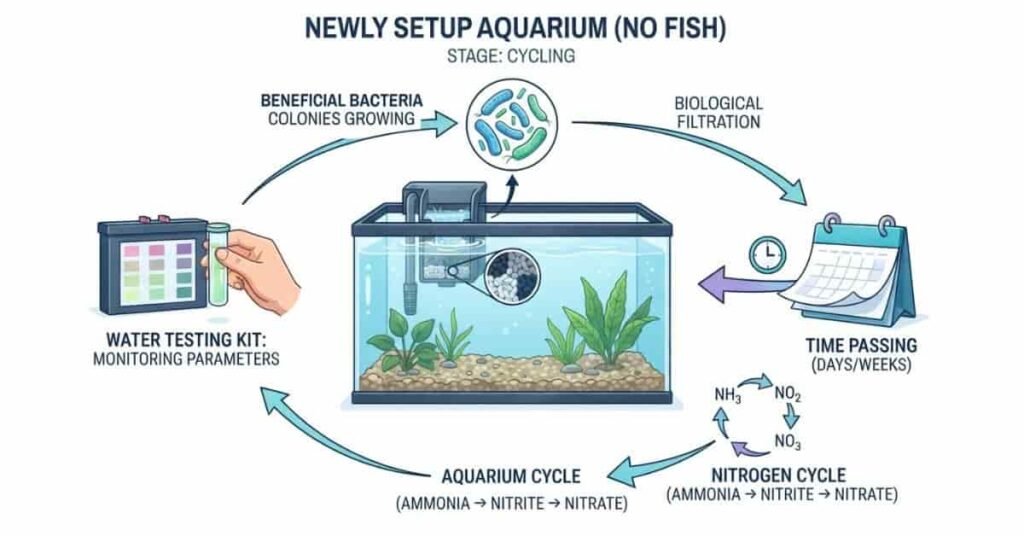
The aquarium nitrogen cycle is a natural biological process that keeps aquarium water safe for fish and other aquatic life. It works by turning harmful waste into less toxic substances with the help of beneficial bacteria. Every new aquarium must complete this process before it can safely support fish.
When fish produce waste or leftover food starts to decay, it releases ammonia into the water. Ammonia is highly toxic, even in small amounts. As the cycle develops, helpful bacteria grow inside the filter, gravel, decorations, and other surfaces. These bacteria convert ammonia into nitrite and then into nitrate.
Nitrate is much less harmful than ammonia or nitrite. Regular water changes and live plants help remove excess nitrate, keeping the aquarium healthy over time. This entire process is also known as aquarium cycling or the aquarium biological cycle.
Many beginners think clean-looking water means the tank is ready. However, clear water does not mean beneficial bacteria are established. Testing the water is the only reliable way to confirm the nitrogen cycle has finished.
Simple Explanation for Beginners
Think of the nitrogen cycle as your aquarium’s natural cleaning system. Instead of removing waste by itself, the tank depends on billions of microscopic bacteria to break harmful chemicals into safer ones. Without these bacteria, toxic waste quickly builds up and stresses or kills fish.
The cycle follows a simple path:
- Fish waste, uneaten food, and dead plants produce ammonia.
- Beneficial bacteria convert ammonia into nitrite.
- A second group of bacteria changes nitrite into nitrate.
- Water changes and live plants remove excess nitrate.
For beginners, the most important lesson is simple: never add a full stock of fish until the bacteria have established themselves. Waiting a few weeks now can prevent expensive fish losses later.
Pro Tip: Keep a liquid water test kit on hand during cycling. It helps you track ammonia, nitrite, and nitrate as the cycle progresses.
Why the Nitrogen Cycle Matters
The nitrogen cycle creates a stable and healthy environment where fish can thrive. Without it, harmful toxins build up quickly and damage fish gills, weaken their immune systems, and increase stress. Even hardy beginner fish struggle in an uncycled aquarium.
A fully cycled tank keeps ammonia and nitrite at 0 ppm while allowing a small amount of nitrate to remain. This balance shows that beneficial bacteria are working correctly and continuously processing waste.
Many experienced aquarists consider cycling the most important step in aquarium setup. Spending extra time before adding fish leads to healthier livestock, fewer water quality problems, and easier long-term maintenance.
Pro Tip: A healthy filter is the heart of the aquarium biological cycle. Never replace all filter media at the same time because it removes much of the beneficial bacteria.
What Happens If You Skip Cycling?
Skipping aquarium cycling is one of the most common beginner mistakes. Without beneficial bacteria, ammonia begins rising almost immediately after fish enter the tank. Soon after, dangerous nitrite levels also increase. Both chemicals are highly toxic and can cause serious health problems.
Fish exposed to these toxins may gasp at the surface, lose their appetite, become inactive, or develop red and irritated gills. In severe cases, they may not survive the first few days. These losses are often called New Tank Syndrome because they occur before the nitrogen cycle is complete.
Although emergency water changes can reduce toxin levels, they do not replace the beneficial bacteria needed for long-term stability. The safest approach is to complete the aquarium cycle before adding most fish. Patience during the first few weeks creates a healthier aquarium that is easier to maintain for years.
Pro Tip: If you must perform a fish-in cycle, test the water daily and complete partial water changes whenever ammonia or nitrite rises above safe levels.
How the Aquarium Nitrogen Cycle Works
The aquarium nitrogen cycle is a step-by-step process that transforms toxic fish waste into safer compounds. This happens naturally as beneficial bacteria grow throughout your aquarium. These bacteria live mainly in the filter, substrate, decorations, and other hard surfaces where water flows.
The cycle has three main stages. Each stage depends on a different type of beneficial bacteria. Until all three stages are complete, harmful chemicals can build up and put fish at risk. Understanding these stages helps you know what is happening inside your tank and why patience is so important during aquarium cycling.
Once the cycle finishes, your aquarium can process waste continuously. Ammonia and nitrite stay at safe levels, while nitrate remains under control through regular maintenance. This balance creates a healthier environment for fish and makes long-term aquarium care much easier.
Stage 1 – Ammonia Builds Up
The first stage of the ammonia cycle aquarium begins when organic waste starts breaking down. In a new aquarium, there are not enough beneficial bacteria to process this waste. As a result, ammonia quickly builds up in the water.
Common sources of ammonia include:
- Fish waste
- Uneaten fish food
- Decaying plants
- Dead fish or snails
- Other decomposing organic matter
Ammonia is extremely toxic, even at low levels. It can burn fish gills, damage internal organs, and make it difficult for fish to breathe. Young fish and sensitive species are especially vulnerable.
During the first week of aquarium cycling, ammonia usually rises before beneficial bacteria begin multiplying. This increase is normal, but it also shows why adding many fish too early is risky.
Pro Tip: Test ammonia every few days during cycling. A liquid test kit provides more accurate readings than most test strips.
Stage 2 – Nitrite Forms
As ammonia levels increase, Nitrosomonas bacteria begin to grow naturally. These helpful bacteria feed on ammonia and convert it into nitrite. This is an important milestone because it shows the first group of beneficial bacteria is becoming established.
Although ammonia starts dropping, nitrite creates a new challenge. Nitrite is also highly toxic and should never remain in the aquarium for long. It enters the fish’s bloodstream and reduces its ability to carry oxygen. Even healthy fish can become stressed when nitrite levels rise.
Many beginners think their aquarium is fully cycled once ammonia reaches zero. However, the process is only halfway complete. Nitrite must also fall to zero before the tank becomes safe for most fish.
Pro Tip: Don’t stop testing when ammonia disappears. Continue checking nitrite until it consistently reads 0 ppm.
Stage 3 – Nitrate Forms
The final stage of the aquarium nitrate cycle begins when Nitrobacter and Nitrospira bacteria become established. These bacteria convert toxic nitrite into nitrate, which is much less harmful to aquarium fish.
Unlike ammonia and nitrite, nitrate can remain at low levels without causing immediate health problems. However, nitrate slowly accumulates over time. If it becomes too high, fish may experience stress, poor growth, and increased disease risk.
The best way to control nitrate is through regular aquarium maintenance. Most aquarists lower nitrate by performing partial water changes every week or two. Live aquatic plants also absorb nitrate as a nutrient, helping improve water quality naturally.
When your water tests show 0 ppm ammonia, 0 ppm nitrite, and a measurable amount of nitrate, the nitrogen cycle is complete. Your aquarium is now biologically ready for fish, although you should still add livestock gradually.
Aquarium Nitrogen Cycle Diagram
Understanding the aquarium nitrogen cycle diagram makes aquarium cycling much easier. Instead of memorizing scientific terms, you can follow the flow of waste as it moves through your aquarium. Every healthy tank follows the same natural process, whether it is freshwater or saltwater.
The cycle starts when fish produce waste or leftover food begins to decompose. This waste releases ammonia, which is highly toxic to fish. As beneficial bacteria grow, they convert ammonia into nitrite and then nitrate. Finally, regular water changes and live plants remove excess nitrate, helping maintain safe water quality.
The simple flow below shows how the nitrogen cycle aquarium diagram works.
Aquarium Nitrogen Cycle Infographic
🐟 Fish Waste
      │
      ▼
🟡 Ammonia (NH₃)
      │
      │ Beneficial Bacteria
      │ (Nitrosomonas)
      ▼
🟠 Nitrite (NO₂⁻)
      │
      │ Beneficial Bacteria
      │ (Nitrobacter / Nitrospira)
      ▼
🟢 Nitrate (NO₃⁻)
      │
      ├──────────────► 🌿 Live Plants absorb nitrate
      │
      ▼
💧 Partial Water Changes remove excess nitrate
      │
      ▼
✅ Clean, Healthy Aquarium Water
This process never stops. As long as fish continue producing waste, beneficial bacteria keep converting harmful chemicals into safer compounds. That is why a healthy biological filter is essential for every aquarium.
Remember that nitrate is much safer than ammonia and nitrite, but it should not build up forever. Weekly partial water changes and healthy plant growth help keep nitrate at safe levels and support long-term fish health.
Aquarium Cycle Stages Explained
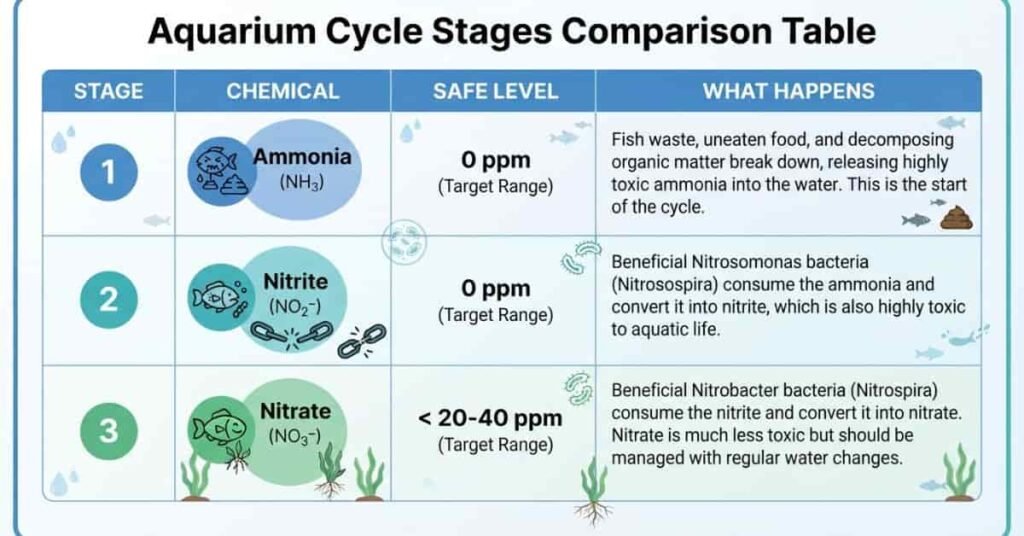
The aquarium cycle stages follow a predictable pattern that every new aquarium must complete. Each stage allows a different group of beneficial bacteria to grow and process waste. Understanding these stages helps you know what your water test results mean and when your aquarium is ready for fish.
During the first stage, ammonia rises because fish waste and decaying organic matter have nowhere to go. As beneficial bacteria develop, ammonia drops while nitrite increases. Finally, a second group of bacteria converts nitrite into nitrate. At this point, your aquarium has completed the nitrogen cycle and can safely process waste.
The table below summarizes each stage of the aquarium cycle.
| Stage | Chemical | Safe Level | What Happens |
|---|---|---|---|
| Stage 1 | Ammonia (NH₃/NH₄⁺) | 0 ppm | Fish waste, uneaten food, and decaying plants release toxic ammonia. |
| Stage 2 | Nitrite (NO₂⁻) | 0 ppm | Nitrosomonas bacteria convert ammonia into nitrite, which is also highly toxic. |
| Stage 3 | Nitrate (NO₃⁻) | Below 20–40 ppm for most freshwater aquariums | Nitrobacter and Nitrospira convert nitrite into nitrate. Water changes and live plants remove excess nitrate. |
Every aquarium moves through these stages at its own pace. Temperature, filter performance, ammonia source, and bacterial growth all affect how quickly the cycle finishes. The process usually takes several weeks, so patience is essential.
What Is Aquarium Cycling?
Aquarium cycling is the process of growing beneficial bacteria before adding a full stock of fish. These bacteria establish the nitrogen cycle by converting toxic ammonia into nitrite and then nitrate. Without this biological process, harmful waste quickly builds up and creates dangerous water conditions.
Many beginners think aquarium cycling means letting a new tank sit for a few weeks. In reality, time alone does not cycle an aquarium. Beneficial bacteria need a steady ammonia source to grow and multiply. They naturally colonize your filter media, gravel, rocks, decorations, and other surfaces where oxygen-rich water flows.
Once these bacteria become established, your aquarium can continuously process fish waste. This natural filtration system is called the aquarium biological cycle. It is the foundation of every healthy freshwater and saltwater aquarium.
A completed cycle does not mean your work is finished. Beneficial bacteria need oxygen, water flow, and a stable environment to survive. Cleaning the filter correctly, avoiding untreated tap water, and performing regular maintenance help preserve these helpful microbes for years.
Think of aquarium cycling as building the biological engine of your tank. Once that engine is running, it works around the clock to keep water safer and healthier for your fish.
How Long Does the Nitrogen Cycle Take?
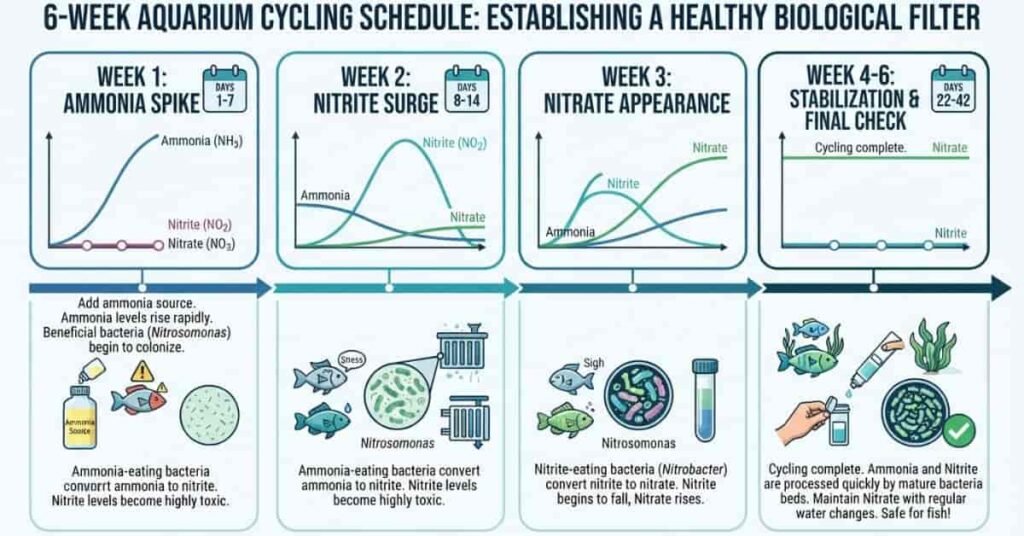
Most aquariums complete the aquarium nitrogen cycle in 4 to 6 weeks, but every tank is different. Some aquariums cycle faster, while others need more time before beneficial bacteria become fully established. The exact timeline depends on water temperature, ammonia source, filter performance, and bacterial growth.
Instead of watching the calendar, rely on water test results. Your aquarium is fully cycled only when ammonia and nitrite consistently test at 0 ppm, while nitrate is present. These readings show that beneficial bacteria can process waste safely and continuously.
The timeline below explains what usually happens during each stage of aquarium cycling.
| Timeline | What Usually Happens |
|---|---|
| Week 1 | Ammonia begins rising as fish waste or another ammonia source enters the aquarium. Very few beneficial bacteria are present. |
| Week 2 | Nitrosomonas bacteria start growing. Ammonia begins dropping while nitrite levels increase. |
| Week 3 | Nitrite reaches its highest level. Nitrobacter and Nitrospira bacteria begin converting nitrite into nitrate. |
| Week 4–6 | Ammonia and nitrite reach 0 ppm, nitrate becomes detectable, and the aquarium is considered fully cycled. |
Several factors can change how quickly your aquarium cycles.
Factors that may speed up cycling:
- Using seeded filter media from an established aquarium
- Adding bottled beneficial bacteria
- Maintaining stable water temperatures
- Running the filter continuously
- Providing a consistent ammonia source
Factors that may slow down cycling:
- Low water temperatures
- Chlorinated tap water
- Turning the filter off for long periods
- Cleaning filter media with untreated tap water
- Inconsistent ammonia levels
Every aquarium develops at its own pace, so avoid rushing the process. Adding fish before the cycle finishes often leads to dangerous ammonia or nitrite spikes. Waiting until the bacteria are fully established gives your fish the best chance of staying healthy.
How to Start the Aquarium Nitrogen Cycle
Starting the aquarium nitrogen cycle correctly is the most important step in setting up a healthy aquarium. The goal is to grow beneficial bacteria that naturally convert toxic ammonia into safer nitrate. Rushing this process often leads to poor water quality and unhealthy fish, so patience is essential.
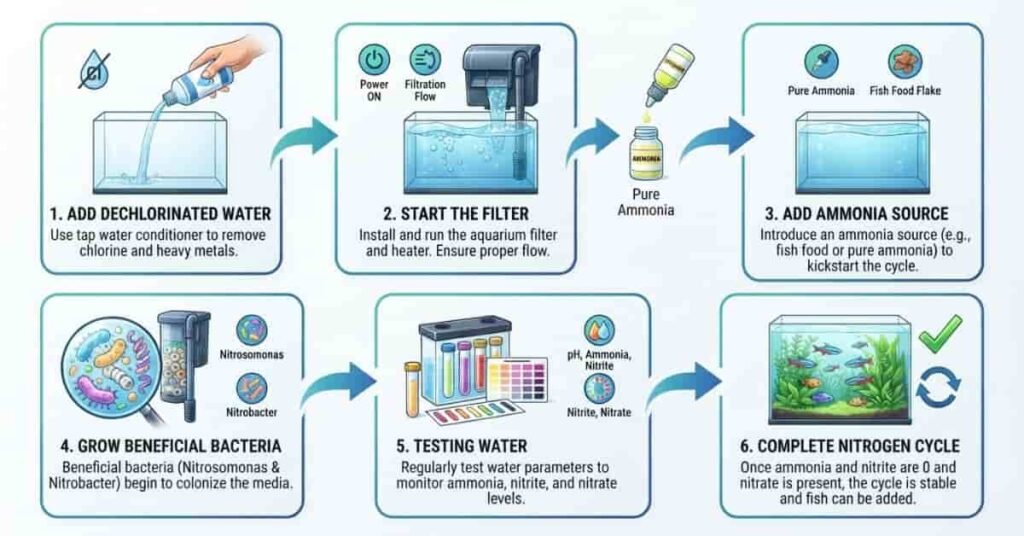
Follow these six simple steps to begin aquarium cycling the right way.
Step 1 – Add Dechlorinated Water
Fill your aquarium with fresh water and always use a quality water conditioner to remove chlorine and chloramine. These chemicals kill beneficial bacteria before they have a chance to grow. Once the tank is full, install your heater if needed and adjust the temperature for your chosen fish species.
Step 2 – Start the Filter
Turn on the aquarium filter and let it run continuously. Beneficial bacteria grow mainly inside the filter because oxygen-rich water flows through the filter media all day. Never switch the filter off for long periods during cycling because bacteria need oxygen to survive.
Step 3 – Add an Ammonia Source
Beneficial bacteria cannot grow without food. Add a safe ammonia source to feed them. Most beginners choose one of these options:
- Pure aquarium-safe ammonia
- Fish food that slowly decomposes
- A fishless cycling product
Avoid adding too much ammonia because very high levels can slow bacterial growth.
Step 4 – Grow Beneficial Bacteria
As ammonia enters the aquarium, beneficial bacteria begin colonizing the filter, substrate, rocks, and decorations. You can let them develop naturally or use a trusted bottled bacteria product to help establish colonies more quickly. Keep water temperature stable and ensure good water circulation throughout the tank.
Step 5 – Test Water Regularly
Use a liquid aquarium test kit every two or three days to monitor:
- Ammonia
- Nitrite
- Nitrate
- pH
Watching these values change helps you track the progress of the nitrogen cycle and confirms when beneficial bacteria are becoming established.
Step 6 – Wait Until the Cycle Completes
Your aquarium is ready only when water tests show:
- Ammonia: 0 ppm
- Nitrite: 0 ppm
- Nitrate: Present
At this stage, your biological filter can safely process fish waste. Add fish gradually instead of stocking the entire aquarium at once. This gives the bacterial colony time to adjust to the increasing waste load.
Pro Tip
Adding all your fish on the first day can overwhelm even a fully cycled aquarium. Introduce a few fish at a time and continue testing the water during the first several weeks.
Beneficial Bacteria Explained
Beneficial bacteria are the foundation of the aquarium biological cycle. These microscopic organisms remove harmful waste from the water and keep your aquarium safe for fish. Without them, toxic ammonia and nitrite would quickly build up, even in crystal-clear water.
Many beginners think these bacteria float freely in the aquarium. In reality, they attach themselves to hard surfaces where oxygen-rich water flows. That is why a healthy filter is so important.
Where Do Beneficial Bacteria Live?
Most beneficial bacteria grow on:
- Filter media
- Sponge filters
- Ceramic rings
- Bio balls
- Gravel and substrate
- Rocks and driftwood
- Aquarium decorations
- Glass surfaces
The largest bacterial colonies usually develop inside the filter because it provides constant water flow and plenty of oxygen.
Why Filters Are So Important
An aquarium filter does much more than remove debris. It also provides the ideal home for beneficial bacteria. This process is called biological filtration.
As water passes through the filter, bacteria convert:
- Ammonia → Nitrite
- Nitrite → Nitrate
Without a healthy biological filter, the nitrogen cycle cannot continue properly.
Why Tap Water Can Kill Beneficial Bacteria
Most municipal tap water contains chlorine or chloramine to make it safe for people. Unfortunately, these disinfectants also kill the bacteria that keep your aquarium healthy.
Never rinse filter media directly under untreated tap water. Instead, clean it gently in a bucket of old aquarium water during a water change. This removes debris while protecting the bacterial colony.
Replacing all filter media at once can also remove most of your beneficial bacteria. Change filter media gradually unless the manufacturer recommends otherwise.
Aquarium Water Parameters During Cycling
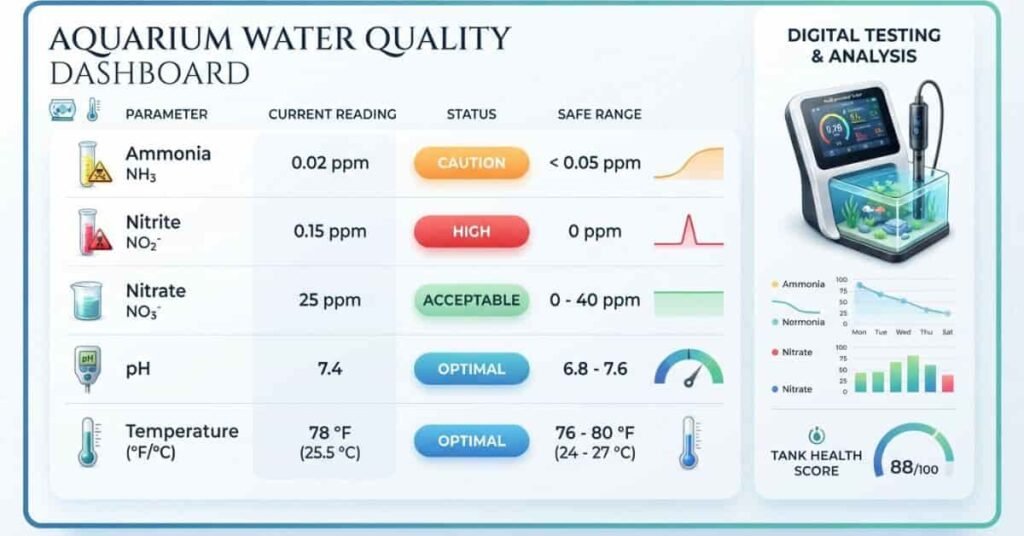
Monitoring your water is the best way to track the aquarium nitrogen cycle. Water may look crystal clear, but harmful chemicals can still be present. Regular testing shows whether beneficial bacteria are growing and tells you when your aquarium is safe for fish.
During cycling, test your water every two or three days with a reliable liquid test kit. Watch how ammonia rises first, followed by nitrite, and finally nitrate. This pattern confirms that the biological cycle is progressing correctly.
Use the reference table below as a general guide during aquarium cycling.
| Water Parameter | Recommended Level During a Completed Cycle | Why It Matters |
|---|---|---|
| Ammonia (NH₃/NH₄⁺) | 0 ppm | Toxic to fish. Beneficial bacteria should remove it completely. |
| Nitrite (NO₂⁻) | 0 ppm | Also highly toxic. It should disappear before adding most fish. |
| Nitrate (NO₃⁻) | Below 20–40 ppm (freshwater community tanks) | Indicates the nitrogen cycle is working. Water changes help control it. |
| pH | Stable for your chosen species (commonly 6.5–8.0) | Sudden pH changes can slow bacterial growth and stress fish. |
| Temperature | 75–82°F (24–28°C) for most tropical aquariums | Warm, stable water encourages beneficial bacteria to multiply. |
Keep in mind that different fish species may require different water parameters after the aquarium finishes cycling. Always research the specific needs of your livestock before making adjustments.
Freshwater vs Saltwater Nitrogen Cycle
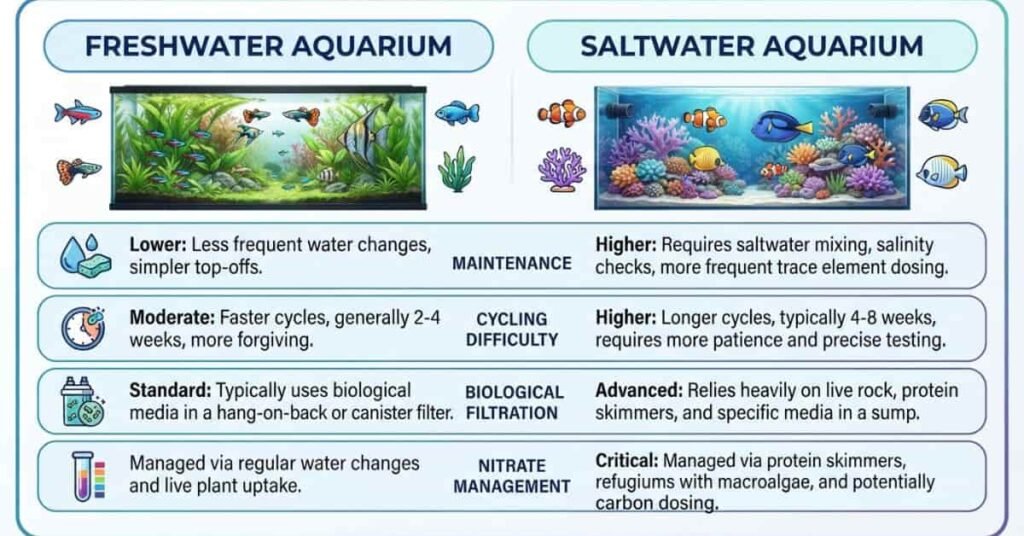
The nitrogen cycle works the same way in every aquarium. Whether you keep freshwater fish, marine species, or a planted aquarium, beneficial bacteria still convert ammonia into nitrite and then nitrate. The biggest differences involve equipment, maintenance, and the speed at which the aquarium becomes stable.
Saltwater aquariums often require more patience because marine animals are generally more sensitive to water quality. Planted freshwater tanks may control nitrate more effectively because healthy plants naturally absorb it as fertilizer.
The comparison below highlights the main differences.
| Aquarium Type | How the Nitrogen Cycle Works | Special Considerations |
| Freshwater | Standard nitrogen cycle with beneficial bacteria. | Usually the easiest option for beginners. |
| Saltwater | Same biological process. | Requires stable salinity and careful water testing. |
| Marine Reef | Identical nitrogen cycle with greater sensitivity. | Corals and invertebrates need excellent water quality. |
| Planted Aquarium | Same nitrogen cycle plus plant nutrient uptake. | Live plants help reduce nitrate naturally. |
Although the process is identical, patience remains the key to success. Never rush the cycling stage simply because the water looks clean.
Common Aquarium Cycling Mistakes
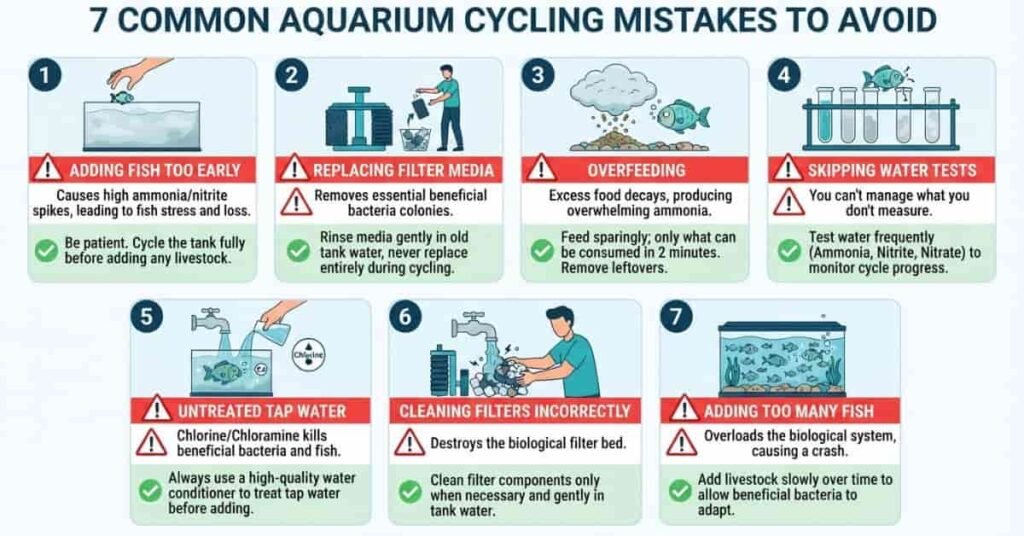
Many aquarium problems begin with simple mistakes during the cycling process. Avoiding these errors helps beneficial bacteria grow properly and gives your fish a much healthier start. Most of these problems are easy to prevent with patience and regular water testing.
1. Adding Fish Too Early
A new aquarium may look ready after a few days, but harmful ammonia and nitrite can still be present. Always confirm the cycle with water tests before adding most fish.
2. Cleaning the Filter Incorrectly
Never wash filter media under untreated tap water. Chlorine and chloramine can kill beneficial bacteria and slow the nitrogen cycle.
3. Replacing All Filter Media
Changing every filter cartridge or sponge at once removes much of your biological filtration. Replace filter media gradually whenever possible.
4. Overfeeding
Extra food breaks down into ammonia and creates unnecessary waste. Feed lightly while the aquarium is cycling to avoid large ammonia spikes.
5. Skipping Water Tests
Guessing is never a good strategy. Regular testing is the only reliable way to monitor ammonia, nitrite, and nitrate throughout aquarium cycling.
6. Using Untreated Tap Water
Always treat tap water with a quality water conditioner before adding it to your aquarium. This protects beneficial bacteria and removes harmful disinfectants.
7. Adding Too Many Fish at Once
Even after cycling, your bacterial colony needs time to adjust to additional waste. Add fish gradually over several weeks instead of stocking the entire aquarium in one day.
Pro Tip
Patience is the most valuable tool in fishkeeping. Waiting an extra week is much safer than replacing lost fish because the aquarium wasn’t fully cycled.
Signs Your Aquarium Has Finished Cycling
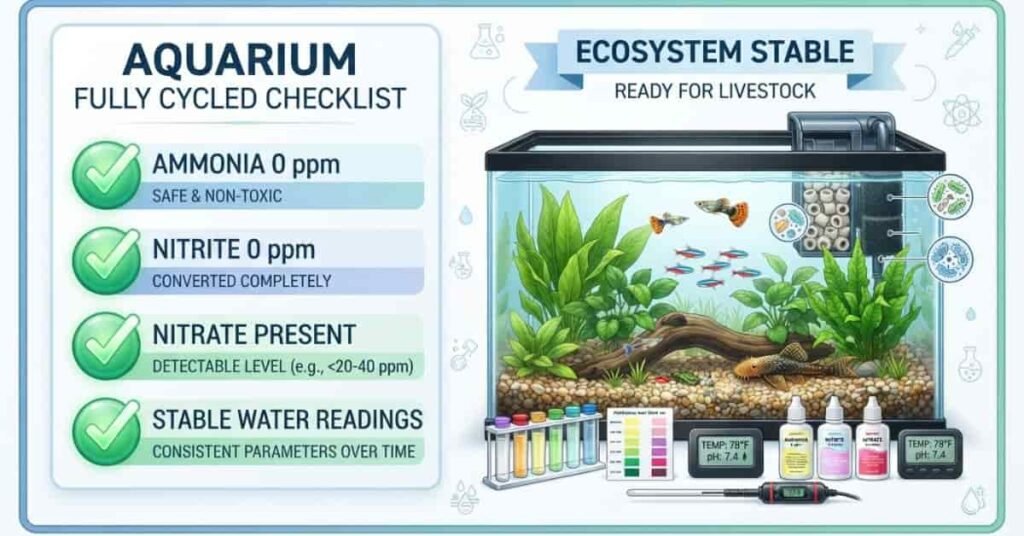
Knowing when your aquarium has finished cycling is one of the most important parts of successful fishkeeping. Many beginners assume clear water means the tank is ready, but appearance alone cannot confirm a completed aquarium nitrogen cycle. The only reliable method is testing your water and looking for consistent results over several days.
A fully cycled aquarium has enough beneficial bacteria to process fish waste continuously. These bacteria quickly convert ammonia into nitrite and then nitrate, preventing dangerous toxin spikes. Before adding most fish, make sure your aquarium meets all of the signs below.
1. Ammonia Reads 0 ppm
Ammonia should consistently test at 0 ppm. This shows the first group of beneficial bacteria is removing toxic waste as quickly as it is produced. Any detectable ammonia means the biological filter is not fully established.
2. Nitrite Reads 0 ppm
Nitrite should also remain at 0 ppm. Although ammonia has disappeared, the cycle is not complete until nitrite also reaches zero. Even low nitrite levels can stress fish and interfere with oxygen transport.
3. Nitrate Is Present
A measurable nitrate reading is a positive sign. It shows the second group of beneficial bacteria has successfully converted nitrite into nitrate. Most newly cycled aquariums show a moderate nitrate level before the first routine water change.
4. Water Readings Stay Stable
The final sign is consistency. Test your aquarium for several consecutive days while maintaining the same ammonia source. If ammonia and nitrite remain at 0 ppm and nitrate stays detectable, your aquarium is considered fully cycled and ready for fish.
Even after cycling, add livestock gradually. Introducing too many fish at once can overwhelm the bacterial colony and temporarily increase ammonia levels. Slow stocking gives beneficial bacteria time to grow alongside the increasing waste load.
Conclusion
The aquarium nitrogen cycle is the foundation of every healthy aquarium. By understanding how ammonia changes into nitrite and then nitrate, you can create a safe environment where fish thrive. Taking the time to complete aquarium cycling and establish beneficial bacteria helps prevent fish loss, improves water quality, and supports long-term success.
Remember, patience is one of the most valuable tools in fishkeeping. Waiting until your aquarium is fully cycled before adding livestock will save you time, money, and frustration later.
Ready for the next step? Explore our complete step-by-step aquarium cycling guide to learn exactly what to do each week. If you found this guide helpful, share it with other beginners, and let us know your aquarium cycling experience or questions in the comments below.
Frequently Asked Questions
1. What is the aquarium nitrogen cycle?
The aquarium nitrogen cycle is a natural biological process that keeps aquarium water safe for fish. Beneficial bacteria convert toxic ammonia from fish waste into nitrite and then into nitrate. Ammonia and nitrite are dangerous, while nitrate is much less harmful and can be controlled with regular water changes and live plants. Every healthy freshwater and saltwater aquarium depends on this cycle to maintain stable water quality.
2. Why is aquarium cycling important?
Aquarium cycling allows beneficial bacteria to grow before you add most fish. Without these bacteria, harmful ammonia and nitrite quickly build up and can poison aquarium livestock. Completing the cycling process creates a stable biological filter that continuously removes toxic waste. Although cycling takes several weeks, it greatly improves fish health and helps prevent common beginner problems such as New Tank Syndrome.
3. How long does the nitrogen cycle take?
Most aquariums complete the nitrogen cycle in 4 to 6 weeks, although the exact time varies. Factors such as water temperature, filter performance, ammonia source, and beneficial bacteria all affect the process. Instead of relying only on the calendar, test your water regularly. Your aquarium is fully cycled when ammonia and nitrite remain at 0 ppm and nitrate is consistently present.
4. Can fish survive in an uncycled aquarium?
Fish can survive in an uncycled aquarium for a short time, but the risk is much higher. Without beneficial bacteria, ammonia and nitrite quickly reach dangerous levels and may damage fish gills, weaken their immune system, and increase stress. If you must perform a fish-in cycle, monitor water daily, perform partial water changes when necessary, and add only a few hardy fish while the biological filter develops.
5. What causes ammonia in an aquarium?
Ammonia forms when organic waste begins to break down. Common sources include fish waste, uneaten fish food, dead plants, dead fish, and other decaying materials. During a new aquarium setup, ammonia naturally rises because beneficial bacteria have not yet developed. Once the nitrogen cycle is complete, these bacteria continuously convert ammonia into safer compounds, helping maintain healthy water conditions.
6. How do beneficial bacteria grow in an aquarium?
Beneficial bacteria grow naturally wherever oxygen-rich water flows. Most colonies develop inside the filter media, but they also live on gravel, rocks, decorations, and aquarium glass. They multiply when a steady ammonia source is available and water conditions remain stable. Running the filter continuously and using dechlorinated water help these bacteria establish healthy colonies more quickly.
7. What is the safest way to cycle an aquarium?
The safest method is a fishless cycle. This process uses a controlled ammonia source instead of live fish, allowing beneficial bacteria to grow without exposing animals to harmful toxins. Test ammonia, nitrite, and nitrate regularly throughout the process. When ammonia and nitrite remain at 0 ppm and nitrate is present, your aquarium is ready for fish.
8. Does every aquarium need to be cycled?
Yes. Every freshwater, saltwater, reef, and planted aquarium should complete the nitrogen cycle before adding most livestock. Regardless of tank size, fish produce waste that creates ammonia. Without beneficial bacteria, this waste becomes toxic. Cycling establishes the biological filter that keeps the aquarium healthy for years and greatly reduces the chance of fish loss.
9. Can live plants speed up the nitrogen cycle?
Live plants do not replace the nitrogen cycle, but they can support it. Healthy aquatic plants absorb ammonia and nitrate as nutrients, helping improve water quality during and after cycling. However, beneficial bacteria are still responsible for converting ammonia into nitrite and nitrate. Plants work alongside biological filtration, not instead of it.
10. How often should I test ammonia and nitrite during cycling?
Test ammonia and nitrite every 2–3 days during a fishless cycle. If you are cycling with fish, daily testing is the safest approach because ammonia and nitrite can rise quickly. Continue monitoring until both readings remain at 0 ppm for several consecutive days while nitrate is present. Regular testing is the most reliable way to know when your aquarium has fully cycled.
11. Can bottled beneficial bacteria speed up aquarium cycling?
Yes. Quality bottled beneficial bacteria can help establish the biological filter more quickly. While results vary by product, many aquarists use these supplements to reduce cycling time. Even when using bottled bacteria, continue testing ammonia, nitrite, and nitrate because every aquarium develops at its own pace. Water test results—not the calendar—confirm when the cycle is complete.
12. How do I know when my aquarium is fully cycled?
A fully cycled aquarium consistently shows 0 ppm ammonia, 0 ppm nitrite, and a measurable amount of nitrate. These readings should remain stable for several days while the aquarium continues receiving an ammonia source. Once these conditions are met, beneficial bacteria can safely process fish waste, and you can begin adding livestock gradually instead of all at once.

The Aquarium Advisor Team was founded by Daniel Carter (Austin, Texas, USA) and Emily Parker (Tampa, Florida, USA), two passionate aquarium enthusiasts dedicated to helping hobbyists build healthy and thriving aquariums.
They created AquariumAdvisor.com to share practical aquarium guides and professional online calculators. Every calculator is developed with experienced software developers to ensure accurate, reliable, and easy-to-use results for aquarium owners of all experience levels.