
Table of Contents
Introduction
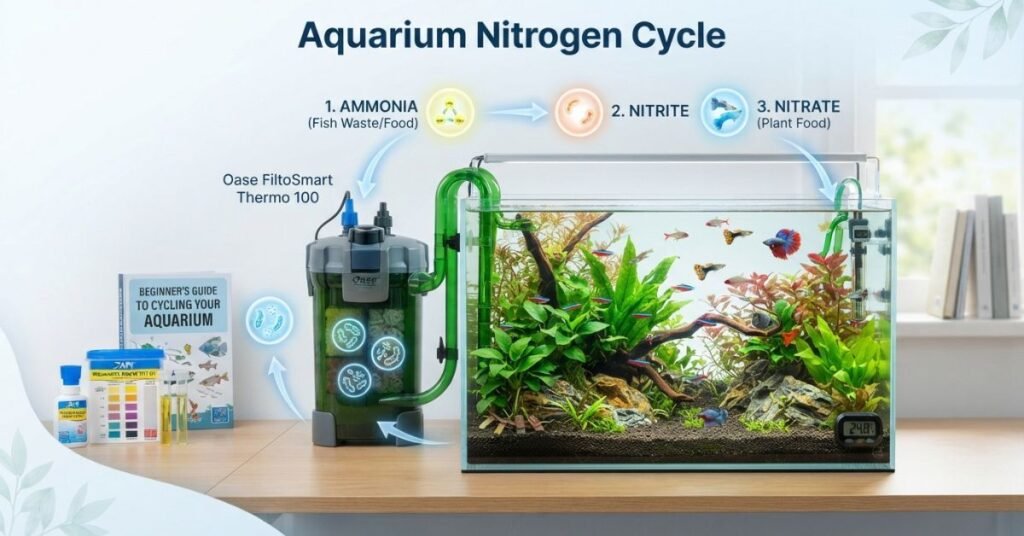
Wondering how long to cycle aquarium before adding your first fish? You’re not alone. Many beginners expect a new tank to be ready within days. In reality, aquarium cycling takes time because beneficial bacteria need to grow naturally. There is no fixed number of days that works for every setup. Water temperature, filtration, bacteria, plants, and the ammonia source all affect the process. That’s why how long does it take to cycle an aquarium can vary from one tank to another.
The good news is that you don’t have to guess. This guide explains the complete aquarium cycle timeline for both freshwater and saltwater tanks. You’ll learn what happens during each stage, what slows or speeds up the cycle, and how to test your water correctly. By the end, you’ll know exactly when your aquarium is safe for fish and how to avoid the common mistakes that cause delays. A little patience now will help you build a healthy, stable aquarium that thrives for years.
How long does it take to cycle an aquarium?
Most aquariums take 4–6 weeks to complete the nitrogen cycle. The exact aquarium cycling time depends on factors like water temperature, filtration, the ammonia source, and beneficial bacteria. Tanks started with established filter media or bottled bacteria may cycle faster, while brand-new setups often need more time. Instead of counting days, test your water regularly. Your aquarium is fully cycled when ammonia and nitrite reach 0 ppm, and nitrate is present, making the tank safe for fish.
Average Aquarium Cycling Timeline
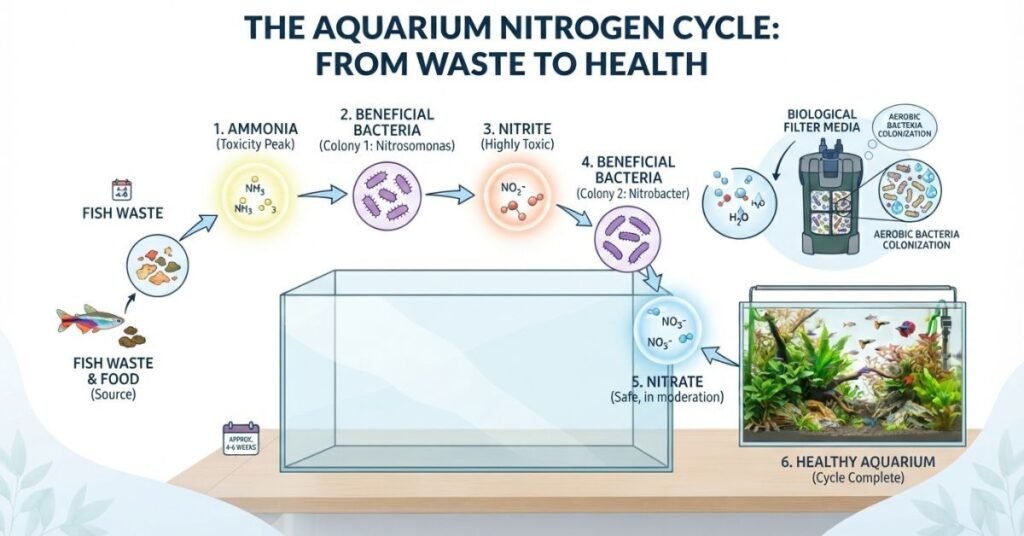
Most new aquariums follow the same general pattern, but every tank develops at its own pace. Beneficial bacteria need time to grow inside the filter and on other surfaces. As these bacteria multiply, they convert harmful ammonia into nitrite and then into the safer nitrate. This natural process explains how long does an aquarium take to cycle and why patience is important.
The timeline below shows what most freshwater and saltwater aquariums experience. Some tanks may move through these stages a little faster, while others may need an extra week or two. Water temperature, oxygen levels, filtration, and the bacteria already present all influence the process. Regular testing gives a more accurate picture than simply waiting a set number of days.
| Week | What Happens |
|---|---|
| Week 1 | Ammonia begins to increase as waste or an ammonia source breaks down. |
| Week 2 | Beneficial bacteria develop, and nitrite starts to appear. |
| Week 3 | Nitrite reaches its highest level while more bacteria continue growing. |
| Week 4 | Nitrate becomes detectable as nitrite levels begin to fall. |
| Week 5–6 | Ammonia and nitrite reach 0 ppm, nitrate remains present, and the aquarium cycle is usually complete. |
Expert Tip
Experienced aquarists rely on water test results, not the calendar. If your test kit still shows ammonia or nitrite, the cycle is not complete, even after six weeks.
What Happens During Each Stage of the Cycle?
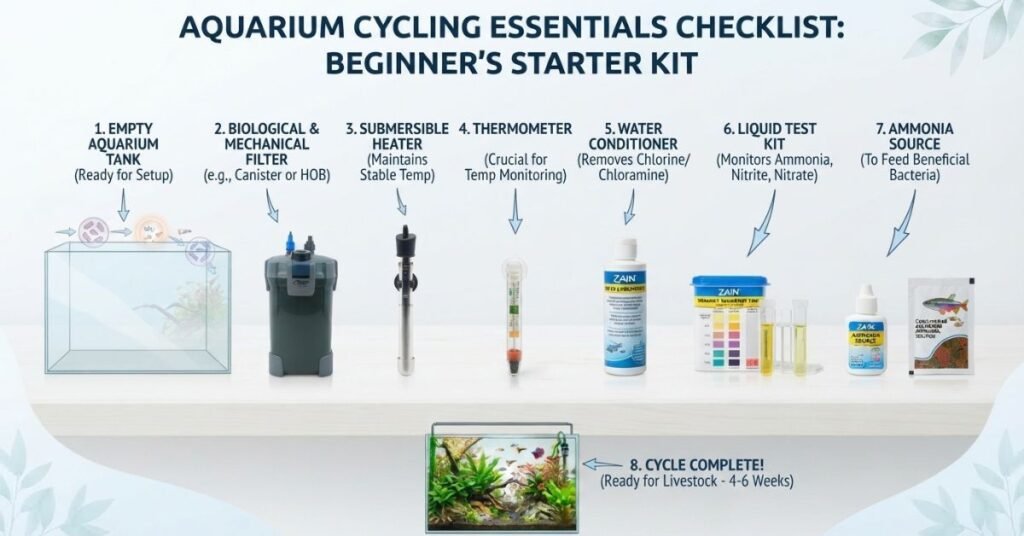
The nitrogen cycle happens in three main stages. Each stage supports the next as beneficial bacteria grow inside your filter and on hard surfaces. Understanding these stages helps you know how long does it take to cycle an aquarium and why water testing matters more than counting days.
Most new aquariums move through these stages over 4–6 weeks, although the timing can vary. Temperature, filtration, oxygen, and the ammonia source all affect how quickly bacteria become established. The safest approach is to watch your water parameters instead of following a fixed schedule.
Ammonia Stage
The ammonia stage begins as soon as an ammonia source enters the aquarium. Fish waste, fish food, or pure ammonia produces this harmful compound. Because a new tank has very few beneficial bacteria, ammonia rises quickly during the first week.
Ammonia is highly toxic to fish, even at low levels. During this stage, the first group of beneficial bacteria starts growing. These bacteria feed on ammonia and slowly convert it into nitrite. This natural process takes time, so patience is important.
Pro Tip
Use a liquid test kit every few days during the first week. Tracking ammonia helps you see when the first beneficial bacteria become active.
Nitrite Stage
As ammonia begins to fall, nitrite starts to appear. This usually happens during the second week, although some tanks take longer. The bacteria that consume ammonia continue multiplying, creating more nitrite as a byproduct.
Nitrite is also dangerous for fish. A second type of beneficial bacteria must grow before the aquarium becomes safe. These bacteria convert nitrite into nitrate. During this stage, nitrite often reaches its highest level before slowly dropping.
Pro Tip
Don’t panic if nitrite stays high for several days. This usually means the second group of beneficial bacteria is still developing.
Nitrate Stage
The nitrate stage is the final step of the nitrogen cycle. By now, the second group of beneficial bacteria has grown enough to convert nitrite into nitrate. As nitrate becomes detectable, both ammonia and nitrite should begin reaching 0 ppm.
Nitrate is much less harmful than ammonia or nitrite, but it should still stay under recommended levels through regular water changes. Live plants also help absorb nitrate, improving overall water quality. When ammonia and nitrite remain at zero while nitrate is present, your aquarium is usually ready for fish.
Expert Tip
Before adding fish, dose a small amount of ammonia during a fishless cycle. If the tank processes it within 24 hours and both ammonia and nitrite return to 0 ppm, your biological filter is ready.
How Long Does It Take to Cycle a Freshwater Aquarium?
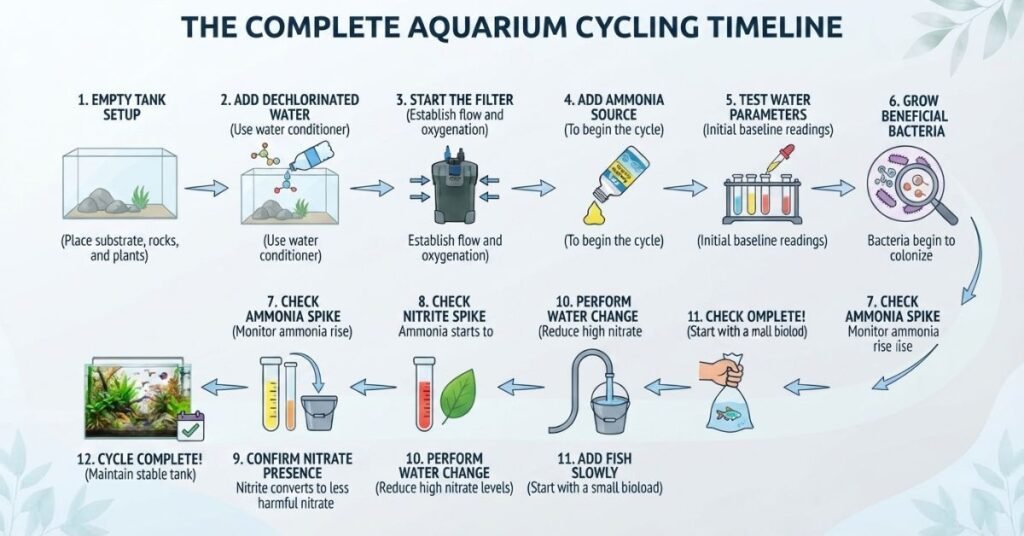
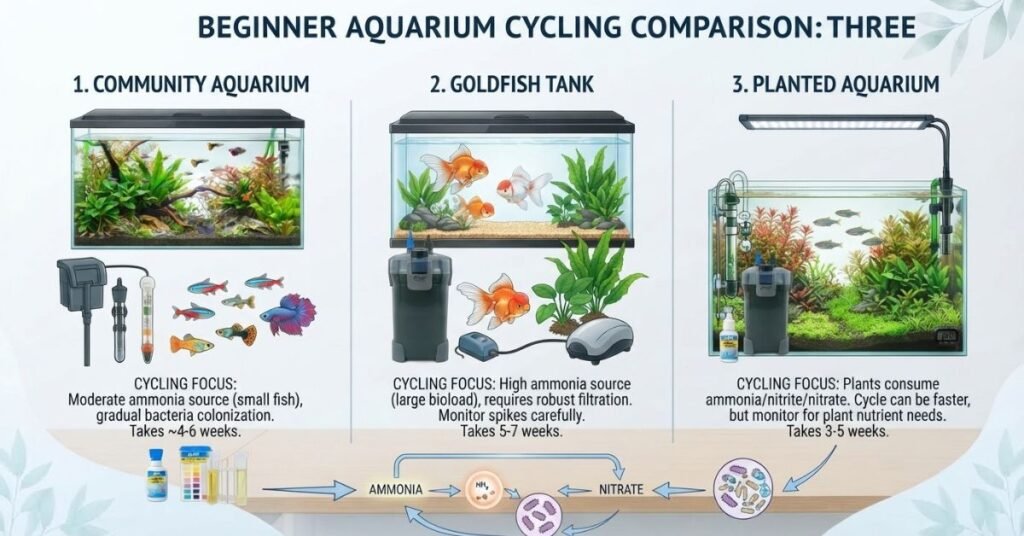
A freshwater aquarium usually takes 4–6 weeks to complete the nitrogen cycle. However, how long does it take to cycle a freshwater aquarium depends on the tank type, filtration, water temperature, and the amount of beneficial bacteria available. Some setups finish sooner with seeded filter media, while others need extra time.
Different freshwater aquariums cycle at different speeds because each one creates a unique environment for beneficial bacteria. Below is what most beginners can expect.
Community Tanks
Community aquariums typically cycle within 4–6 weeks. A quality filter, stable temperature, and regular water testing help bacteria establish a healthy biological filter.
Planted Tanks
Heavily planted aquariums may cycle a little faster because live plants absorb some ammonia and nitrate. Plants improve water quality, but they do not replace the nitrogen cycle or eliminate the need for testing.
Goldfish Tanks
Goldfish produce large amounts of waste. Their tanks often create more ammonia, making strong filtration essential. With proper filtration and maintenance, most goldfish aquariums still cycle in about 4–6 weeks.
Nano Aquariums
Nano tanks can be less stable because small water volumes change quickly. Even though they hold less water, they usually require the same cycling period as larger aquariums. Careful testing is especially important in these systems.
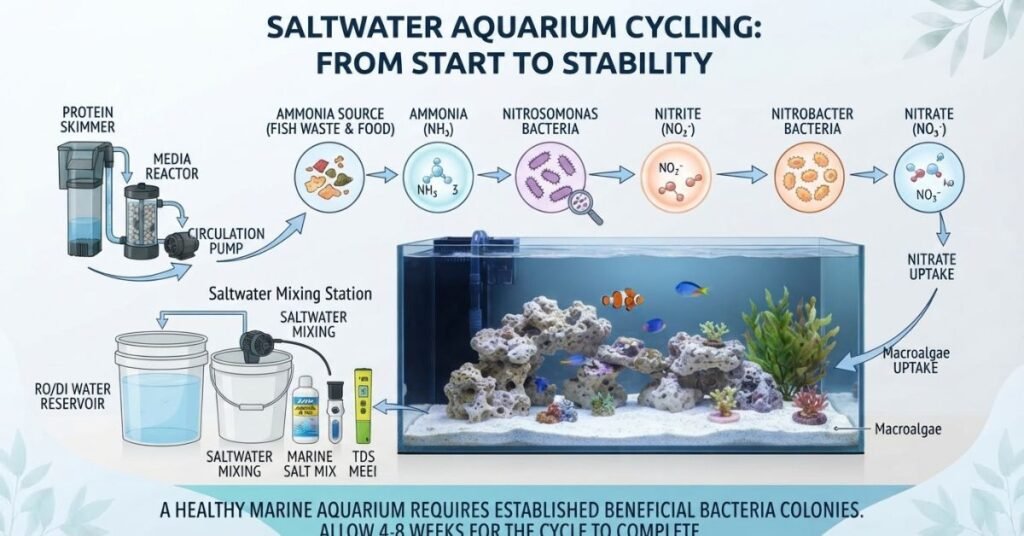
How Long Does It Take to Cycle a Saltwater Aquarium?
A saltwater aquarium usually takes 4–8 weeks to complete the nitrogen cycle. In many cases, it follows the same biological process as a freshwater tank, but marine systems often need extra time because of live rock, dry rock, and reef equipment. If you’re wondering how long does it take to cycle a saltwater aquarium, the type of rock you choose is one of the biggest factors.
Live Rock
Live rock already contains beneficial bacteria and other helpful microorganisms. Because of this, aquariums started with high-quality cured live rock often cycle faster than tanks built with dry rock. You should still test the water before adding fish or corals.
Dry Rock
Dry rock starts with very little beneficial bacteria. New bacteria must colonize the rock before the nitrogen cycle can finish. This process usually extends the cycling period, especially in larger marine tanks.
Marine Bacteria
Many reef keepers use bottled marine bacteria to help establish the biological filter. These products can reduce cycling time, but they do not guarantee an instant cycle. Water testing remains essential throughout the process.
Reef Systems
Reef aquariums require extra patience because fish, corals, and other invertebrates need stable water conditions. Even after the nitrogen cycle finishes, many hobbyists allow the tank to mature for several more weeks before adding sensitive coral species.
Factors That Affect Cycling Time
No two aquariums cycle at exactly the same speed. While most tanks finish within the typical timeframe, several conditions influence aquarium cycle time. Understanding these factors helps explain why one aquarium cycles quickly while another takes several extra weeks.
Water Temperature
Beneficial bacteria grow faster in warm water. Most fishless cycles progress well between 75–86°F (24–30°C). Very cold water slows bacterial growth and extends the cycling process.
Filter Quality
A quality filter provides more surface area for beneficial bacteria. Biological filter media support larger bacterial colonies than simple mechanical filters alone.
Beneficial Bacteria
Using established filter media or bottled bacteria can help jump-start the cycle. Without an existing bacterial colony, the process naturally takes longer.
Live Plants
Live plants absorb small amounts of ammonia and nitrate. Healthy plants improve water quality, but they do not replace the biological filter or eliminate the need for cycling.
Tank Size
Large and small aquariums can both require several weeks to cycle. Smaller tanks often experience quicker water parameter changes, making regular testing even more important.
Ammonia Source
Pure ammonia provides a consistent food source for beneficial bacteria during a fishless cycle. Uneven ammonia levels from decaying fish food can make the process less predictable.
Water Chemistry
Chlorine, chloramine, low oxygen, or unstable pH can slow bacterial growth. Always use a quality water conditioner and maintain good water circulation.
Can You Speed Up Aquarium Cycling?
Yes, you can safely reduce how long to cycle a new aquarium, but you cannot skip the nitrogen cycle entirely. Every aquarium still needs time for beneficial bacteria to establish a healthy biological filter. Safe methods encourage bacterial growth without putting fish at risk.
Seeded Filter Media
The fastest method is using filter media from a healthy, established aquarium. This media already contains beneficial bacteria, allowing the new tank to develop a biological filter much sooner.
Bottled Bacteria
Quality bottled bacteria products introduce live bacterial cultures into the aquarium. They may shorten the cycling process when used correctly, especially during a fishless cycle.
Stable Temperature
Keeping the water within the recommended range helps bacteria multiply more efficiently. Avoid sudden temperature changes that can slow bacterial growth.
Good Oxygen Circulation
Beneficial bacteria require oxygen to survive. Strong water movement from a filter or air stone improves oxygen levels and supports faster bacterial growth.
Although these methods can speed up the process, they cannot replace proper testing. Always confirm that ammonia and nitrite remain at 0 ppm and nitrate is present before adding fish. A test kit is far more reliable than following a calendar.
Expert Tip
Even if your aquarium appears cycled in two weeks, continue testing for several days before adding livestock. Stable results are more important than a fast timeline.
Signs Your Aquarium Is Fully Cycled
Knowing when your aquarium is ready is more important than knowing how long to cycle an aquarium. Many beginners wait four to six weeks and assume the cycle is complete. However, the calendar cannot confirm that your biological filter is working. Only stable water test results can do that.
A fully cycled aquarium has enough beneficial bacteria to process ammonia into nitrite and then into nitrate. When these bacteria work efficiently, toxic compounds no longer build up between feedings or ammonia doses. Before adding fish, confirm that your aquarium meets all the signs below.
Checklist: Signs Your Aquarium Is Fully Cycled
- ✅ Ammonia = 0 ppm
- ✅ Nitrite = 0 ppm
- ✅ Nitrate is detectable
- ✅ Water parameters remain stable for several days
- ✅ The biological filter is fully established
If any of these conditions are missing, continue the cycling process and keep testing every few days. Rushing this stage can expose fish to dangerous water conditions and increase stress or disease.
Expert Tip
Test your water after adding a small amount of ammonia during a fishless cycle. If ammonia and nitrite both return to 0 ppm within 24 hours, your filter is usually ready for livestock.
How to Confirm the Cycle with a Test Kit
A liquid water test kit is the most reliable way to confirm how long does it take for an aquarium to cycle. Test kits measure the chemicals produced during the nitrogen cycle and show whether beneficial bacteria are doing their job. Never rely only on the number of days your aquarium has been running.
Test each parameter carefully and compare the results with the manufacturer’s color chart. Keeping a simple record of your readings makes it easier to spot progress and identify problems.
Ammonia Test
Ammonia should read 0 ppm before you add fish. Any detectable ammonia means the biological filter is not fully established.
Nitrite Test
Nitrite should also measure 0 ppm. Even small amounts can harm fish, so wait until it remains at zero.
Nitrate Test
A nitrate reading confirms the final stage of the nitrogen cycle. Moderate nitrate levels show that beneficial bacteria are converting waste correctly.
pH Check
A stable pH supports healthy bacterial growth. Sudden pH changes can slow the nitrogen cycle and stress future fish.
Recommended Water Parameters
| Parameter | Target Reading |
|---|---|
| Ammonia | 0 ppm |
| Nitrite | 0 ppm |
| Nitrate | Detectable (keep at a safe level with water changes) |
| pH | Stable and appropriate for your livestock |
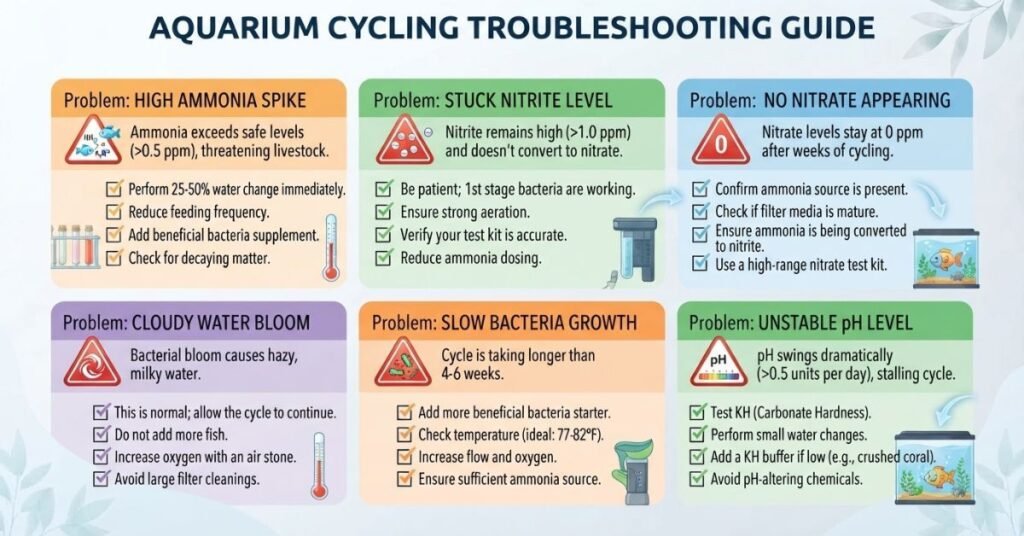
Common Reasons Cycling Takes Longer
Most aquariums finish cycling within 4–6 weeks, but some take longer. Delays usually happen because beneficial bacteria cannot grow under poor conditions. Understanding the cause helps you fix the problem without starting over.
Low Temperatures
Cold water slows bacterial growth.
Solution: Keep the aquarium within the recommended temperature range for a fishless cycle.
Poor Filtration
Small or inefficient filters provide less space for beneficial bacteria.
Solution: Use a quality filter with enough biological media for your tank size.
Chlorinated Water
Chlorine and chloramine kill beneficial bacteria.
Solution: Always treat tap water with a water conditioner before adding it to the aquarium.
Cleaning Filter Media
Washing filter media under tap water removes or kills beneficial bacteria.
Solution: Rinse filter media gently in old aquarium water during maintenance.
Insufficient Bacteria
New aquariums naturally start with very few beneficial bacteria.
Solution: Add seeded filter media or a trusted bottled bacteria product to help establish the colony.
Low Oxygen
Beneficial bacteria need oxygen to survive and multiply.
Solution: Increase water movement with a filter, air stone, or additional surface agitation.
Beginner Mistakes That Delay the Cycle
Many beginners expect a new aquarium to cycle on its own without problems. In reality, small mistakes can slow bacterial growth and extend aquarium cycling time. If you’re wondering how long should a new aquarium cycle before adding fish, avoiding these common errors can help your tank stay on track.
The nitrogen cycle depends on healthy colonies of beneficial bacteria. Anything that removes or harms those bacteria can delay the process. Fortunately, these mistakes are easy to avoid once you understand why they matter.
Over-Cleaning the Aquarium
A spotless aquarium may look nice, but over-cleaning removes beneficial bacteria from surfaces and decorations. Frequent deep cleaning can interrupt the nitrogen cycle before it finishes.
What to do instead: Clean only when necessary, and avoid scrubbing every surface at the same time.
Replacing Filter Media Too Soon
Your filter media holds most of the beneficial bacteria in the aquarium. Replacing all of it at once removes the biological filter and may force the cycle to start again.
What to do instead: Replace filter media only when recommended, and change one piece at a time if possible. Rinse reusable media in old aquarium water, not tap water.
Turning Off the Filter
Beneficial bacteria need a constant flow of oxygen-rich water. Turning off the filter for long periods reduces oxygen and can kill part of the bacterial colony.
What to do instead: Keep the filter running 24 hours a day. If maintenance is necessary, restart it as quickly as possible.
Adding Fish Too Early
One of the biggest beginner mistakes is adding fish before ammonia and nitrite reach 0 ppm. Fish create waste immediately, increasing toxic ammonia before the biological filter is ready.
What to do instead: Wait until water tests confirm the cycle is complete before introducing fish.
Adding Too Much Ammonia
During a fishless cycle, more ammonia does not mean a faster cycle. Excess ammonia can actually slow bacterial growth and delay progress.
What to do instead: Follow the recommended ammonia level for fishless cycling and test regularly to keep it within the proper range.
Conclusion
Cycling an aquarium is one of the most important steps in building a healthy tank. You now know how long to cycle aquarium, what happens during each stage, what affects the timeline, and how to confirm the cycle with a water test kit. While most aquariums finish in 4–6 weeks, every setup is different. Testing your water is always more reliable than counting days.
Be patient and let beneficial bacteria grow naturally. A properly cycled aquarium creates a safer environment for your fish and helps prevent future water quality problems. If you are still wondering how long does it take to cycle an aquarium, remember that stable water parameters matter more than a fast timeline.
If you found this guide helpful, share it with other beginner aquarists. You can also leave a comment below with your cycling experience or explore our other aquarium care guides to continue learning.
Frequently Asked Questions
1. How long does it take to cycle an aquarium?
Most aquariums take 4–6 weeks to complete the nitrogen cycle. Tanks started with established filter media or bottled beneficial bacteria may cycle faster, while others take longer because of water temperature, filtration, or water chemistry. Always confirm the cycle with a water test kit instead of relying only on the number of days.
2. Can an aquarium cycle finish in one week?
Usually, no. A brand-new aquarium rarely finishes cycling in just one week. If you use seeded filter media from a healthy aquarium, the process may be much faster. Even then, only add fish after ammonia and nitrite remain at 0 ppm and nitrate is present.
3. Why is my aquarium taking longer than six weeks to cycle?
Several factors can slow the nitrogen cycle, including low water temperature, poor filtration, chlorinated tap water, low oxygen levels, or an insufficient amount of beneficial bacteria. Review your water parameters and avoid replacing filter media or making major changes while the tank is cycling.
4. Does a planted aquarium cycle faster?
Live plants help improve water quality by absorbing some ammonia and nitrate. This can make the aquarium more stable, but plants do not replace beneficial bacteria or eliminate the nitrogen cycle. Water testing is still necessary before adding fish.
5. Does bottled bacteria really speed up aquarium cycling?
Yes, quality bottled bacteria products can help establish beneficial bacteria more quickly. They may shorten the cycling period, especially during a fishless cycle. However, they cannot replace proper water testing, so always confirm that ammonia and nitrite are zero before adding fish.
6. Can I add fish before the aquarium is fully cycled?
No. Adding fish too early exposes them to toxic ammonia and nitrite, which can lead to stress, disease, or death. Wait until ammonia and nitrite stay at 0 ppm and nitrate is detectable before introducing fish.
7. How do I know when my aquarium is fully cycled?
Your aquarium is fully cycled when:
- Ammonia = 0 ppm
- Nitrite = 0 ppm
- Nitrate is detectable
- Water parameters remain stable
- The biological filter processes waste efficiently
A liquid water test kit is the most reliable way to confirm these conditions.
8. Do freshwater and saltwater aquariums cycle at the same speed?
Both aquarium types follow the same nitrogen cycle, but saltwater aquariums often take slightly longer. Freshwater tanks usually cycle within 4–6 weeks, while saltwater systems may require 4–8 weeks, especially when using dry rock or setting up a reef tank.
9. Can cold water slow the aquarium cycle?
Yes. Beneficial bacteria grow more slowly in cold water. Maintaining a stable temperature within the recommended range helps bacteria multiply faster and supports a healthier biological filter.
10. What happens if I stop cycling my aquarium midway?
Stopping the cycle or turning off the filter for long periods reduces oxygen and can harm beneficial bacteria. This may delay the nitrogen cycle or force part of it to start over. Keep the filter running continuously until the cycle is complete.
11. How long should I cycle a new aquarium before adding fish?
Most new aquariums need about 4–6 weeks. However, you should only add fish after testing confirms 0 ppm ammonia, 0 ppm nitrite, and detectable nitrate. Test results are more reliable than counting days.
12. Can I perform water changes while cycling an aquarium?
Yes. Water changes may be necessary if ammonia or nitrite becomes dangerously high during a fish-in cycle. During a fishless cycle, avoid unnecessary water changes unless required. Always use a water conditioner to remove chlorine and chloramine.
13. Does tank size affect aquarium cycling time?
Not significantly. Small and large aquariums generally require a similar amount of time to establish beneficial bacteria. However, smaller tanks experience faster changes in water parameters, so they require more frequent testing.
14. What is the fastest safe way to cycle a new aquarium?
The safest methods include using seeded filter media, adding a trusted bottled bacteria product, maintaining a stable temperature, and providing good oxygen circulation. These methods can reduce cycling time, but none can replace proper water testing.
15. Can I cycle an aquarium without fish?
Yes. A fishless cycle is the method most experts recommend. It uses an ammonia source instead of live fish, allowing beneficial bacteria to grow without exposing fish to harmful ammonia or nitrite. It is safer, more humane, and easier to control.

The Aquarium Advisor Team was founded by Daniel Carter (Austin, Texas, USA) and Emily Parker (Tampa, Florida, USA), two passionate aquarium enthusiasts dedicated to helping hobbyists build healthy and thriving aquariums.
They created AquariumAdvisor.com to share practical aquarium guides and professional online calculators. Every calculator is developed with experienced software developers to ensure accurate, reliable, and easy-to-use results for aquarium owners of all experience levels.