
Table of Contents
Introduction
Can you cycle a new aquarium without putting your fish at risk? Many beginners ask this question before setting up their first tank. Cycling aquarium with fish is possible, but it requires patience, daily care, and close attention to water quality. If done incorrectly, harmful ammonia and nitrite can stress or even harm your fish.
Many new aquarium owners in the USA choose fish-in cycling because they already have fish or want to enjoy their tank right away. However, this method demands regular water testing and timely water changes to keep your fish safe while beneficial bacteria grow. Understanding how to cycle an aquarium with fish can help you avoid common mistakes and build a healthy aquarium from the start.
In this guide, you’ll learn how fish-in cycling works, whether it’s safe, when to use it instead of fishless cycling, and the exact steps to complete the process successfully. By the end, you’ll know how to protect your fish while creating a stable, healthy aquarium.
What Is Fish-In Cycling?

Fish-in cycling is the process of establishing beneficial bacteria in a new aquarium while fish are already living in the tank. These bacteria convert harmful fish waste into less toxic substances, creating a stable and healthy environment over time.
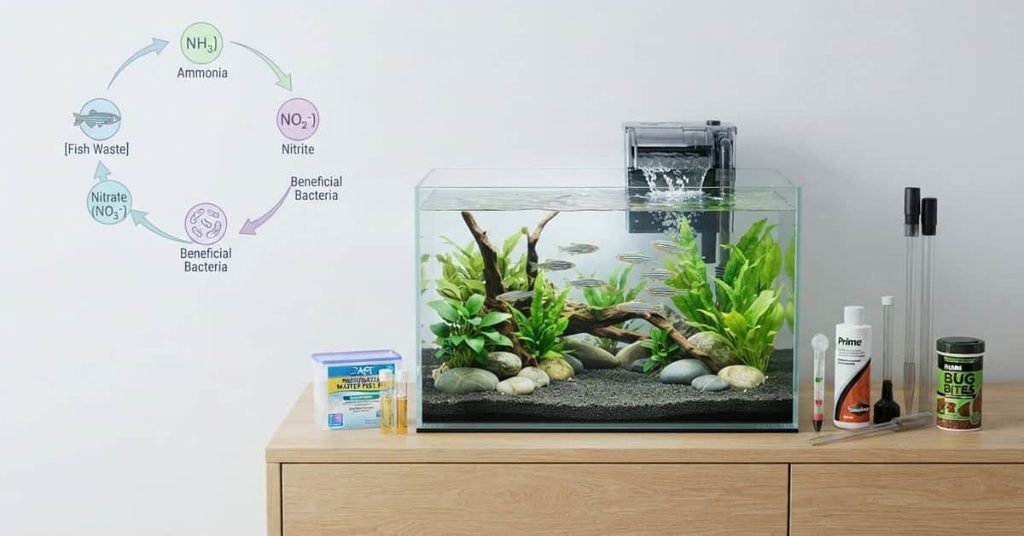
Before starting a fish-in cycle, it helps to understand the Aquarium Nitrogen Cycle and how beneficial bacteria process waste.
Unlike fishless cycling, fish-in cycling exposes fish to small amounts of ammonia and nitrite during the process. That is why it requires careful monitoring, regular water testing, and timely water changes to keep fish safe.
Although this method can work, it demands more effort than fishless cycling. Many aquarium experts recommend fishless cycling whenever possible because it avoids unnecessary stress on fish.
How Fish-In Cycling Works
Every aquarium needs beneficial bacteria to process fish waste. When fish produce waste or leftover food begins to decay, ammonia enters the water. Ammonia is highly toxic, even at low levels.
During fish-in cycling, helpful bacteria slowly develop inside the filter, gravel, and other surfaces. The first group of bacteria converts ammonia into nitrite. A second group then changes nitrite into nitrate, which is much less harmful and can be controlled through regular water changes.
Because these bacteria need time to grow, you must test the water every day. If ammonia or nitrite rises, perform a partial water change to protect your fish. Feeding lightly during this period also helps reduce waste and keeps water conditions safer.
Fish-In Cycling vs Fishless Cycling
Both methods build the same beneficial bacteria, but they differ in safety and maintenance. Fishless cycling is generally easier because no fish are exposed to toxic water conditions.
| Fish-In Cycling | Fishless Cycling |
|---|---|
| Fish are present during cycling | No fish in the aquarium |
| Higher risk if water quality declines | Safer because no fish are exposed |
| Requires daily water testing | Less frequent testing needed |
| Frequent water changes | Minimal water changes during cycling |
If you’re setting up a brand-new aquarium and have not purchased fish yet, fishless cycling is usually the better choice. It gives beneficial bacteria time to develop without putting fish under stress.
Read our complete Fishless Aquarium Cycling Guide to learn the safest way to establish a healthy aquarium before adding fish.
Should Beginners Use Fish-In Cycling?

Fish-in cycling can be successful, but it is not the easiest method for beginners. It requires patience, daily attention, and a good understanding of water quality. Missing water tests or delaying water changes can quickly create unsafe conditions for your fish.
Regular testing is essential during cycling, and our guide explains how to know when your aquarium is fully cycled.
Advantages
- You can keep fish in the aquarium while the nitrogen cycle develops.
- It is useful if fish are already living in the tank.
- You learn how to monitor water quality from the beginning.
- No separate ammonia source is needed.
Disadvantages
- Daily testing is usually required.
- Frequent water changes take time.
- Fish may become stressed if ammonia or nitrite rises.
- The cycling process can feel overwhelming for first-time aquarium owners.
Risks
The biggest risk is exposing fish to toxic ammonia and nitrite. Even short periods of poor water quality can weaken their immune system, reduce appetite, and increase the chance of disease. Delicate species are especially vulnerable during cycling.
Expert Recommendation
Most aquarium experts recommend fishless cycling whenever possible. It is safer, less stressful, and gives beneficial bacteria time to establish before fish are introduced. However, if your fish are already in the aquarium, careful fish-in cycling can still produce a healthy and fully cycled tank when you test the water regularly and perform water changes as needed.
Best Fish for Fish-In Cycling
If fish-in cycling is necessary, choose hardy freshwater species that can better tolerate temporary water quality changes. Even these fish still require proper care and close monitoring throughout the cycling process.
If you want to avoid exposing fish to the cycling process, see our Fishless Aquarium Cycle guide.
Some of the best choices include:
- Zebra Danios – Active, hardy, and commonly recommended for beginner aquariums.
- White Cloud Mountain Minnows – Peaceful fish that adapt well to stable freshwater conditions.
- Cherry Barbs – A suitable option for well-maintained community tanks when water quality is closely monitored.
Avoid using delicate species such as Discus, many dwarf cichlids, or sensitive shrimp during fish-in cycling. These animals are much less tolerant of ammonia and nitrite and can become sick even when levels are only slightly elevated.
Regardless of the species you choose, start with only a small number of fish. A lighter bioload produces less waste, making it easier for beneficial bacteria to develop while keeping water conditions safer throughout the cycling process.
Equipment You’ll Need
Before you begin cycling an aquarium with fish, gather the right equipment. Having these essentials makes the process safer and helps you maintain healthy water conditions from day one.
Fish-In Cycling Checklist
| Equipment | Why You Need It |
|---|---|
| Aquarium | Provides a stable home with enough space for your fish. |
| Filter | Houses beneficial bacteria that break down harmful waste. |
| Heater | Keeps the water at a stable, species-appropriate temperature. |
| Water Conditioner | Removes chlorine and chloramine from tap water to protect fish and beneficial bacteria. |
| Liquid Test Kit | Measures ammonia, nitrite, nitrate, and pH accurately during cycling. |
| Gravel Vacuum | Removes waste and leftover food during water changes without disturbing the tank too much. |
| Thermometer | Helps you monitor water temperature and prevent sudden changes. |
Using quality equipment from the start makes fish-in cycling easier and reduces stress on your fish. A reliable liquid test kit is especially important because daily testing helps you spot water quality problems before they become dangerous.
Step-by-Step Fish-In Cycling Process

Fish-in cycling takes patience and consistent care. Follow these steps to establish beneficial bacteria while keeping your fish as safe as possible.
Step 1 – Set Up the Aquarium
Place the aquarium on a sturdy, level surface away from direct sunlight and heating vents. Add rinsed substrate, decorations, and any live or artificial plants you plan to use. Fill the tank with fresh water, leaving enough room for equipment.
Step 2 – Dechlorinate Water
Treat all tap water with a quality water conditioner before adding fish. Chlorine and chloramine can harm both your fish and the beneficial bacteria needed to complete the nitrogen cycle. Always follow the product’s dosage instructions.
Step 3 – Install the Filter
Install and start the filter before introducing fish. The filter provides oxygen circulation and the main surface where beneficial bacteria grow. Keep the filter running continuously throughout the cycling process.
Step 4 – Add a Small Number of Hardy Fish
Introduce only a few hardy fish instead of stocking the entire aquarium. Fewer fish produce less waste, making it easier to control ammonia and nitrite while the beneficial bacteria become established.
Step 5 – Feed Lightly
Feed only what your fish can eat within a minute or two. Overfeeding creates excess waste, which quickly raises ammonia levels and slows the cycling process. Remove any uneaten food after feeding.
Step 6 – Test Water Daily
Use a liquid test kit every day to check ammonia, nitrite, nitrate, and pH. Daily testing helps you identify problems early so you can act before water conditions become unsafe.
Step 7 – Perform Water Changes When Needed
If ammonia or nitrite begins to rise, perform a partial water change immediately. Fresh, conditioned water dilutes harmful toxins and helps protect your fish while beneficial bacteria continue to grow.
Step 8 – Monitor Ammonia and Nitrite
During the first few weeks, ammonia usually rises before nitrite appears. As more beneficial bacteria develop, ammonia drops and nitrite increases. Continue monitoring both closely until they consistently remain at safe levels.
Step 9 – Wait for Nitrate to Appear
Nitrate is the final product of the nitrogen cycle. Its appearance shows that the second group of beneficial bacteria is becoming established. Continue regular water testing and water changes to keep nitrate at a healthy level.
Step 10 – Confirm the Tank Is Fully Cycled
Your aquarium is considered fully cycled when ammonia and nitrite consistently test at 0 ppm, nitrate is present, and your fish appear healthy and active. Continue regular maintenance, weekly water testing, and routine water changes to keep the aquarium stable over the long term.
Safe Water Parameters During Fish-In Cycling
Keeping water parameters within a safe range is the most important part of cycling an aquarium with fish. Test the water every day using a liquid test kit. This allows you to spot problems early and protect your fish from harmful water conditions.
| Parameter | Safe Range During Fish-In Cycling |
|---|---|
| Ammonia | As close to 0 ppm as possible |
| Nitrite | As close to 0 ppm as possible |
| Nitrate | Keep below recommended maintenance levels with regular water changes |
| pH | Stable for your fish species |
| Temperature | Species-appropriate and consistent |
Even small amounts of ammonia and nitrite can stress fish. If either level begins to rise, perform a partial water change with conditioned water. Avoid sudden changes in pH or temperature because rapid swings can cause additional stress.
Water Change Schedule During Cycling
Regular water changes are the safest way to protect fish while beneficial bacteria establish themselves. The goal is to reduce harmful toxins without removing the bacteria growing inside the filter and on aquarium surfaces.
When Should You Change the Water?
Test the aquarium every day. Perform a partial water change whenever ammonia or nitrite starts to rise above safe levels or your fish show signs of stress, such as rapid breathing or gasping near the surface.
How Much Water Should You Change?
Most situations only require a 20% to 50% partial water change. The exact amount depends on your water test results. Smaller, more frequent water changes are usually better than one large change because they keep water conditions more stable.
Always replace the removed water with fresh, dechlorinated water that closely matches the aquarium’s temperature.
How to Protect Beneficial Bacteria
Beneficial bacteria live mainly inside the filter media, substrate, and decorations, not in the water itself. To avoid disrupting the cycle:
- Never replace all filter media at once.
- Rinse filter media only in old aquarium water, never under tap water.
- Keep the filter running at all times.
- Avoid deep-cleaning the entire aquarium during cycling.
- Vacuum the gravel gently to remove waste without disturbing beneficial bacteria.
Following these steps helps the nitrogen cycle continue while keeping your fish safe.
Common Problems During Fish-In Cycling

Fish-in cycling can present a few challenges, especially for beginners. Knowing how to respond quickly helps prevent serious problems.
Fish Gasping at the Surface
Fish may gasp when ammonia or nitrite levels increase or when oxygen levels are low.
Solution:
- Test the water immediately.
- Perform a partial water change if needed.
- Make sure the filter is running properly.
- Increase surface movement to improve oxygen exchange.
High Ammonia
Ammonia is highly toxic and often appears during the early stages of cycling.
Solution:
- Perform a partial water change.
- Feed less until ammonia decreases.
- Continue daily testing.
- Avoid adding more fish.
Nitrite Spike
Nitrite usually appears after ammonia begins to fall. It is also dangerous to fish.
Solution:
- Continue daily testing.
- Perform partial water changes as needed.
- Be patient while beneficial bacteria continue to grow.
Cloudy Water
Cloudy water is common in new aquariums and is often caused by a bacterial bloom or excess organic waste.
Solution:
- Avoid overfeeding.
- Continue regular maintenance.
- Do not replace filter media unnecessarily.
- Allow the aquarium time to stabilize.
Fish Not Eating
Fish may lose their appetite because of stress or poor water quality.
Solution:
- Check ammonia, nitrite, and temperature.
- Offer small amounts of food.
- Remove uneaten food after a few minutes.
- Keep the environment quiet and stable.
Slow Cycling Process
Some aquariums take longer than expected to complete the nitrogen cycle.
Solution:
- Keep the filter running continuously.
- Continue testing the water daily.
- Avoid cleaning filter media too aggressively.
- Be patient, as most fish-in cycles take several weeks to finish.
With regular testing, timely water changes, and careful observation, most common fish-in cycling problems can be managed before they become serious.
Beginner Mistakes to Avoid

Fish-in cycling requires patience and careful attention. Even small mistakes can slow the nitrogen cycle or put your fish at risk. Avoid these common errors to keep your aquarium healthy.
Overstocking the Tank
Adding too many fish at once creates more waste than the beneficial bacteria can process. This causes ammonia and nitrite levels to rise quickly.
Tip: Start with only a small number of hardy fish and increase the population gradually after the aquarium is fully cycled.
Overfeeding
Extra food breaks down into waste and increases ammonia. Overfeeding is one of the most common causes of poor water quality in new aquariums.
Tip: Feed only what your fish can finish within one to two minutes. Remove any uneaten food promptly.
Skipping Water Tests
Water can look clean while harmful toxins are building up. Without testing, you may not notice dangerous ammonia or nitrite levels until your fish become stressed.
Tip: Test ammonia, nitrite, nitrate, and pH every day during the cycling process using a liquid test kit.
Cleaning Filter Media Incorrectly
Beneficial bacteria live mainly inside the filter media. Washing it under tap water or replacing all of it at once can destroy much of the bacterial colony.
Tip: Rinse filter media gently in old aquarium water during maintenance. Replace media only when necessary and never all at the same time.
Adding More Fish Too Soon
The biological filter needs time to adjust to additional waste. Adding more fish before the cycle is complete can trigger another ammonia spike.
Tip: Wait until the aquarium is fully cycled before introducing new fish. Add them gradually over time.
Ignoring Ammonia Spikes
Ammonia is highly toxic and should never be ignored. Even short exposure can harm fish and increase stress.
Tip: If ammonia begins to rise, perform a partial water change immediately, reduce feeding, and continue testing the water daily.
How to Know Fish-In Cycling Is Complete

A fully cycled aquarium has enough beneficial bacteria to process fish waste efficiently. Before adding more fish, make sure your aquarium meets all of the following conditions.
Fish-In Cycling Completion Checklist
- ✅ Ammonia consistently tests at 0 ppm
- ✅ Nitrite consistently tests at 0 ppm
- ✅ Nitrate is present on your test results
- ✅ Fish are active, eating well, and behaving normally
- ✅ Water parameters remain stable for several days without unexpected spikes
Once you reach these milestones, your aquarium is ready for normal maintenance. Continue performing regular water changes and testing the water weekly to keep the environment healthy.
Read our How to Know When an Aquarium Is Fully Cycled guide for a detailed explanation of the final signs of a stable nitrogen cycle.
Fish-In vs Fishless Cycling: Which Is Better?
Both methods create the beneficial bacteria your aquarium needs, but they differ in safety, maintenance, and ease of use. Choosing the right approach depends on your situation and experience.
| Feature | Fish-In Cycling | Fishless Cycling |
|---|---|---|
| Safety | Fish are exposed to some risk if water quality declines | Safest method because no fish are exposed to ammonia or nitrite |
| Cost | Slightly lower upfront cost if you already have fish | May require an ammonia source or bottled bacteria |
| Speed | Usually takes 4–8 weeks | Usually takes 3–6 weeks, depending on conditions |
| Difficulty | Requires daily testing and frequent water changes | Easier to manage with fewer urgent maintenance tasks |
| Recommended Users | Best for aquarists who already have fish in the aquarium | Best for beginners and anyone setting up a new tank |
If you’re starting a brand-new aquarium, fishless cycling is generally the better choice. It allows beneficial bacteria to develop without exposing fish to harmful ammonia and nitrite. Fish-in cycling should only be used when necessary and requires close monitoring, daily water testing, and regular water changes to keep fish healthy throughout the process.
Conclusion
Cycling aquarium with fish is possible, but it requires patience, daily care, and close attention to water quality. In this guide, you learned how fish-in cycling works, the equipment you’ll need, safe water parameters, common mistakes to avoid, and the signs of a fully cycled aquarium. Following these steps helps protect your fish while beneficial bacteria establish a healthy biological filter.
For most beginners in the USA, fishless cycling remains the safer and easier option. However, if cycling an aquarium with fish is your only choice, regular water testing and timely water changes can make the process much safer for your aquatic pets.
Have you tried fish-in cycling before? Share your experience or questions in the comments below. If you found this guide helpful, explore our other aquarium care articles to build a healthy, thriving fish tank with confidence.
Frequently Asked Questions
1. Can you cycle an aquarium with fish?
Yes. You can cycle an aquarium with fish, but it requires daily water testing and regular water changes. Fish-in cycling allows beneficial bacteria to grow while fish remain in the tank. Because ammonia and nitrite can become harmful, you must monitor water quality closely to keep your fish safe throughout the cycling process.
2. Is fish-in cycling safe?
Fish-in cycling can be safe when done correctly, but it carries more risk than fishless cycling. Daily water testing, light feeding, and partial water changes whenever ammonia or nitrite rises are essential to protect your fish.
3. What fish are best for fish-in cycling?
Hardy freshwater fish are the best choice. Zebra Danios, White Cloud Mountain Minnows, and Cherry Barbs are commonly recommended because they tolerate temporary water quality changes better than delicate species. Always begin with only a small number of fish.
4. How often should I test the water during fish-in cycling?
Test your aquarium every day until the nitrogen cycle is complete. Check ammonia, nitrite, nitrate, and pH using a liquid test kit. Daily testing helps you detect harmful water conditions before they become dangerous.
5. How often should I change the water during fish-in cycling?
There is no fixed schedule. Perform a partial water change whenever ammonia or nitrite begins to rise above safe levels. Most aquariums need several partial water changes each week, depending on water test results.
6. Can fish survive ammonia spikes?
Small ammonia spikes may be survivable if corrected quickly, but prolonged exposure can seriously harm or kill fish. If ammonia increases, perform an immediate partial water change, reduce feeding, and continue testing the water every day.
7. How long does fish-in cycling take?
Fish-in cycling usually takes between 4 and 8 weeks. The exact timeline depends on temperature, filtration, fish stocking levels, maintenance routine, and how quickly beneficial bacteria become established.
8. Should I use bottled beneficial bacteria?
Bottled beneficial bacteria can help introduce helpful microorganisms and may shorten the cycling process. However, they do not instantly cycle an aquarium. Continue testing ammonia and nitrite until the tank is fully cycled.
9. When can I add more fish?
Wait until your aquarium consistently shows 0 ppm ammonia, 0 ppm nitrite, and detectable nitrate. Add new fish gradually so the biological filter can adjust to the increased waste.
10. Is fishless cycling better than fish-in cycling?
Yes. Fishless cycling is generally the safest and most beginner-friendly method. It allows beneficial bacteria to develop without exposing fish to harmful ammonia or nitrite. Fish-in cycling should only be used when necessary.
11. Can I use tap water during fish-in cycling?
Yes, but always treat tap water with a quality water conditioner before adding it to the aquarium. This removes chlorine and chloramine, which can harm both fish and beneficial bacteria.
12. Can I turn off the filter at night while cycling?
No. The filter should run continuously, 24 hours a day. Beneficial bacteria need a constant supply of oxygen-rich water. Turning the filter off for long periods can damage the bacterial colony and delay the cycling process.
13. Why is my aquarium water cloudy during cycling?
Cloudy water is usually caused by a bacterial bloom, which is a normal part of establishing beneficial bacteria. It can also result from overfeeding or excess organic waste. Continue testing the water and avoid replacing filter media unnecessarily.
14. Can live plants help during fish-in cycling?
Yes. Live aquarium plants can absorb some ammonia and nitrate, helping improve water quality. However, they should never replace regular water testing or water changes during the cycling process.
15. What is the biggest mistake during fish-in cycling?
The biggest mistake is ignoring rising ammonia or nitrite levels. Other common mistakes include overfeeding, overstocking, skipping water tests, and cleaning filter media with tap water. Avoiding these errors helps create a healthy and fully cycled aquarium.

The Aquarium Advisor Team was founded by Daniel Carter (Austin, Texas, USA) and Emily Parker (Tampa, Florida, USA), two passionate aquarium enthusiasts dedicated to helping hobbyists build healthy and thriving aquariums.
They created AquariumAdvisor.com to share practical aquarium guides and professional online calculators. Every calculator is developed with experienced software developers to ensure accurate, reliable, and easy-to-use results for aquarium owners of all experience levels.