Table of Contents
Introduction
Did you know most new aquarium problems begin before the first fish even enters the tank?
Learning how to cycle your aquarium is the most important step to creating a healthy, stable environment for your fish. Many beginners skip this process because it seems confusing, but doing so can lead to poor water quality, stressed fish, and unnecessary losses. Whether you’re planning to cycle a new aquarium or wondering how to cycle an aquarium the right way, understanding the basics will save you time and frustration.
This guide explains the aquarium cycling process in simple, beginner-friendly steps. You’ll learn what happens during the nitrogen cycle, why beneficial bacteria are essential, and how to monitor your water until the tank is safe. We’ll also cover freshwater and saltwater aquariums, common cycling mistakes, and practical tips to help you avoid delays. By the end, you’ll know exactly when your aquarium is fully cycled and ready to welcome its first fish with confidence.
What Does It Mean to Cycle an Aquarium?
Cycling an aquarium means creating a healthy biological system before adding fish. During this process, beneficial bacteria grow inside the filter, substrate, and other surfaces. These bacteria break down harmful fish waste and keep the water safe for aquatic life.
When you cycle an aquarium, you allow the tank to develop a stable nitrogen cycle. Without these helpful bacteria, toxic ammonia can quickly build up and harm or even kill fish. A properly cycled tank naturally converts ammonia into less harmful compounds, making it much safer for long-term fish keeping.
For beginners, cycling may seem like an extra step, but it’s the foundation of every successful aquarium. Whether you’re learning how to cycle a new aquarium, a freshwater tank, or a marine setup, patience during this stage helps prevent common problems later.
To understand how ammonia and nitrite are processed in a new tank, see our complete guide to the Aquarium Nitrogen Cycle.
What You’ll Learn
- Why beneficial bacteria are essential
- How the aquarium cycle protects fish
- What happens during each stage of the cycling process
- When your tank is ready for its first fish
Expert Tip: Think of beneficial bacteria as your aquarium’s natural cleaning crew. Once established, they work around the clock to keep your water healthy.
What Happens During Cycling?
The cycling process begins when an ammonia source enters the aquarium. This may come from pure ammonia, fish food, or another controlled source. At first, ammonia levels rise because there are no beneficial bacteria to remove it.
After several days, the first group of bacteria begins converting ammonia into nitrite. Although nitrite is less toxic than ammonia, it can still harm fish if levels become too high. Soon after, a second group of bacteria develops and changes nitrite into nitrate.
Nitrate is much safer in small amounts and can be controlled with regular water changes and live plants. As ammonia and nitrite drop to 0 ppm, your aquarium becomes biologically stable and ready for fish.
Pro Tip
Test your water every few days instead of guessing. Watching ammonia, nitrite, and nitrate change over time is the best way to confirm your aquarium is cycling correctly.
Why Cycling Is Necessary Before Adding Fish
Adding fish before the aquarium finishes cycling exposes them to toxic water conditions. Even a small amount of ammonia or nitrite can stress fish, weaken their immune system, and increase the risk of disease.
Cycling your aquarium first allows beneficial bacteria to grow before fish produce waste. Once the bacteria become established, they continuously remove harmful toxins and help maintain stable water quality.
Skipping this step often leads to a condition called New Tank Syndrome, where toxic waste builds up faster than the aquarium can process it. Waiting until the cycle is complete gives your fish the best chance to thrive from day one.
If you’d like to understand the science behind this process, read our Aquarium Nitrogen Cycle guide. It explains how beneficial bacteria convert ammonia into nitrite and finally into nitrate, creating a safe environment for aquatic life.
What You’ll Need Before Cycling

Before you start how to cycle your aquarium, gather the right equipment. Having everything ready makes the cycling process smoother and helps beneficial bacteria grow under stable conditions. Most of these items are standard for both freshwater and saltwater aquariums.
Aquarium Cycling Checklist
- ✅ Aquarium – Choose an appropriate tank size for your fish.
- ✅ Filter – Provides a home for beneficial bacteria and keeps water moving.
- ✅ Heater – Maintains a stable temperature, usually 75–82°F (24–28°C), to support bacterial growth.
- ✅ Water Conditioner – Removes chlorine and chloramine that can kill beneficial bacteria.
- ✅ Liquid Water Test Kit – Measures ammonia, nitrite, nitrate, and pH accurately.
- ✅ Ammonia Source – Use pure ammonia, ammonium chloride, or fish food for a fishless cycle.
- ✅ Thermometer – Helps monitor water temperature throughout the cycling process.
Using quality equipment from the beginning makes it easier to cycle a new aquarium successfully. It also reduces the chances of delays, stalled cycles, and water quality problems later.
Step-by-Step: How to Cycle an Aquarium

Learning how to cycle your aquarium is easier when you follow a clear process. A fishless cycle is the safest method for beginners because it builds beneficial bacteria before any fish enter the tank. Follow these 12 steps in order, and avoid rushing the process. Most aquariums finish cycling in 4–6 weeks, although the exact time can vary.
If you prefer cycling without fish, follow our Fishless Aquarium Cycle step-by-step guide.
Step 1 – Set Up the Aquarium
Place your aquarium on a sturdy, level stand away from direct sunlight and heating vents. Add the substrate, decorations, and any hardscape materials. If you’re setting up a planted aquarium, add plants before filling the tank.
Step 2 – Fill with Dechlorinated Water
Fill the aquarium with tap water and treat it with a quality water conditioner. Chlorine and chloramine can kill beneficial bacteria before they have a chance to grow.
Step 3 – Install and Start the Filter
Install your filter according to the manufacturer’s instructions. Turn it on immediately and let it run continuously. The filter provides the main surface where beneficial bacteria establish their colonies.
Step 4 – Turn on the Heater
Set the heater between 75–82°F (24–28°C) unless your setup requires a different temperature. Warm, stable water encourages faster bacterial growth during the cycling process.
Step 5 – Add an Ammonia Source
Add a controlled ammonia source to feed beneficial bacteria. You can use pure ammonia, ammonium chloride, or a small amount of fish food. Follow the product instructions if using bottled ammonia, and avoid adding more than recommended.
Step 6 – Test Water Every Few Days
Use a liquid test kit to measure ammonia, nitrite, nitrate, and pH every two to three days. Record the results so you can track the progress of your aquarium tank cycle.
Step 7 – Wait for Beneficial Bacteria to Grow
Be patient while the first bacteria begin converting ammonia into nitrite. This stage often takes one to two weeks, depending on water temperature and other conditions.
Step 8 – Watch Ammonia Drop
As the first bacterial colony grows, ammonia levels begin to fall. This is a positive sign that your aquarium is developing a healthy biological filter.
Step 9 – Watch Nitrite Rise and Fall
Nitrite levels usually increase after ammonia starts dropping. A second group of beneficial bacteria then converts nitrite into nitrate. Continue testing until nitrite also reaches 0 ppm.
Step 10 – Confirm Nitrate Is Present
When nitrate appears, your nitrogen cycle is almost complete. Nitrate confirms that both groups of beneficial bacteria are working. Low to moderate nitrate levels are normal before the first water change.
Step 11 – Perform a Large Water Change
Complete a 50–80% water change to lower nitrate before adding fish. Always treat new tap water with a water conditioner to protect the bacteria you’ve grown.
Step 12 – Add Fish Slowly
Introduce only a few fish at first instead of stocking the aquarium all at once. This gives the beneficial bacteria time to adjust to the increasing amount of waste. Continue testing your water during the first few weeks to ensure the cycle remains stable.
Expert Tip: If you have access to seeded filter media from a healthy, disease-free aquarium, you can often shorten the cycling process by introducing established beneficial bacteria. Still, always confirm your water parameters before adding fish.
How to Cycle a Freshwater Aquarium

If you’re wondering how to cycle a freshwater aquarium, the process is almost the same as any fishless cycle. The main difference is choosing equipment and maintaining stable conditions for the type of freshwater tank you plan to keep. A successful freshwater aquarium cycle creates beneficial bacteria that safely process fish waste before your fish arrive.
Once the cycling process is underway, learn how to know when your aquarium is fully cycled before adding fish.
Community Tanks
Community aquariums usually contain peaceful fish that thrive in stable water conditions. Start the cycle by adding an ammonia source, running the filter continuously, and testing the water every few days. Wait until both ammonia and nitrite reach 0 ppm before introducing your first fish. Add only a few fish at a time to avoid overwhelming the biological filter.
Goldfish Tanks
Goldfish produce more waste than many tropical fish. Because of this, they need a strong filter and a well-established nitrogen cycle. Consider using a filter rated for a larger aquarium to provide extra biological filtration. Once the tank is cycled, continue testing the water regularly to ensure ammonia and nitrite remain at 0 ppm.
Planted Tanks
Live plants can absorb small amounts of ammonia and nitrate, which may help improve water quality during cycling. However, plants do not replace beneficial bacteria or eliminate the need to complete the cycling process. Continue monitoring water parameters until the cycle finishes.
Beginner Tips
- Use a fishless cycling method whenever possible.
- Keep the filter running 24/7.
- Maintain a stable temperature between 75–82°F (24–28°C).
- Test ammonia, nitrite, nitrate, and pH with a liquid test kit.
- Be patient, even if the water looks clear.
Expert Tip: Many beginners think clear water means the aquarium is safe. Always trust your water test results instead of appearance.
How to Cycle a Saltwater Aquarium

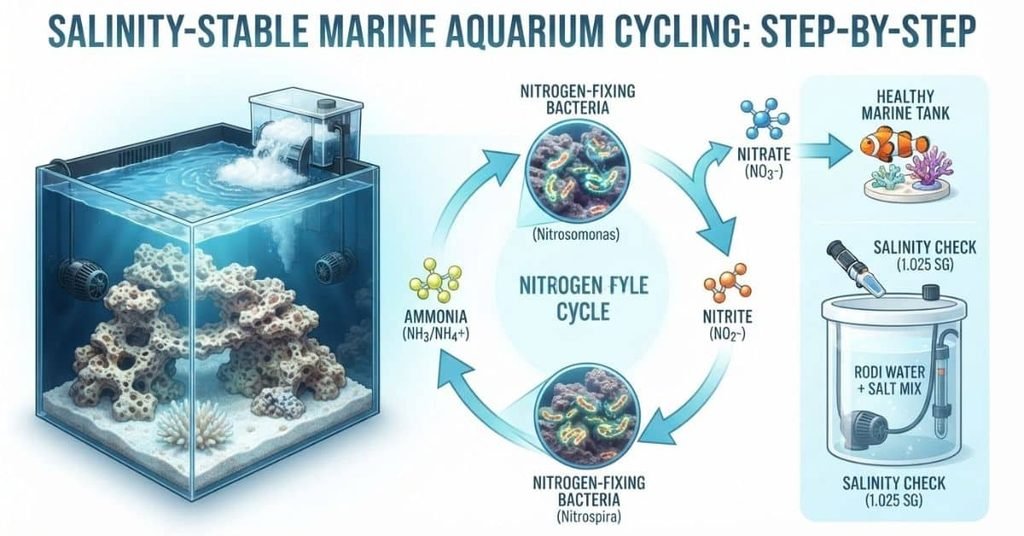
Learning how to cycle a saltwater aquarium follows the same biological process as freshwater cycling, but marine tanks require additional preparation. A healthy saltwater aquarium cycle depends on properly mixed saltwater, stable salinity, and high-quality biological filtration. Taking your time now helps create a healthier environment for marine fish and invertebrates.
Mixing Saltwater
Never fill a marine aquarium with fresh tap water and salt separately inside the tank. Instead, mix marine salt with RO/DI water in a clean container until it reaches the correct salinity. Use a refractometer to confirm the specific gravity before adding the water to your aquarium.
Live Rock
Live rock plays an important role in cycling marine aquarium systems. It provides a large surface area where beneficial bacteria grow and naturally support the nitrogen cycle. Dry rock also works well, but it may take longer to develop a strong bacterial colony.
Marine Bacteria
After adding an ammonia source, beneficial marine bacteria begin converting ammonia into nitrite and then nitrate. Test your water every few days and wait until ammonia and nitrite both reach 0 ppm before adding livestock. Many hobbyists also use bottled bacteria to help establish the cycle, but water testing remains essential.
Extra Precautions
- Check salinity regularly with a refractometer.
- Keep the heater and circulation pumps running at all times.
- Avoid adding corals or sensitive invertebrates before the tank finishes cycling.
- Perform a large water change before introducing marine fish.
- Add livestock slowly to give the biological filter time to adjust.
How Long Does Aquarium Cycling Take?

Most aquariums complete the cycling process in 4–6 weeks. However, the exact timeline depends on factors such as water temperature, ammonia source, filter efficiency, and the growth rate of beneficial bacteria. Some tanks cycle a little faster, while others need extra time.
The key is not the number of weeks but your water test results. Your aquarium is fully cycled only when ammonia and nitrite both measure 0 ppm, and nitrate is present. Avoid adding fish based on time alone.
Typical Aquarium Cycling Timeline
| Week | What Happens |
|---|---|
| Week 1 | Ammonia begins to rise after adding an ammonia source. |
| Week 2 | Beneficial bacteria develop, and nitrite starts to appear. |
| Week 3 | Nitrite begins to drop as nitrate develops. |
| Week 4–6 | Ammonia and nitrite reach 0 ppm, nitrate is present, and the cycle is complete. |
Keep testing every few days, even if the timeline looks different. Every aquarium develops at its own pace.
Expert Tip: A stable temperature and continuous filter operation often help beneficial bacteria establish more consistently.
How to Test Your Water During Cycling

Testing your water is the only reliable way to know how your aquarium cycle is progressing. Clear water does not always mean safe water. A quality liquid test kit helps you monitor ammonia, nitrite, nitrate, and pH throughout the process.
Test your water every two to three days and record the results. Watching the changes over time makes it easier to spot problems and confirm when the cycle is complete.
Ammonia
Ammonia is the first waste product that appears during cycling. At the beginning, its level rises because beneficial bacteria have not developed yet. As the first bacterial colony grows, ammonia gradually falls.
Target Reading
- During cycling: Ammonia rises, then falls.
- Before adding fish: 0 ppm
Pro Tip
If ammonia remains very high for an extended period, avoid adding more ammonia until the level begins to decrease.
Nitrite
Nitrite appears after bacteria begin breaking down ammonia. It is also toxic to fish and should never remain in a stocked aquarium. As the second bacterial colony develops, nitrite levels drop.
Target Reading
- During cycling: Nitrite rises, then falls.
- Before adding fish: 0 ppm
Pro Tip
Don’t panic if nitrite stays high for several days. This stage often takes longer than the ammonia stage.
Nitrate
Nitrate is the final product of the nitrogen cycle. Its presence shows that both groups of beneficial bacteria are working properly. Although less harmful than ammonia and nitrite, nitrate should still be managed with regular water changes.
Target Reading
- During cycling: Nitrate begins to appear.
- Before adding fish: Detectable, preferably below 40 ppm after a large water change.
Pro Tip
A large water change before adding fish helps lower nitrate and gives your aquarium a healthy start.
pH
Beneficial bacteria grow best in stable water conditions. Large pH swings can slow or even stall the cycling process. Check pH along with your other water tests to ensure it stays within a suitable range.
Target Reading
- Most freshwater aquariums: 6.8–8.0
- Avoid sudden changes during cycling.
Pro Tip
If your pH drops unexpectedly, test your water source before making major adjustments.
Common Cycling Problems and Solutions
Even a properly planned aquarium cycle can face delays. Most problems happen because beneficial bacteria need more time or because water conditions change unexpectedly. The good news is that nearly every cycling issue has a simple solution.
| Problem | Possible Cause | Solution |
|---|---|---|
| Ammonia not dropping | Bacteria have not fully developed or too much ammonia was added. | Be patient, keep the filter running, and continue testing. |
| Nitrite stuck | The second bacterial colony is still growing. | Maintain stable temperature and wait for beneficial bacteria to multiply. |
| No nitrates | The cycle has not reached the final stage or testing is too early. | Continue monitoring until nitrate appears naturally. |
| Cloudy water | A bacterial bloom or suspended particles. | Avoid unnecessary water changes and let the filter clear the water. |
| Slow bacterial growth | Low temperature, chlorine, or poor oxygen circulation. | Keep water conditioned, maintain 75–82°F (24–28°C), and ensure good water movement. |
| High or low pH | Water chemistry changes or low buffering capacity. | Test regularly and correct pH gradually if needed. |
Most cycling problems resolve with patience and consistent maintenance. Avoid making several changes at once because that can make troubleshooting more difficult.
Expert Tip: Keep a simple notebook or digital log of your water tests. Small trends are much easier to spot when you compare results over several weeks.
Beginner Mistakes to Avoid
Many beginners make simple mistakes that delay the cycling process or create unsafe water conditions. The good news is that these problems are easy to avoid with a little planning and regular testing. Knowing what not to do is just as important as learning how to cycle your aquarium.
Adding Fish Too Early
One of the biggest mistakes is adding fish before the cycle is complete. Even if the water looks clear, harmful ammonia or nitrite may still be present. Always confirm your water parameters before introducing any fish.
Overfeeding
If you’re using fish food as an ammonia source, avoid adding too much. Excess food can pollute the water, create unpleasant odors, and make it harder to track ammonia levels accurately.
Skipping Water Testing
Never guess where your aquarium is in the cycling process. A liquid test kit provides the only reliable way to monitor ammonia, nitrite, nitrate, and pH.
Cleaning the Filter Media
Beneficial bacteria live mainly inside the filter media. Washing it under untreated tap water can kill these bacteria and slow or restart the cycling process. Rinse filter media only in old aquarium water when necessary.
Replacing All Filter Media
Changing every piece of filter media at once removes much of the beneficial bacteria your aquarium depends on. Replace media gradually and follow the manufacturer’s recommendations.
Turning Off the Filter
Keep the filter running 24 hours a day during cycling. Beneficial bacteria need a steady supply of oxygen-rich water. Long power interruptions can weaken or kill the bacterial colony.
Forgetting Dechlorinator
Always treat tap water with a water conditioner before adding it to the aquarium. Chlorine and chloramine can destroy beneficial bacteria and delay your aquarium cycle.
Tips to Speed Up Aquarium Cycling Safely
While you can’t safely skip the nitrogen cycle, you can create conditions that help beneficial bacteria establish more quickly. These methods support natural bacterial growth without risking your future fish.
Use Seeded Filter Media
The fastest way to introduce beneficial bacteria is by using seeded filter media from a healthy, disease-free aquarium. This provides an established bacterial colony and may reduce cycling time.
Add Bottled Beneficial Bacteria
Many aquarium keepers use bottled bacteria to help start the cycling process. Choose a reputable product and follow the manufacturer’s directions. Continue testing your water because bacteria products work at different speeds.
Maintain a Stable Temperature
Beneficial bacteria grow best in warm, stable water. Keep your heater set between 75–82°F (24–28°C) unless your aquarium requires different conditions.
Ensure Good Oxygen Circulation
Beneficial bacteria need oxygen to thrive. Keep your filter running continuously and provide good water movement with the filter outlet or additional circulation if needed.
Be Patient—Avoid Shortcuts
The safest way to cycle an aquarium is to let beneficial bacteria grow naturally. Products advertised as “instant cycling” can support bacterial growth, but they do not eliminate the need to test ammonia, nitrite, and nitrate. Always confirm your water parameters before adding fish.
When Is Your Aquarium Ready for Fish?
Adding fish is the most exciting part of starting a new aquarium, but timing is critical. Your tank is ready only after the nitrogen cycle is complete and your water tests confirm safe conditions. Never rely on clear water or the number of weeks that have passed.
Before introducing fish, use this checklist to confirm your aquarium is fully cycled.
Aquarium Ready Checklist
- ✅ Ammonia = 0 ppm
- ✅ Nitrite = 0 ppm
- ✅ Nitrate is detected
- ✅ Water parameters remain stable for several days
- ✅ Filter is running properly
- ✅ A large water change has been completed
- ✅ Water temperature matches your fish species
Once every item is complete, add only a few fish at a time. This allows the beneficial bacteria to adjust to the increased waste without causing another ammonia spike. Continue testing your water during the first few weeks after stocking the aquarium.
Conclusion
Learning how to cycle your aquarium is the first step toward building a healthy, stable home for your fish. By following each stage carefully, testing your water regularly, and waiting until the cycle is complete, you can avoid many common beginner mistakes and reduce future water quality problems. Whether you’re planning to cycle a new aquarium or complete a freshwater aquarium cycle, patience will always pay off.
Remember, successful fish keeping starts with understanding the science behind the nitrogen cycle. If you’d like a deeper explanation, explore our Aquarium Nitrogen Cycle guide to learn how beneficial bacteria keep your aquarium safe. If this guide helped you, share it with other aquarium beginners, leave a comment with your cycling experience or questions, and explore our other aquarium setup guides to continue building your fish-keeping knowledge.
Frequently Asked Questions
1. How do I cycle a new aquarium?
The safest method is a fishless cycle. Set up the aquarium, fill it with dechlorinated water, start the filter and heater, and add an ammonia source. Test ammonia, nitrite, and nitrate every few days. When ammonia and nitrite reach 0 ppm and nitrate is present, perform a large water change before adding fish slowly.
2. Can I cycle an aquarium in one week?
Usually not. Most aquariums need 4–6 weeks for beneficial bacteria to become established. Seeded filter media or bottled bacteria may shorten the process, but you should always confirm the cycle with water tests before adding fish.
3. Should the filter stay on during cycling?
Yes. The filter should run 24 hours a day throughout the cycling process. Beneficial bacteria live mainly in the filter media and need a constant flow of oxygen-rich water. Turning the filter off for long periods can slow or damage the bacterial colony.
4. Can I cycle an aquarium with live plants?
Yes. Live plants can absorb small amounts of ammonia and nitrate, helping improve water quality. However, they do not replace beneficial bacteria or eliminate the need to complete the nitrogen cycle. Continue testing until ammonia and nitrite remain at 0 ppm.
5. Do I need bottled beneficial bacteria?
No, but they can help. Bottled bacteria may introduce beneficial microorganisms that support the cycling process, especially in a new aquarium. However, they do not guarantee an instant cycle. Always verify your water parameters before adding fish.
6. Can I add fish before the cycle finishes?
No. Adding fish too early exposes them to toxic ammonia and nitrite, which can cause stress, illness, or death. Wait until ammonia and nitrite are both 0 ppm and nitrate is present before introducing fish.
7. What should I do if ammonia never drops?
Check that your filter is running continuously and that you treated tap water with a dechlorinator. Avoid adding excessive ammonia and continue testing every few days. If needed, add seeded filter media from a healthy aquarium to introduce beneficial bacteria.
8. How often should I test the water during cycling?
Test your aquarium every two to three days using a liquid test kit. Monitor ammonia, nitrite, nitrate, and pH, and record the results. Regular testing helps you track the nitrogen cycle and identify problems early.
9. Is cycling different for freshwater and saltwater aquariums?
The biological process is the same because both rely on beneficial bacteria to convert ammonia into nitrite and then nitrate. Saltwater aquariums require properly mixed saltwater, stable salinity, and often live rock, while freshwater aquariums use dechlorinated water and freshwater filtration.
10. Can I speed up the cycling process safely?
Yes. Seeded filter media, bottled beneficial bacteria, stable temperatures, and good oxygen circulation can support faster bacterial growth. However, no product replaces proper water testing. Only add fish after ammonia and nitrite stay at 0 ppm.
11. What is the fastest way to cycle an aquarium?
The fastest proven method is using seeded filter media from a healthy, disease-free aquarium. This introduces an established bacterial colony and may reduce cycling time. Even then, confirm the cycle with water testing before adding fish.
12. Can I use fish food to cycle an aquarium?
Yes. Fish food breaks down into ammonia, which feeds beneficial bacteria during a fishless cycle. Add only a small amount at a time to avoid excessive waste and poor water quality.
13. How do I know when my aquarium is fully cycled?
Your aquarium is fully cycled when ammonia = 0 ppm, nitrite = 0 ppm, and nitrate is present. The filter should also be working properly, and these readings should remain stable for several days before adding fish.
14. Can I perform water changes while cycling?
Yes, when necessary. If ammonia or nitrite becomes extremely high, a partial water change can help. Once the cycle finishes, perform a 50–80% water change to reduce nitrate before introducing fish.
15. What happens if I accidentally replace all my filter media?
Replacing all filter media at once can remove much of your beneficial bacteria and may restart or weaken the nitrogen cycle. Replace filter media gradually whenever possible to preserve your biological filtration.

The Aquarium Advisor Team was founded by Daniel Carter (Austin, Texas, USA) and Emily Parker (Tampa, Florida, USA), two passionate aquarium enthusiasts dedicated to helping hobbyists build healthy and thriving aquariums.
They created AquariumAdvisor.com to share practical aquarium guides and professional online calculators. Every calculator is developed with experienced software developers to ensure accurate, reliable, and easy-to-use results for aquarium owners of all experience levels.