
Table of Contents
Introduction
Did you know a new aquarium can look perfect but still be unsafe for fish?
A fishless aquarium cycle gives your tank time to grow beneficial bacteria before you add fish. This simple process protects your future fish from harmful ammonia and nitrite. That’s why most aquarium experts recommend it over fish-in cycling, especially for beginners in the USA.
If you’re wondering how to cycle an aquarium without fish, you’re in the right place. Fishless cycling is easier to control, more humane, and helps create a stable, healthy environment from day one.
In this guide, you’ll learn what fishless aquarium cycling is, why it matters, and how to complete it step by step. We’ll also explain the best ammonia sources, how long the process takes, how to speed up aquarium cycling safely, and the common mistakes to avoid. By the end, you’ll know exactly when your tank is ready for its first fish and how to give them the best possible start.
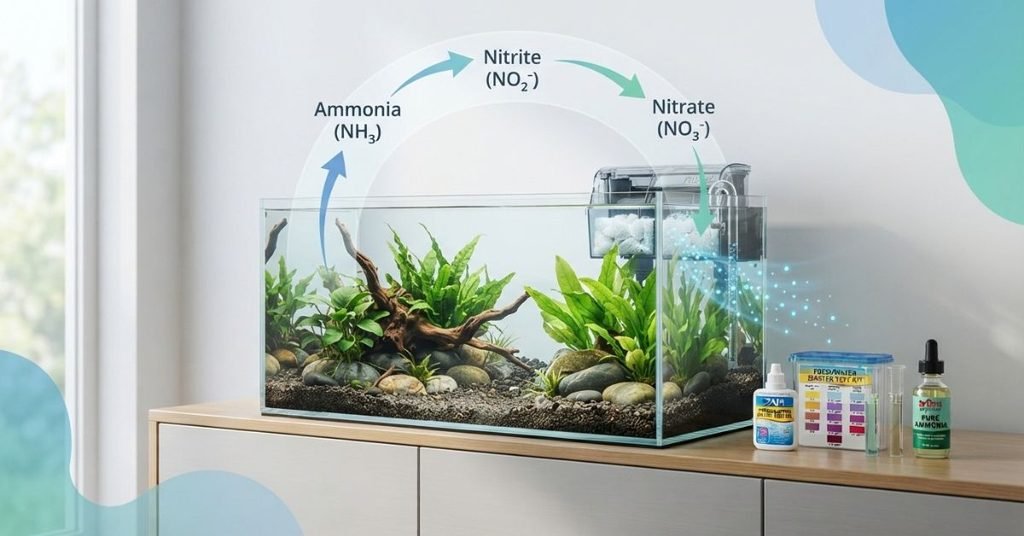
Fishless aquarium cycling is the process of establishing beneficial bacteria in a new aquarium by adding an ammonia source instead of live fish. These bacteria convert harmful ammonia into nitrite and then nitrate, creating a safe, stable environment before fish are introduced. It is the safest and most beginner-friendly way to prepare an aquarium.
What Is Fishless Aquarium Cycling?

A fishless aquarium cycle is the process of growing beneficial bacteria in a new aquarium before adding fish. Instead of using live fish to produce waste, you add an ammonia source. The bacteria feed on the ammonia and begin forming a healthy biological filter.
Before starting a fishless cycle, learn how the Aquarium Nitrogen Cycle works and why beneficial bacteria matter.
These helpful bacteria convert toxic ammonia into nitrite and then into nitrate. This natural process is called the aquarium nitrogen cycle. Once the bacteria can remove ammonia and nitrite within 24 hours, your tank is ready for fish.
Fishless cycling is one of the safest ways to start an aquarium. It gives you full control over water conditions without exposing fish to harmful toxins. Beginners can also learn how the nitrogen cycle works before caring for live animals.
Most freshwater and saltwater aquariums benefit from fishless cycling. While the process takes several weeks, it creates a stronger biological filter that supports long-term fish health.
Expert Tip: Be patient during cycling. A well-established biological filter helps prevent many common aquarium problems later.
How Fishless Cycling Works
Fishless cycling copies the natural waste cycle without putting fish at risk. You begin by adding a measured amount of pure ammonia, fish food, or a commercial ammonia product to the aquarium. This provides food for beneficial bacteria.
The first group of bacteria converts ammonia into nitrite. As these bacteria grow, a second group develops and changes nitrite into nitrate. Nitrate is much less harmful and can be removed with regular water changes.
During this process, you should test the water every few days. You’ll see ammonia rise first, followed by nitrite, and finally nitrate. Once both ammonia and nitrite reach 0 ppm within 24 hours after dosing ammonia, the biological filter is ready to support fish.
Keeping the filter running, maintaining a stable temperature, and using dechlorinated water help beneficial bacteria grow faster and remain healthy.
Pro Tip
Use a liquid test kit instead of test strips whenever possible. Liquid kits usually provide more accurate readings during fishless cycling.
Fishless Cycling vs Fish-In Cycling
Both cycling methods build beneficial bacteria, but they work very differently. Fishless cycling uses an ammonia source instead of live fish. Fish-in cycling relies on fish waste, which can expose fish to harmful ammonia and nitrite while the tank matures.
For beginners, fishless cycling is usually the better choice. You can control ammonia levels, test water safely, and complete the cycle without risking fish health. Fish-in cycling requires frequent testing, careful water changes, and close monitoring to keep fish safe.
If you want to compare both methods in detail, read our guide on Cycling an Aquarium With Fish.
| Feature | Fishless Cycling | Fish-In Cycling |
|---|---|---|
| Fish safety | No fish stress | Fish exposed to ammonia |
| Beginner friendly | ✔ Yes | ✘ Higher risk |
| Water control | Easier to control | Requires close monitoring |
| Animal welfare | More humane | Less humane |
| Success rate | More predictable | Depends on careful management |
Why Fishless Cycling Is Recommended

Most aquarium experts recommend fishless cycling because it creates a healthier environment before fish arrive. Instead of exposing fish to toxic ammonia, you build the biological filter first. This approach reduces stress and makes the aquarium easier to manage.
Fishless cycling also produces a stronger colony of beneficial bacteria. These bacteria are ready to process waste as soon as fish are introduced. As a result, the tank is more stable and less likely to experience dangerous ammonia spikes.
Another advantage is lower fish mortality. Fish added to a fully cycled aquarium face fewer water quality problems during their first weeks. This gives beginners a better chance of long-term success.
Although fishless cycling requires patience, the extra time is worth it. A properly cycled aquarium is easier to maintain, supports healthier fish, and helps prevent many common beginner mistakes.
What You’ll Need Before Starting
Before you begin a fishless aquarium cycle, gather all the essential equipment. Having everything ready makes the process smoother and helps beneficial bacteria grow under stable conditions. Most of these items are standard aquarium supplies, so they’re easy to find at local pet stores or online.
Choose quality equipment whenever possible. Reliable tools make water testing easier and help you avoid common beginner mistakes during the cycling process.
Fishless Aquarium Cycling Checklist
| Item | Why You Need It |
|---|---|
| Aquarium | Provides the environment where beneficial bacteria will grow. |
| Filter | Houses most of the beneficial bacteria and keeps water circulating. |
| Heater | Maintains a stable temperature to support faster bacterial growth. |
| Water Conditioner | Removes chlorine and chloramine that can kill beneficial bacteria. |
| Pure Ammonia | Feeds beneficial bacteria without using live fish. |
| Liquid Test Kit | Measures ammonia, nitrite, nitrate, and pH throughout the cycle. |
| Thermometer | Helps monitor and maintain the correct water temperature. |
A filter is the most important piece of equipment during cycling because it’s where beneficial bacteria establish their largest colonies. Keep the filter running 24 hours a day throughout the entire process. Turning it off for long periods can reduce oxygen levels and harm the bacteria you’re trying to grow.
The cycling process can take time, so check our guide on how long it takes to cycle an aquarium.
If you’re using tap water, always add a water conditioner before dosing ammonia. Chlorine and chloramine are safe for people but harmful to beneficial bacteria. Finally, use a liquid test kit instead of test strips whenever possible. It provides more accurate readings and helps you track your progress with confidence.
Step-by-Step Fishless Aquarium Cycling

Following a clear process makes a fishless aquarium cycle easier and more successful. Each step helps beneficial bacteria grow until your aquarium can safely support fish. Don’t rush the process. A properly cycled tank creates a healthier environment for years to come.
Before adding your first fish, learn how to know when your aquarium is fully cycled.
Step 1 – Set Up the Aquarium
Place your aquarium on a sturdy, level stand. Install the filter, heater, thermometer, and any decorations or substrate. Make sure all equipment is clean and ready to use.
Step 2 – Fill with Dechlorinated Water
Fill the tank with tap water and add a quality water conditioner. This removes chlorine and chloramine, which can kill beneficial bacteria before they begin growing.
Step 3 – Start the Filter & Heater
Turn on the filter and heater. Keep the water between 78–82°F (25.5–28°C) to encourage faster bacterial growth. Let the equipment run continuously throughout the cycling process.
Step 4 – Add an Ammonia Source
Dose the aquarium with pure ammonia until it reaches about 2 ppm. This gives beneficial bacteria the food they need to begin multiplying. Avoid adding too much ammonia because very high levels can slow bacterial growth.
Step 5 – Test Ammonia Daily
Use a liquid test kit to check ammonia every day. At first, ammonia will stay high. After several days, you’ll notice it beginning to decrease as bacteria develop.
Step 6 – Monitor Nitrite
As ammonia drops, nitrite will appear. This is a good sign because it shows the first group of beneficial bacteria is working. Continue testing both ammonia and nitrite regularly.
Step 7 – Wait for Nitrate
A second group of bacteria will convert nitrite into nitrate. Once nitrate appears, your biological filter is almost complete. Continue monitoring all three water parameters.
Step 8 – Confirm the Cycle Is Complete
Dose ammonia to about 2 ppm one final time. If both ammonia and nitrite return to 0 ppm within 24 hours while nitrate is present, your aquarium is fully cycled.
Step 9 – Perform a Large Water Change
Change 50–80% of the water to lower nitrate before adding fish. Remember to treat the new water with a water conditioner before it enters the aquarium.
Step 10 – Add Fish Gradually
Introduce only a few fish at first instead of filling the aquarium immediately. This allows the biological filter to adjust to the increasing waste load and helps maintain stable water quality.
Choosing the Best Ammonia Source
The ammonia source you choose directly affects how easy your fishless cycle will be. Some methods give you precise control, while others work more slowly. Beginners usually have the best results with pure ammonia because it’s easy to measure and produces consistent results.
Pure Household Ammonia
Pure household ammonia is the preferred choice for most aquarium hobbyists. It lets you raise ammonia to the desired level without adding extra waste to the aquarium.
Before using any household ammonia, read the label carefully. Choose a product that contains only ammonia and water. Avoid cleaners with soaps, fragrances, dyes, or surfactants because they can harm your aquarium and beneficial bacteria.
Pro Tip
Shake the bottle before buying it. If it creates lasting foam, choose a different product because it likely contains additives.
Fish Food Method
If you can’t find pure ammonia, regular fish food is another option. Place a small amount of food into the aquarium and let it break down naturally. As it decomposes, it releases ammonia that feeds beneficial bacteria.
This method works well but takes longer than using pure ammonia. It also creates extra organic waste, which can make the water cloudy and produce inconsistent ammonia levels.
Pro Tip
Add only a small amount of fish food. Too much food can create unnecessary waste and slow the cycling process.
Commercial Ammonia Products
Several aquarium brands sell ammonia products designed specifically for fishless cycling. These products are easy to dose and usually include clear instructions for beginners.
Although they often cost more than household ammonia, they reduce the risk of choosing the wrong product. They’re a great option if you’re new to aquarium keeping and want a simple, reliable solution.
Pro Tip
Always follow the manufacturer’s dosing instructions and confirm ammonia levels with your test kit after each dose.
Ammonia Source Comparison
| Ammonia Source | Pros | Cons |
|---|---|---|
| Pure Household Ammonia | Fast, inexpensive, easy to measure, precise dosing | Must be free of soaps, scents, and additives |
| Fish Food Method | Easy to find, no special products needed | Slower, less accurate, can cloud the water |
| Commercial Ammonia Products | Safe, beginner-friendly, simple dosing | Usually more expensive than household ammonia |
How Long Does Fishless Cycling Take?

A fishless aquarium cycle usually takes 4 to 6 weeks, although some aquariums finish sooner or later. The exact timeline depends on water temperature, the ammonia source, the amount of beneficial bacteria already present, and how consistently you maintain the tank.
Most new aquariums follow the same pattern. Ammonia appears first, then nitrite, and finally nitrate. These changes show that beneficial bacteria are growing and building a healthy biological filter.
Typical Fishless Cycling Timeline
| Week | Expected Progress |
|---|---|
| Week 1 | Ammonia rises after dosing. |
| Week 2 | Nitrite begins to appear as ammonia drops. |
| Week 3 | Nitrate develops while nitrite starts decreasing. |
| Week 4–6 | Ammonia and nitrite reach 0 ppm within 24 hours, completing the cycle. |
Several factors can affect how quickly your aquarium cycles:
- Temperature: Keep the water between 78–82°F (25.5–28°C) to encourage bacterial growth.
- Ammonia level: Around 2 ppm is ideal. Excess ammonia can slow the process.
- Beneficial bacteria: Seeded filter media or bottled bacteria may shorten the cycling time.
- Filter operation: Run the filter continuously to supply oxygen and water flow.
- Water quality: Always use a water conditioner to remove chlorine and chloramine.
Don’t compare your aquarium to someone else’s. Every tank develops at its own pace. Focus on your water test results instead of the calendar.
How to Speed Up Fishless Cycling Safely

Many beginners search for ways to speed up aquarium cycling, but there is no magic shortcut. The goal is to help beneficial bacteria grow faster without harming the biological filter. While you can reduce the cycling time, there is no true “instant cycle” unless you introduce an established bacterial colony from a healthy aquarium.
One of the fastest methods is using seeded filter media from a mature, disease-free aquarium. Because it already contains beneficial bacteria, it can significantly shorten the cycling process.
Another helpful option is a beneficial bacteria product. Quality bottled bacteria may reduce cycling time when used with an ammonia source. However, results vary between products, so continue testing your water until ammonia and nitrite consistently reach 0 ppm.
Maintain a stable temperature of 78–82°F (25.5–28°C) throughout the cycle. Warm water encourages bacterial growth, while sudden temperature swings can slow it down.
Strong water circulation also helps. A properly running filter moves oxygen-rich water across the filter media, where beneficial bacteria live. Good circulation keeps bacteria healthy and improves waste processing.
Finally, ensure the aquarium has adequate oxygen. Beneficial bacteria need oxygen to survive and multiply. Gentle surface movement from the filter outlet is usually enough, but an air stone can provide extra aeration if needed.
Although many people search for how to instantly cycle an aquarium or how to quick cycle an aquarium, remember that every biological filter needs time to mature. Even when using seeded media or bottled bacteria, always confirm the cycle with water tests before adding fish.
Water Parameters to Monitor
Testing your water is the best way to track a fishless aquarium cycle. Clear water doesn’t always mean the tank is safe. Regular testing shows how beneficial bacteria are developing and tells you when your aquarium is ready for fish.
A liquid test kit gives the most accurate results during cycling. Check your water at the same time each day to spot changes more easily. Record your readings in a notebook or phone app so you can follow your progress.
Recommended Water Parameters
| Parameter | Target Range During Cycling | Testing Frequency |
|---|---|---|
| Ammonia | Around 2 ppm after dosing, then 0 ppm within 24 hours when fully cycled | Daily |
| Nitrite | Will rise, then return to 0 ppm | Daily |
| Nitrate | Should become detectable and continue increasing | Every 1–2 days |
| pH | 7.0–8.2 | Every 2–3 days |
| Temperature | 78–82°F (25.5–28°C) | Daily |
If your pH drops too low, beneficial bacteria may slow down or stop growing. Likewise, cold water can extend the cycling process. Keeping these parameters stable helps bacteria establish a strong biological filter.
Don’t rely on appearance alone. A tank can look crystal clear while still containing harmful ammonia or nitrite. Always trust your test results before adding fish.
Common Fishless Cycling Problems
Even when you follow every step correctly, a fishless cycle can sometimes slow down. Most problems have simple solutions, and a little patience usually gets the process back on track.
Common Problems and Solutions
| Problem | Possible Cause | Solution |
|---|---|---|
| Ammonia not decreasing | Beneficial bacteria have not developed yet, or ammonia is too high. | Wait a few more days, keep the filter running, and maintain about 2 ppm ammonia. |
| Nitrite spike lasts too long | The second group of bacteria is still growing. | Continue testing and be patient. Keep temperature stable and avoid changing filter media. |
| No nitrate detected | Cycling is still in the early stages or the test kit is inaccurate. | Continue monitoring. Check your test kit’s expiration date if nitrate never appears. |
| Cloudy water | Bacterial bloom or excess organic waste. | Keep the filter running, avoid overfeeding if using fish food, and let the bloom clear naturally. |
| Cycle appears stalled | Low pH, cold water, chlorine, or insufficient oxygen. | Check pH, temperature, water conditioner, and ensure good water circulation. |
Most cycling problems happen because beginners try to speed up the process too much. Avoid adding extra ammonia unless testing shows it’s needed. Consistent conditions help beneficial bacteria grow more effectively than frequent adjustments.
Expert Tip: If your cycle seems stuck for more than a week, review every step before changing anything. Small issues like low temperature or untreated tap water are often the cause.
Signs Your Fishless Cycle Is Complete
Before adding fish, make sure your aquarium has finished the cycling process. A fully cycled tank can quickly process fish waste and keep ammonia and nitrite at safe levels. The easiest way to confirm this is by testing your water after dosing ammonia.
Your aquarium is considered fully cycled when it can process about 2 ppm of ammonia within 24 hours. At the same time, nitrite should also return to 0 ppm, and nitrate should be present. These results show that both groups of beneficial bacteria are working properly.
Don’t forget to perform a large water change before adding fish. This removes excess nitrate and gives your new fish the best possible start.
Fishless Cycle Completion Checklist
- ✅ Ammonia = 0 ppm within 24 hours after dosing
- ✅ Nitrite = 0 ppm
- ✅ Nitrate is present
- ✅ Water parameters remain stable
- ✅ The filter contains a healthy colony of beneficial bacteria
If every item on this checklist is complete, your aquarium is ready for its first fish. Add them gradually rather than stocking the entire tank at once. This allows the biological filter to adjust to the increasing waste load.
For a more detailed checklist, read our guide on How to Know When an Aquarium Is Fully Cycled.
Common Mistakes to Avoid
A successful fishless aquarium cycle depends on consistency and patience. Many beginners run into problems because they rush the process or skip important steps. The good news is that most mistakes are easy to avoid once you know what to watch for.
Learning these common errors will help you build a healthy biological filter and prepare your aquarium for fish safely.
1. Adding Too Much Ammonia
More ammonia does not mean a faster cycle. In fact, very high ammonia levels can slow the growth of beneficial bacteria.
Aim for about 2 ppm ammonia during cycling. Test the water before adding more, and avoid letting ammonia climb above 4–5 ppm.
2. Skipping Water Tests
Water tests show exactly how your cycle is progressing. Without them, you won’t know when ammonia drops, nitrite appears, or nitrate develops.
Use a liquid test kit to check ammonia and nitrite daily. Test nitrate every few days and keep a record of your results.
3. Turning Off the Filter
Beneficial bacteria live mainly inside the filter media. They need a constant flow of oxygen-rich water to survive.
Keep the filter running 24 hours a day during the entire cycling process. Turning it off for several hours can weaken or even kill parts of the bacterial colony.
4. Cleaning Filter Media Too Early
New beneficial bacteria need time to establish themselves. Cleaning or replacing filter media too soon removes many of the bacteria your aquarium has worked to grow.
If the filter media becomes dirty, gently rinse it in a bucket of old aquarium water. Never rinse it under untreated tap water because chlorine can kill beneficial bacteria.
5. Adding Fish Before the Cycle Finishes
This is one of the most common beginner mistakes. Fish added too early are exposed to harmful ammonia and nitrite, which can cause stress, illness, or death.
Wait until ammonia reaches 0 ppm within 24 hours after dosing, nitrite is 0 ppm, and nitrate is present before introducing fish. Add only a few fish at first so the biological filter can adjust gradually.
Takeaways
- Keep ammonia near 2 ppm during cycling.
- Test your water regularly instead of guessing.
- Never turn off the filter for long periods.
- Protect beneficial bacteria by cleaning filter media correctly.
- Add fish only after the aquarium is fully cycled.
Expert Tip: The biggest mistake isn’t waiting too long—it’s adding fish too soon. An extra week of cycling is far safer than dealing with stressed or sick fish.
Introduction
A successful fishless aquarium cycle gives your aquarium the strong biological filter it needs before any fish are added. You now know how the process works, which supplies you’ll need, how to monitor water parameters, solve common problems, and confirm when your tank is fully cycled.
Although fishless aquarium cycling takes time, the results are worth the wait. A properly cycled aquarium reduces fish stress, improves long-term water stability, and helps new fish thrive from day one. If you’re wondering how to cycle an aquarium without fish, following these steps will give you the best chance of success.
Ready for the next step? Explore our guides on aquarium cycling and water testing to build your confidence. If this guide helped you, share it with other beginners and let us know about your cycling experience in the comments.
Frequently Asked Questions
Find answers to the most common questions about fishless aquarium cycling, ammonia dosing, cycling time, water testing, and preparing your aquarium safely for fish.
1. What is fishless aquarium cycling?
Fishless aquarium cycling is the process of growing beneficial bacteria in a new aquarium before adding fish. Instead of using live fish to produce waste, you add an ammonia source to feed the bacteria. These bacteria convert harmful ammonia into nitrite and then nitrate, creating a healthy biological filter. This method is considered the safest and most beginner-friendly way to prepare an aquarium.
2. Is fishless cycling better than fish-in cycling?
Yes. Most aquarium experts recommend fishless cycling because it does not expose fish to harmful ammonia or nitrite. It also gives you better control over the cycling process and allows beneficial bacteria to develop without risking fish health. Fish-in cycling can work, but it requires frequent testing, careful water changes, and close monitoring to keep fish safe.
3. How much ammonia should I add during a fishless cycle?
Aim for about 2 ppm of ammonia when starting a fishless cycle. This level provides enough food for beneficial bacteria without slowing their growth. Avoid raising ammonia above 4–5 ppm, as excessive levels can delay the cycling process. Always confirm ammonia levels with a liquid test kit before adding more.
4. How long does fishless aquarium cycling take?
Most fishless aquarium cycles take 4 to 6 weeks. During this time, ammonia rises first, followed by nitrite and then nitrate. The exact timeline depends on water temperature, ammonia levels, filter performance, and whether you use seeded filter media or bottled beneficial bacteria. Your aquarium is ready when it processes about 2 ppm ammonia within 24 hours while ammonia and nitrite both test at 0 ppm.
5. Can I use fish food instead of pure ammonia?
Yes. Fish food can be used as an ammonia source because it releases ammonia as it decomposes. However, this method is slower and less predictable than using pure ammonia. It may also create cloudy water and make ammonia levels harder to control. Pure ammonia or aquarium-specific ammonia products usually provide faster and more consistent results.
6. Can I add live plants during fishless aquarium cycling?
Yes. Live plants can be added during a fishless cycle. Many aquatic plants absorb small amounts of ammonia and nitrate, which may improve water quality. However, heavy plant growth can slightly affect water test readings because the plants consume some of the available nutrients. Continue testing your water until ammonia and nitrite consistently reach 0 ppm.
7. Can I speed up fishless aquarium cycling?
Yes, but there is no true instant cycle. The fastest method is adding seeded filter media from a healthy, established aquarium. Bottled beneficial bacteria may also shorten the process. Keeping the water between 78–82°F (25.5–28°C), maintaining good water circulation, and providing adequate oxygen all help beneficial bacteria grow more quickly.
8. When is my aquarium ready for fish?
Your aquarium is ready when it can process about 2 ppm ammonia within 24 hours, ammonia and nitrite both test at 0 ppm, and nitrate is present. Before adding fish, perform a 50–80% water change to reduce nitrate levels. Introduce fish gradually instead of stocking the aquarium all at once to protect the biological filter.
9. Do I need bottled beneficial bacteria?
No. A fishless aquarium cycle will complete naturally without bottled bacteria. However, a high-quality beneficial bacteria product may reduce cycling time when used correctly. Even if you use bottled bacteria, continue testing your water regularly. Never assume your aquarium is fully cycled until ammonia and nitrite consistently reach 0 ppm after dosing ammonia.
10. What should ammonia and nitrite levels be during fishless cycling?
During most of the cycle, maintain ammonia at around 2 ppm after dosing. Nitrite will naturally rise as beneficial bacteria develop, and this is completely normal. Once the cycle is complete, both ammonia and nitrite should reach 0 ppm within 24 hours after adding ammonia, while nitrate remains detectable. These readings confirm that your biological filter is ready for fish.

The Aquarium Advisor Team was founded by Daniel Carter (Austin, Texas, USA) and Emily Parker (Tampa, Florida, USA), two passionate aquarium enthusiasts dedicated to helping hobbyists build healthy and thriving aquariums.
They created AquariumAdvisor.com to share practical aquarium guides and professional online calculators. Every calculator is developed with experienced software developers to ensure accurate, reliable, and easy-to-use results for aquarium owners of all experience levels.